

The best on-the-go weight-loss snacks combine 15 to 20 grams of protein with fiber, stay under 200 calories, and are pre-portioned so you don't keep grazing. Portable, plant-based savory options can fit that formula well when they're built for fullness instead of dessert-style cravings.
You know the moment. It's 3 PM, lunch is long gone, dinner is still hours away, and the easiest thing in reach is a vending-machine bar that tastes fine for five minutes, then leaves you hungry again. That's the snack trap most busy people fall into, and it's why healthy snacks on the go for weight loss have to be chosen with more intention than convenience-store marketing suggests.
Why Your On-The-Go Snacks Are Sabotaging Your Weight Loss Goals
The problem usually starts small. You are rushing between meetings, driving to the gym, or standing in line with no patience left, and the first edible thing wins. That often means chips, pastries, or an energy bar that looks healthy but eats like candy.
That is why snack quality matters more than snacking itself. A Harvard-led analysis cited by WeightWatchers looked at a large group of adults over time and found that people who ate more nutrient-dense foods, including fruits, vegetables, yogurt, nuts, and whole grains, were more likely to lose weight over time than people who leaned on lower-nutrient foods like potato chips, sugar-sweetened beverages, and processed meats (WeightWatchers summary of the Harvard-led analysis). In plain language, snacks that bring nutrients to the table tend to support the outcome you want.
Why the vending-machine version backfires
A lot of grab-and-go food is built to be easy to finish, not easy to stop eating. That is where things go off track. If a snack is mostly refined starch, added sugar, or salty crunch with little protein or fiber, it may quiet hunger for a moment, then leave you ready to eat again soon after.
The better question is not whether you should snack. It is what kind of snack helps you get to the next meal without blowing past your calorie target. Harvard's Nutrition Source notes that many people snack repeatedly through the day, some use snacks in place of meals, and public-health guidance generally points toward snacks in the 150 to 250 calorie range, often around two snacks per day. Those patterns make snacking a real part of eating behavior, not a side issue, and they show why the wrong snack can support weight gain instead of weight loss.
For a practical outside reference on ingredient quality in portable energy products, I also point people to energy pouch ingredients and safety, especially when they are comparing convenience snacks with cleaner labels.
Practical rule: if your snack does not reduce hunger enough to make the next meal easier to control, it is not helping your weight-loss plan.
One more thing matters here. If you are not reading labels, you are guessing, and the food company usually benefits from that. A quick refresher on how to read nutrition labels helps you spot the difference between a snack built for satiety and one built for repeat purchases.
The Science Behind Snacks That Support Weight Loss
The snack that helps with weight loss does a specific job. It slows hunger, keeps energy steadier, and avoids the blood-sugar roller coaster that sends people back into the kitchen an hour later. That's why protein and fiber keep showing up in good snack advice, while sugar-heavy, energy-dense foods keep showing up in the “why am I hungry again?” category.
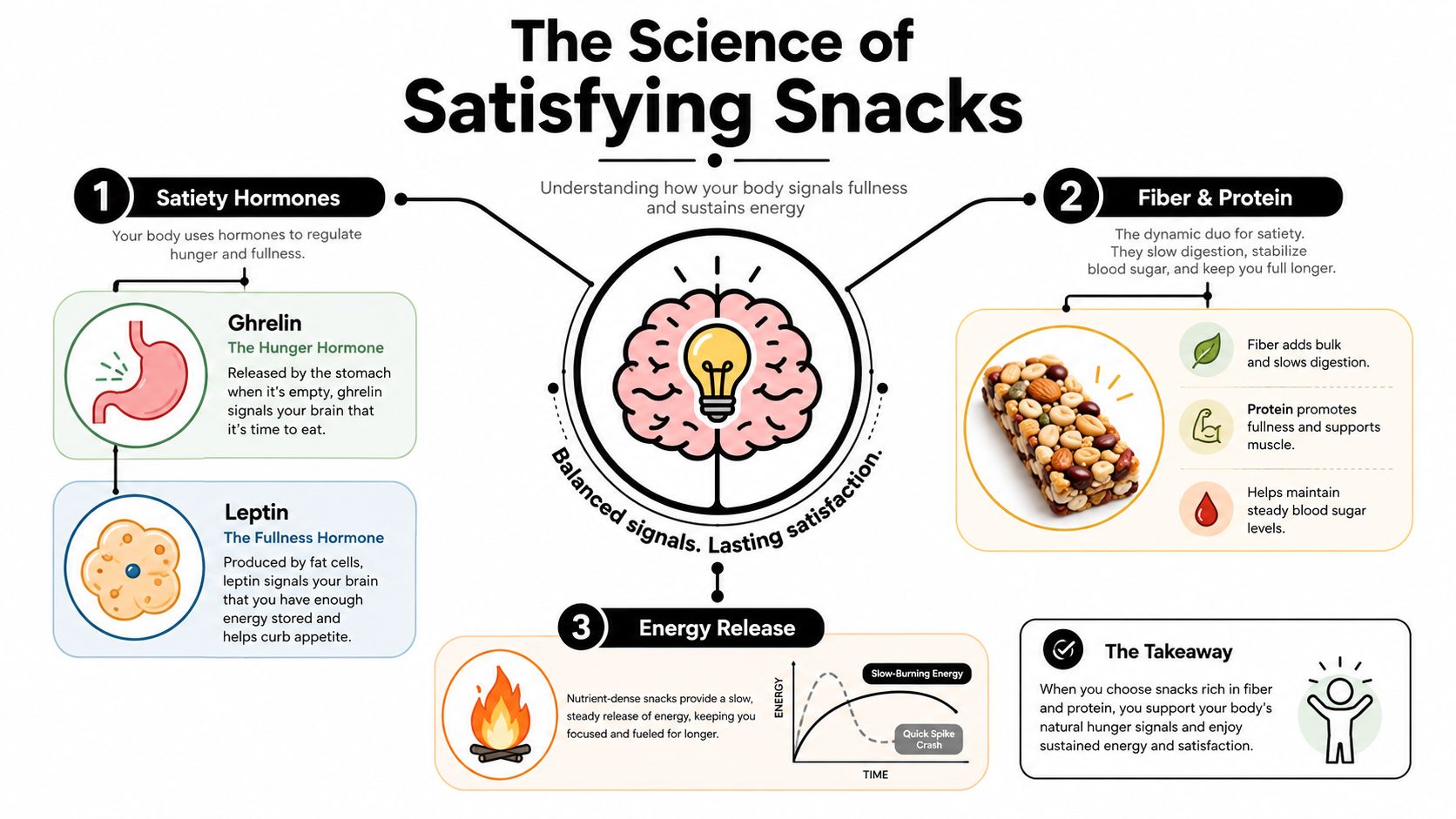
The mechanism is pretty straightforward. Protein and fiber support fullness signals, while highly processed snack foods tend to deliver calories faster than satiety. A peer-reviewed review on snack food, satiety, and weight found the evidence is mixed overall, but nutrient-dense snacks higher in protein and fiber are associated with weight reduction or maintenance, while energy-dense snack foods are associated with weight gain or no effect (peer-reviewed review on snack food, satiety, and weight).
Meaningful protein per calorie is the real target
A snack doesn't need to be huge to work. It needs to earn its calories. That's why examples like 8 oz plain Greek yogurt with 22 g protein and 130 kcal, ½ cup cottage cheese with 12 g protein and 90 kcal, and 3 cups air-popped popcorn with 3 g protein, 3.6 g fiber, and 93 kcal are useful benchmarks for snack-building (Women's Health examples). They show how fullness can come from protein or fiber without blowing up total intake.
High-protein, high-fiber snacks can also reduce calorie intake at the next meal compared with high-fat, high-sugar snacks, which is why they work so well in real life.
Timing matters too. In one observational study of weight-loss participants, mid-morning snackers lost less weight than non-mid-morning snackers, 7.0% versus 11.4%, with a statistically significant difference (p = 0.004) (peer-reviewed review on snack food, satiety, and weight). That doesn't mean all snacking is bad. It means a snack should be deliberate, portioned, and chosen for satiety, not just convenience.
For a second label-based reference point, best foods for appetite control is a useful reminder that protein, fiber, and portion control consistently outwork vague “healthy” claims.
What the label should tell you
If the snack is meant to carry you between meals, look for three things:
- Protein first, because it does the heaviest lifting for fullness.
- Fiber next, because it helps slow digestion and blunt rebound hunger.
- Low added sugar and saturated fat, because those usually make a snack easier to overeat without feeling satisfied.
That's the core formula behind healthy snacks on the go for weight loss. Not fancy. Not trendy. Just effective.
How To Build And Time Snacks For Real On-The-Go Life
The easiest snack system is the one you can repeat without thinking. That means deciding in advance what counts as a snack, where it lives, and when you'll eat it. If you wait until you're starving in traffic or between client calls, you'll almost always choose the fastest option, not the best one.
Build it before you need it
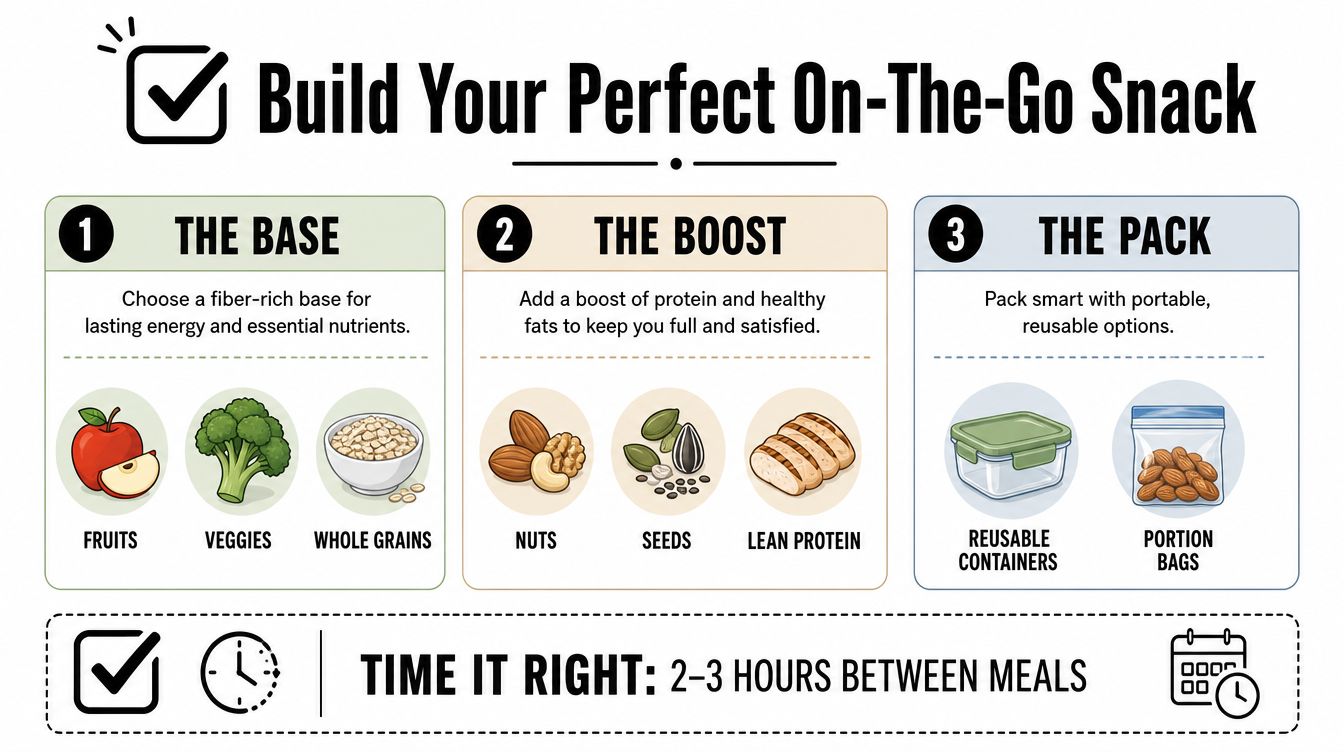
A smart portable snack usually follows a simple structure. Start with a protein-forward base, add a fiber source or produce when possible, then pre-portion it so you don't accidentally turn one snack into three.
A workable rule set looks like this:
- Base: Greek yogurt, cottage cheese, roasted edamame, tuna, eggs, or a savory high-protein snack.
- Boost: Fruit, vegetables, popcorn, nuts, seeds, or whole grains for fiber and texture.
- Pack: Single-serve containers, small bags, or anything that prevents casual overeating.
The calorie target depends on the day. For standard weight-loss snacking, practical guidance often lands around 100 to 200 calories, while more active days may fit 150 to 250 calories depending on the rest of the menu (Healthline snack guidance). That range works because it's enough to take the edge off without replacing a meal.
Time it around hunger, not boredom
A snack works best when it solves a real gap. If you train after work, a protein-forward snack before the gym can stop you from arriving depleted. If you usually crash mid-afternoon, a pre-planned snack at that point beats a random trip to the break room.
The bigger win is consistency. Grazing all day blurs the line between snack and meal, which makes it harder to see how much you're eating. A deliberate snack, eaten because you're hungry, is much easier to manage than constant nibbling.
If you carry snacks, you're less likely to buy the first thing you see when energy dips.
That's why I like clients to keep one shelf-stable option in a work bag, one in a desk drawer, and one in the car if temperature allows. It removes the “I had no choice” excuse that usually shows up right before a calorie-dense impulse purchase.
For office-ready ideas that fit this same logic, 2026 guide to office snack choices is a helpful reference for keeping the break room stocked with better options.
High-Protein Portable Snacks You Can Actually Eat On The Go
The best portable snacks are boring in the right way. They're easy to eat, easy to pack, and easy to repeat without needing special circumstances. A snack should survive a commute, fit in a backpack, and not require a perfect fridge situation to be useful.
The most reliable options
Plain Greek yogurt works when you need something cold and filling fast. The issue is portability, so it shines most when you've got a cooler bag or you're eating it right after a workout.
Cottage cheese cups are another strong option, especially when paired with fruit or cucumber slices. They're soft, high in protein, and useful when you want something lighter than a full meal but more substantial than a handful of nuts.
Roasted chickpeas and air-popped popcorn work well for people who need crunch. They won't give the same protein punch as dairy-based snacks, but they can satisfy the urge for something salty without turning into chip territory.
When savory beats sweet
Many people think “healthy” snacks have to be sweet, but that's usually where they go wrong. Sweet snacks can be fine, yet they often feel more like a treat than a stabilizer, especially if you're already tired or trying not to trigger a sugar crash.
Savory portable snacks are often easier to control because they feel like food, not dessert. That matters during a long workday, after lifting, or on the road when your brain is looking for something substantial rather than another sugar hit.
If you want a practical office reference point, the office snack choices guide for 2026 is useful for comparing shelf-stable and fridge-friendly options without overcomplicating the decision.
A fast filter for choosing the right one
Before you buy or pack a snack, ask three questions:
- Will this keep me full for more than a few minutes?
- Does it give me protein, fiber, or both?
- Can I eat a reasonable portion without opening the floodgates?
That's why pre-portioned, savory snacks often outperform oversized “healthy” bags. They're easier to stop eating. They also fit the way most busy people snack, which is standing, walking, or eating between tasks.
Snacking Smarter When Appetite Changes Or GLP-1 Medications Are Involved
Standard snack advice can miss the mark when appetite is lower. That happens with GLP-1 medications, but also with stress, nausea, early satiety, or just a smaller meal capacity during busy weeks. In those cases, a big, high-volume snack can feel like a chore instead of help.
The core principle still holds, though. Protein plus fiber remains the most useful combination for satiety, but the execution has to shrink. Smaller portions, easier textures, and less sweetness tend to work better than large, bulky snacks that ask for more appetite than someone has available.
Why generic advice falls short here
Most snack articles repeat the same formula, keep calories modest, add protein, choose fiber, and move on. That advice helps some people, but it leaves a real gap for anyone who can't comfortably eat much at once. For them, the question isn't how to eat more volume, it's how to get enough nutrition without forcing it.
That's where savory, protein-dense snacks make more sense than oversized fruit bowls or sugary bars. A smaller, more deliberate portion can be easier to digest and less likely to trigger nausea than something very sweet or very bulky. It also prevents the common mistake of nibbling just to “get something in” and ending up overdoing it later.
Best fit rule: if appetite is low, choose the most nutrient-dense snack you can comfortably finish, not the biggest one that looks healthy.
Label awareness matters more in this setting too. Sodium can sneak up in packaged foods, and added sugar can make a snack taste good without supporting stable energy. A quick look at the ingredient list and nutrition panel helps you avoid snacks that are technically convenient but practically unhelpful.
For people who want a cleaner framework for choosing food when they're not very hungry, how to read nutrition labels is worth revisiting before shopping.
Common Snacking Mistakes And How To Fix Them Before They Derail Progress
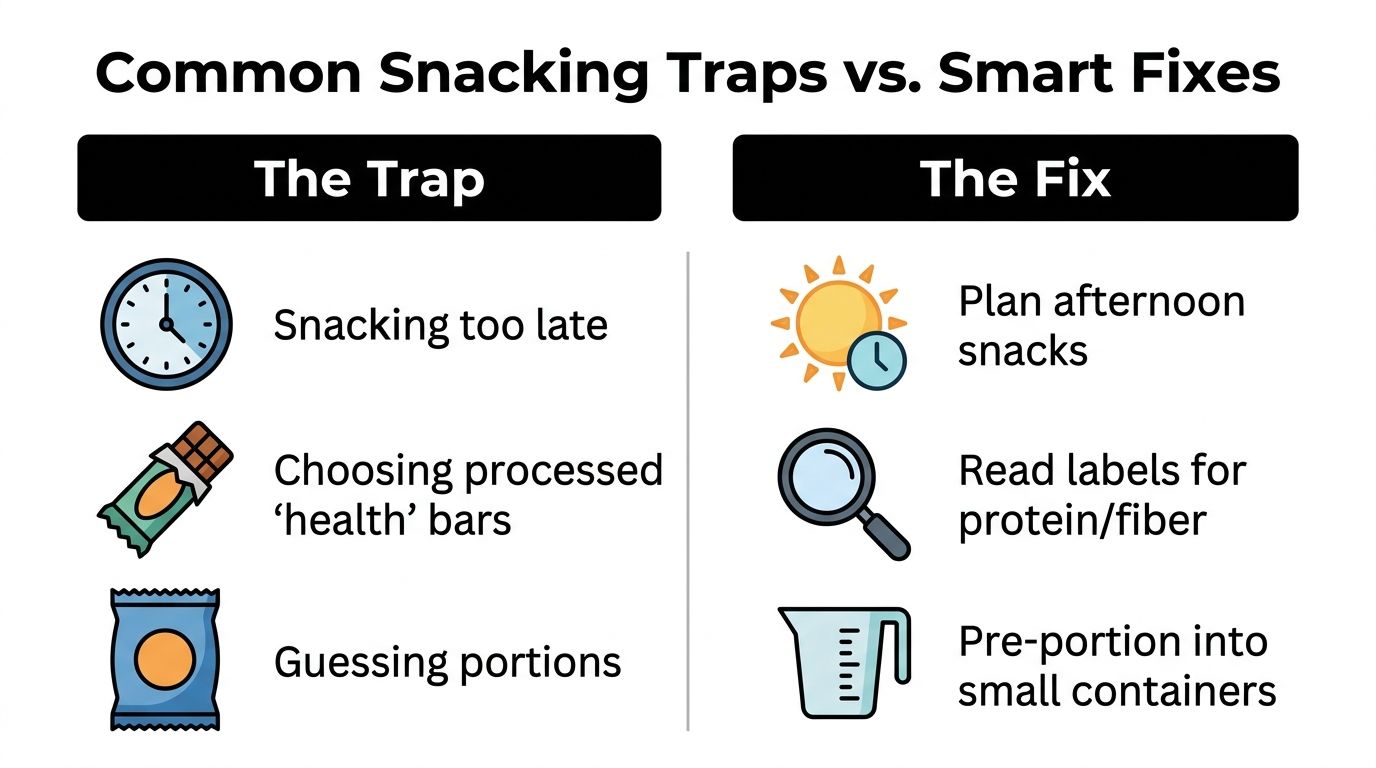
The biggest snacking mistakes are usually the most ordinary ones. People buy whatever is closest, trust whatever says “protein” on the front, and assume frequency automatically equals progress. That combination can erase a calorie deficit faster than many expect.
The usual traps and the better move
If you keep grabbing bars that look healthy, the problem may be that they're dessert in disguise. The fix is to check the protein, fiber, and sugar balance instead of trusting the packaging.
If you buy family-size bags, the issue is usually portion control, not willpower. The fix is to divide them into single servings before the week starts.
If you snack when you're bored, you're probably using food to break up stress, not hunger. The fix is to pause and ask whether you'd still eat if you were headed straight into a meal.
If you forget to pack anything, the solution is to make snack prep part of the same routine as charging your phone. Convenience has to be built, not hoped for.
What actually derails people
A lot of “healthy” snacking fails because it's too sweet, too easy to overeat, or too close to candy in texture and satisfaction. A snack can be made with decent ingredients and still fail if the portion is vague or the appetite trigger is wrong.
That's why single-serve packaging matters. It creates a stopping point. It also helps people avoid the dangerous middle ground where they tell themselves they're being healthy while eating double the intended portion.
For people comparing packaged options against something more controlled, cleaner savory snacks can be easier to manage because they're less likely to disappear by accident. Single portions, low hidden sugar, and a more satisfying savory profile make the decision simpler at the exact moment it usually falls apart.
Your Practical On-The-Go Snack Shopping And Prep Roadmap
Start with a short shopping list, not an aspiration. Buy one or two fridge-friendly protein options, one shelf-stable savory option, and one fiber-based backup. That covers most real-life situations without filling your kitchen with snacks you'll ignore.
For batch prep, keep it simple. Portion nuts, wash fruit, pre-cut vegetables, and pack any fridge items in containers you'll reuse. If you want a more structured approach to weekly setup, how to meal prep for weight loss is a useful companion for building a routine that doesn't fall apart by Wednesday.
A good weekly system usually includes:
- One office snack, kept in a drawer or bag.
- One training snack, ready for pre- or post-workout use.
- One emergency snack, meant for the day that runs late.
That's enough variety without creating decision fatigue. The best snack is the one you'll eat because it's there, it fits your goals, and it doesn't require a full lifestyle negotiation every time hunger shows up.
If you want a quicker path, choose snacks that are already portioned, protein-forward, and easy to keep in a bag. Then repeat the same setup for a week before changing anything. Consistency beats novelty when the goal is weight loss.
If you want a portable snack that's built around satiety, convenience, and real-life use, visit Gym Snack to see how a savory, protein-forward option can fit into your workdays, workouts, and travel routines. It's a practical fit for people who want healthy snacks on the go for weight loss without relying on sweet bars or guesswork.