

At 6:30 a.m., you're standing in front of the bar aisle with a gym bag over one shoulder and a workday already underway. One wrapper promises protein, another promises energy, a third looks like a candy bar with a fitness slogan. Some bars are soft and dessert-like, some are dry and chalky, and the nutrition panels blur together before you've even chosen breakfast.
A useful high protein energy bar isn't defined by flashy packaging or a single large number. It's a tool that should match your hunger, training schedule, digestion, dietary needs, and the food you'll eat around it. The guide below breaks down the category, explains the label numbers that deserve your attention, compares protein sources, covers timing and satiety, and makes the case for savory plant-based formats that give your palate a break from sweet bars.
Why the Bar Aisle Feels Overwhelming
Seeing protein on the wrapper can make a bar seem like an obvious choice, especially after a workout or during a rushed morning. The word alone leaves out the details that determine whether the bar suits you. A product may provide substantial protein alongside considerable saturated fat, added sugar, salt, or ingredients that upset your stomach. Another may contain fewer grams yet feel lighter and digest more comfortably before training.
The category has also grown beyond traditional sports nutrition. The U.S. market analysis reports $4.03 billion in annual sales and approximately 3.0 billion bars in volume for protein bars. Products containing at least 15 grams of protein accounted for nearly $1.5 billion in sales and more than 650 million bars during the measured year. Both sales and unit volume increased for these products, so the 15-gram level serves as a practical category marker rather than a random wrapper claim. Glanbia's U.S. nutrition bar market analysis provides that market context.
Start with the job you need the bar to perform
Choose according to the situation. Before training, a bar should provide useful fuel without feeling heavy in your stomach. Between meals, it should help carry you to the next meal without encouraging a cycle of sweet snacks. As a travel backup, it needs to tolerate time in a bag, taste acceptable at room temperature, and offer practical nutrition when a full meal is unavailable.
The familiar soft, sweet format is only one option. Dessert-style bars may suit a sweet craving, while crunchy plant-based snacks can provide protein with a different texture and flavor. These savory alternatives can be especially useful when repeated sweetness becomes unappealing. The occasion, digestion, and surrounding meals should guide the choice.
Practical rule: Decide what you need the bar to do before choosing its flavor.
What Counts as a High Protein Energy Bar
A bar with 15 grams of protein per serving qualifies as a practical high-protein energy bar. Use this threshold as the first filter before considering carbohydrates, fat, fiber, and the situation in which you will eat it. It separates a product built around protein from a standard snack bar that contains a smaller amount.
A bar with 10 to 14 grams can still work well between meals, especially when its fiber and total calories suit your eating plan. It belongs to a different group, though. That distinction matters after lifting, during a long commute, or when you need a portable bridge to your next meal.
Protein density adds context
Protein grams show quantity, while protein density shows how much of the bar's energy comes from protein. A 200-calorie bar with 15 grams of protein provides about 7.5 grams of protein per 100 calories. This quick calculation helps distinguish a protein-forward bar from a calorie-dense snack with protein added.
Use this calculation as a first filter before considering carbs, fat, and fiber. A higher-calorie bar may fit a long training session or a demanding day. A lighter bar may suit the space between meals. The right choice depends on the job the bar needs to perform.
| Bar Type | Typical Protein | Typical Calories | Primary Role |
|---|---|---|---|
| Standard snack bar | Low to moderate | Varies | General snacking |
| High-protein energy bar | 15g or more | Varies | Portable protein and bridge fuel |
| Meal-replacement bar | Moderate to high | Often more substantial | Backup meal with added micronutrients |
| Low-carb or keto bar | Variable | Often fat-focused | Lower-carbohydrate eating pattern |
These formats overlap on the shelf but serve different purposes. Meal-replacement bars usually aim for more complete meal-style nutrition, often with a larger calorie contribution and added vitamins and minerals. Low-carb or keto bars may focus on fat and carbohydrate restriction instead of maximizing protein. Savory plant-based options, such as crunchy pea-protein snacks, offer another route when dessert-style sweetness becomes tiring.
Read the product's stated purpose rather than treating “protein” as shorthand for meal replacement, workout fuel, or weight-management support.
Globally, protein bars have moved beyond a narrow sports-nutrition niche. One market estimate values the global protein bar market at $15.80 billion in 2025 and projects $24.21 billion by 2033. A broader energy-bar analysis estimates protein bars at about 41% of that market. Grand View Research's protein bar market report describes the category's mainstream scale and projected growth.
The Five Numbers on the Label That Matter Most
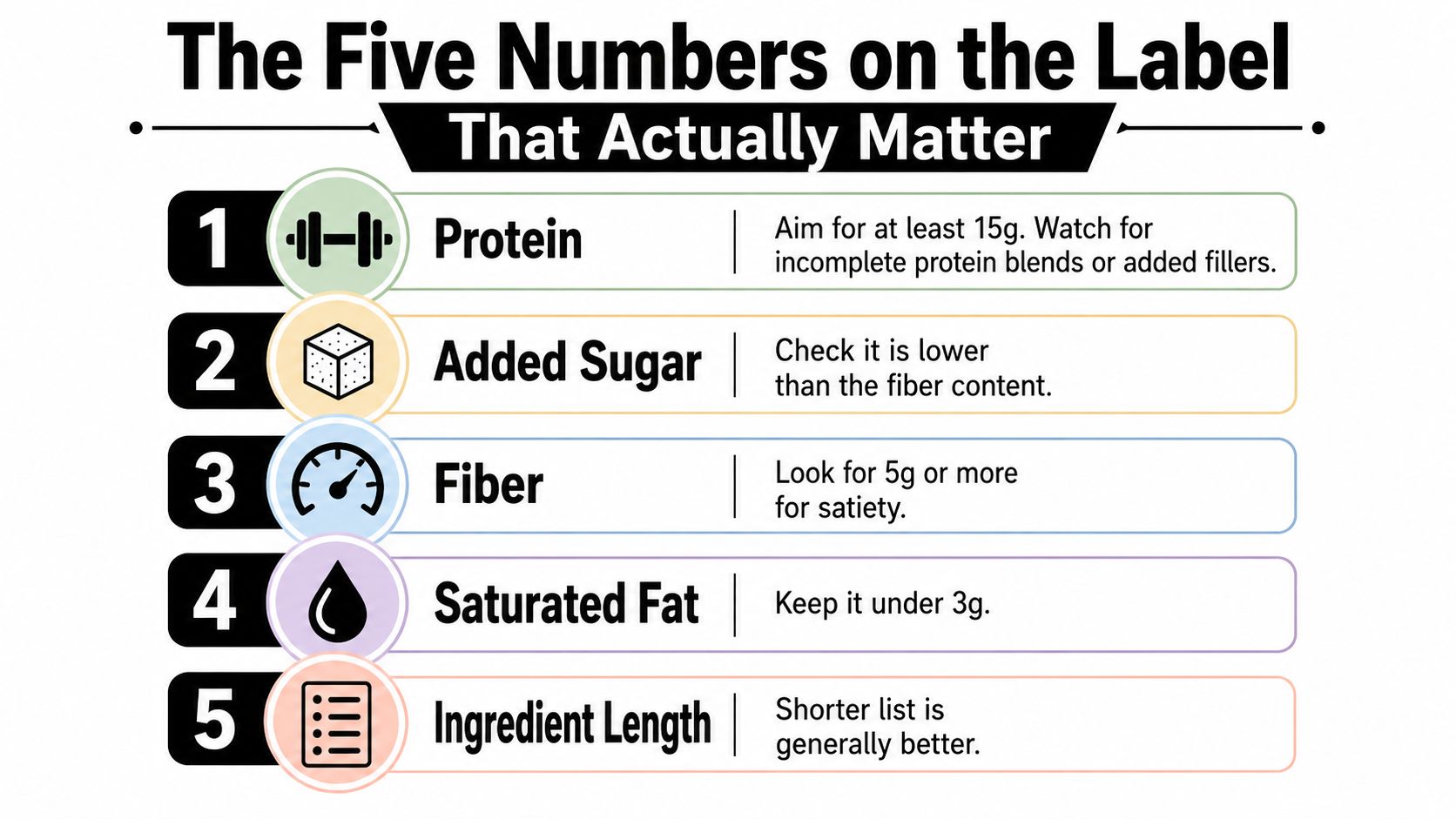
A rushed gym session, a long commute, or an afternoon slump can make the bar shelf look complicated. Read the panel in a fixed order instead: protein, fiber, fat, added sugar, and sodium. Each number answers a different question about how the bar may work for you.
- Protein comes first. Look for 15 grams or more if you want the product to fit the high-protein category. Then check the ingredient source. Collagen and gelatin can raise the protein total without providing the amino-acid profile or digestibility associated with a complete protein source. A recent evaluation found that several bars met protein-content requirements for a protein claim while recording digestibility scores below the FAO threshold for quality claims. The peer-reviewed bar evaluation shows why the grams on the front and the protein's nutritional usefulness both deserve attention.
- Fiber affects staying power and comfort. Some fiber can make a bar feel more substantial, much like adding structure to a meal. Sources differ, though. Chicory-root inulin and similar added fibers may cause bloating or discomfort for some people, particularly when the bar is eaten quickly or with little fluid. Check the ingredient list rather than treating a large fiber figure as a guarantee of better nutrition.
- Total fat needs context. Fat can improve texture and help the bar feel satisfying, while saturated fat deserves a closer look. A high-protein claim does not describe the whole product. Use this nutrition-label reading guide to compare the full panel instead of stopping at the protein line.
- Added sugar changes the bar's role. A sweet product may suit carbohydrate needs around exercise, while a dessert-style bar may fit poorly as a low-sugar snack. Sugar alcohols, including maltitol, can also upset sensitive digestive systems. The same bar may work well before training and feel excessive as a routine desk snack.
- Sodium is easy to miss. Savory products and strongly flavored bars may contain more salt than expected. Compare brands serving by serving, especially if packaged foods already make up much of your daily eating pattern.
Read the numbers together
Suppose one bar provides plenty of protein but little fiber, high saturated fat, and a long ingredient list centered on sweeteners and coatings. It can still serve as emergency fuel, yet that profile may make it less suitable as an everyday choice. Another bar with similar protein, more familiar ingredients, and a texture you digest comfortably may serve you better, even if it tastes less like dessert.
Choosing Proteins, Fats, and Allergen-Friendly Ingredients
Protein source determines more than whether a bar fits a vegan diet. It affects amino-acid quality, texture, digestibility, and the people who can safely eat the product.
Whey concentrate and whey isolate are dairy proteins with complete amino-acid profiles and a familiar creamy texture. They can suit people who tolerate dairy and want a convenient post-training option. They aren't appropriate for vegans, and dairy-sensitive shoppers need to distinguish lactose tolerance from a milk-protein allergy.
Pea protein provides a plant-based alternative and works well in savory formats. It can be lower in certain amino acids than whey, so some plant-based products combine pea with rice protein to create a broader amino-acid profile. Protein quality still depends on the complete formulation and processing. The 2025 study summary reported by FoodBible highlights why a high number on the front of the package doesn't guarantee that the body can access all of that protein efficiently.
Fats shape texture and satiety
Nut butters, seeds, and other unsaturated fat sources can contribute richness without relying entirely on palm oil or butter fat. MCT-based formulas may create a different texture and digestion experience. Seed oils aren't automatically disqualifying, but a formula dominated by them may deserve closer inspection, particularly when the product provides little variety from whole-food ingredients.
Allergen checking also requires more than looking for obvious nuts. Review the full ingredient statement for:
- Peanuts and tree nuts
- Milk and eggs
- Wheat
- Soy
- Fish and shellfish
- Sesame
- Coconut and sunflower ingredients, which may appear in flavor systems or processing components
Ingredient reality: “Plant-based” describes the protein source. It doesn't automatically describe the bar's sugar, fat, fiber, or additive profile.
| Ingredient | Type | Key Strength | Watch For |
|---|---|---|---|
| Whey isolate | Dairy protein | Complete protein and creamy texture | Milk allergy and dairy tolerance |
| Whey concentrate | Dairy protein | Protein-rich and often softer in texture | Lactose and milk ingredients |
| Pea protein | Plant protein | Dairy-free option suited to savory recipes | Texture and amino-acid balance |
| Rice protein | Plant protein | Complements pea-based blends | Grain sensitivity and chalky texture |
| Nut butter | Unsaturated fat source | Flavor, richness, and texture | Peanut or tree-nut allergies |
| Palm oil or butter fat | Saturated fat source | Firmness and indulgent mouthfeel | Saturated-fat load |
| Added seed oils | Plant fat source | Processing and smoothness | Formula balance and personal preference |
If you have a diagnosed allergy, don't rely on a front-of-pack vegan or gluten-free claim alone. Use a dedicated allergy-friendly protein bar checklist and check manufacturer allergen statements.
When a High Protein Energy Bar Earns Its Place
A bar earns its place when it solves a specific food problem. It shouldn't replace every meal because it fits in your hand.
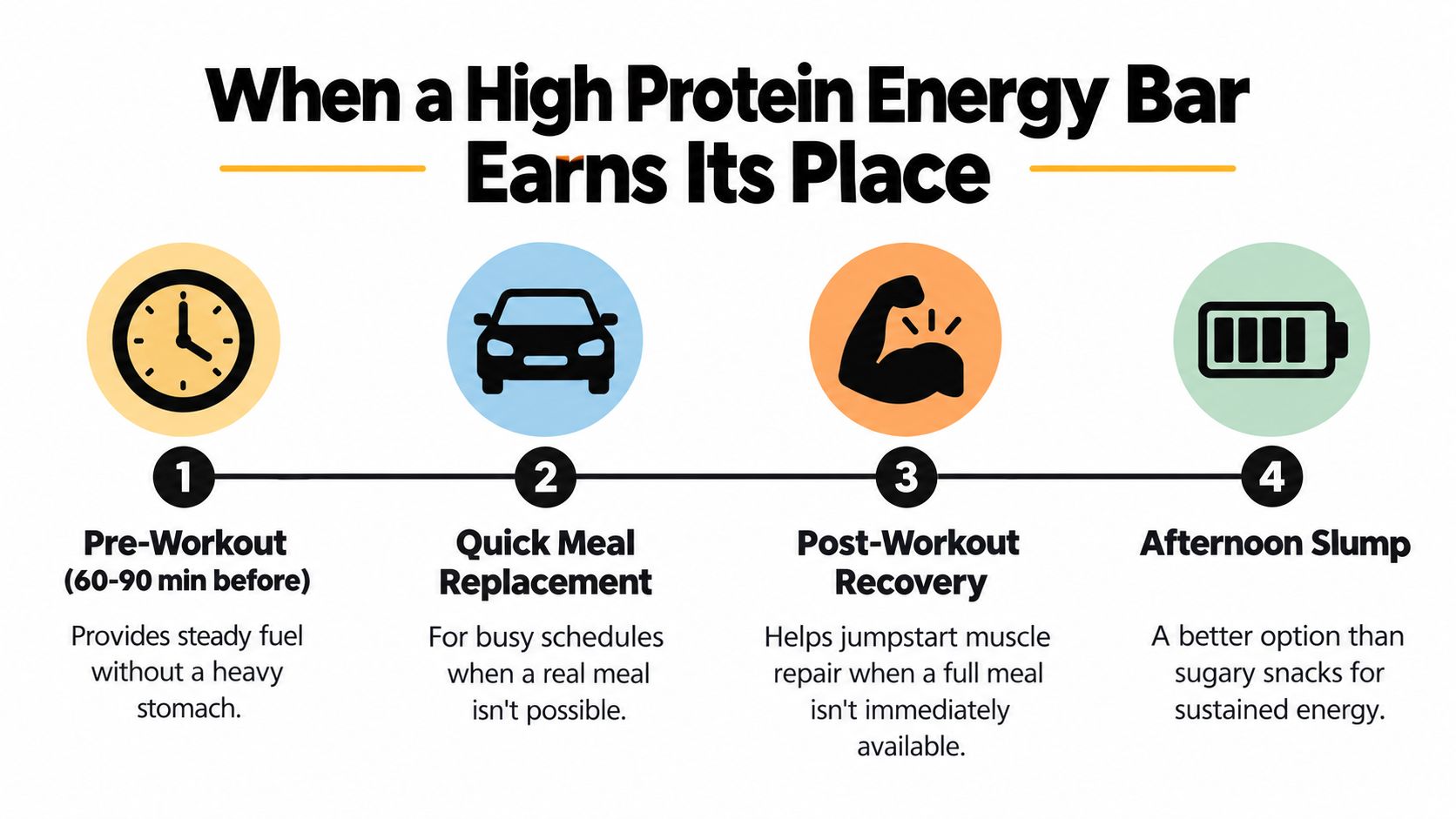
Four practical timing windows
Before training, eat it when you have roughly 60 to 90 minutes before exercise and need something steadier than a sugary snack. Choose moderate carbohydrates with protein in the 10 to 15 gram range if a large serving feels heavy.
After training, use a bar when a full meal isn't immediately available. A product with at least 15 grams of protein and some simple carbohydrate can support the transition from exercise to your next proper meal. The bar is a bridge, not a complete recovery plan.
Between meals, prioritize protein and fiber. The purpose is to take the edge off hunger without creating a sharp appetite rebound. A very sweet bar may taste satisfying for a few minutes but leave you reaching for another snack later.
During travel or a disrupted day, shelf stability matters more than an ideal texture. A dense bar can be useful in a backpack, desk drawer, or carry-on when food options are limited. Keep water nearby if the product contains concentrated fiber or sugar alcohols.
A balanced whole-food meal still does things a bar can't easily reproduce. It can provide more variety, more volume, and a broader combination of produce, grains, legumes, or animal proteins. Use the bar when convenience creates a genuine gap, not because the wrapper makes it sound like a complete diet.
This short video provides a visual supplement for thinking about bar timing and workout nutrition:
How Protein and Fiber Talk to Your Hunger Hormones
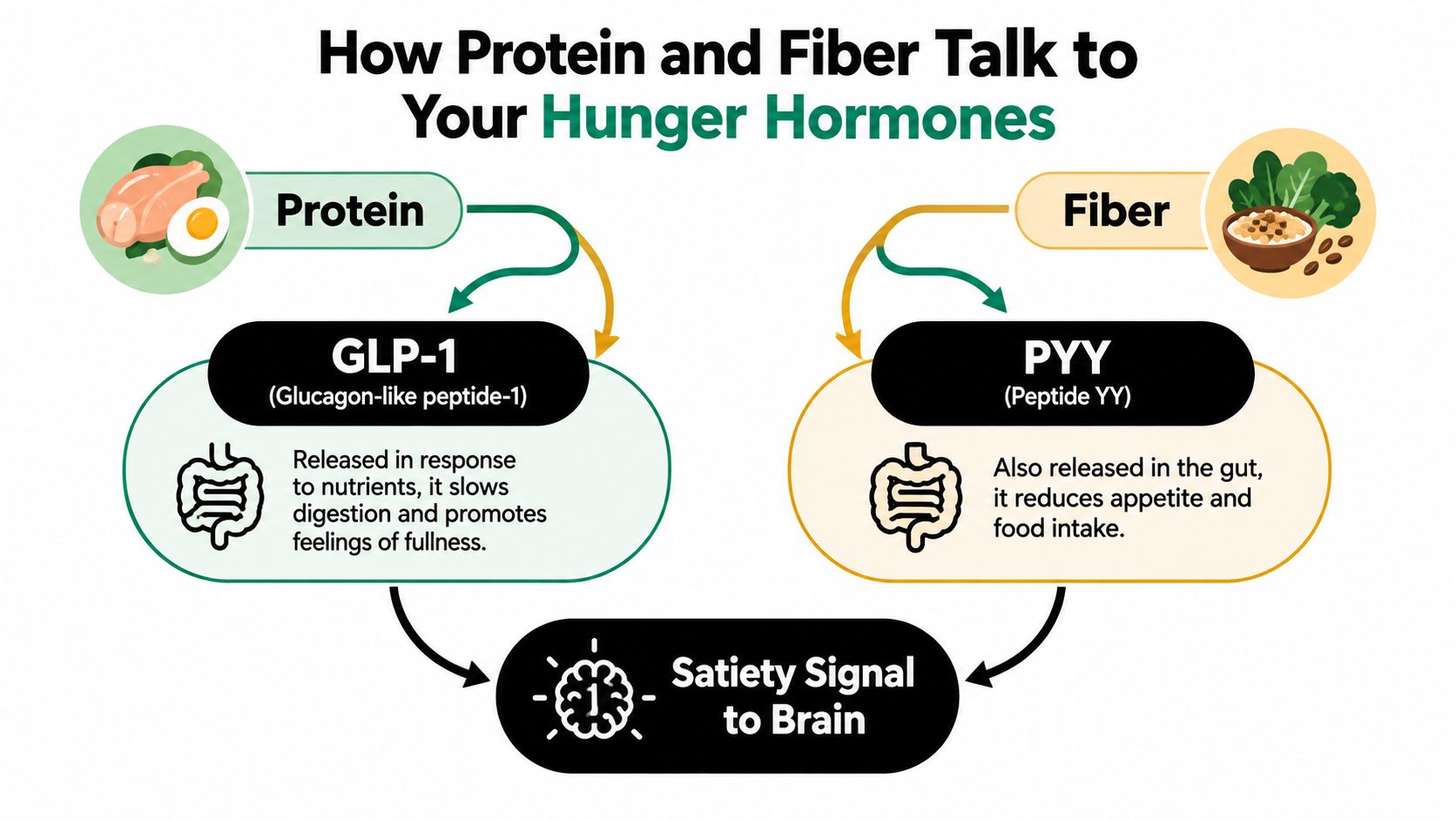
Hunger isn't controlled by willpower alone. Your digestive system sends signals to the brain as nutrients arrive and move through the gut. Two of the better-known signals are GLP-1, or glucagon-like peptide-1, and PYY, or peptide YY.
Protein and certain fibers stimulate specialized gut cells to release these hormones. GLP-1 can slow the movement of food from the stomach and support a feeling of fullness. PYY also communicates with appetite centers and can reduce the drive to keep eating. That doesn't make a bar equivalent to medication or a balanced meal, but it explains why protein and fiber can influence how long a snack carries you.
Why the label still matters
A bar that delivers protein with very little fiber may help you increase protein intake but provide less volume and digestive bulk. A bar with plenty of added fiber but minimal protein may feel filling briefly without serving a muscle-support goal. Combining both nutrients gives the snack more than one route to usefulness.
A randomized trial offers a practical example. Participants who ate a high-protein, high-fiber snack bar in the morning consumed 5% less energy at a lunch buffet than participants who ate no bar. The randomized trial indexed by PubMed supports a cause-and-effect satiety finding, although it doesn't mean every bar will produce the same result for every person.
The 15-gram protein benchmark and a meaningful fiber contribution are useful shopping anchors, not magical hormonal thresholds. Your response also depends on portion size, the rest of your diet, activity, sleep, and individual digestion. If a bar leaves you bloated, uncomfortable, or hungry soon afterward, its theoretical nutrition doesn't make it a good personal choice.
A Simple Checklist for Your Next Bar Purchase
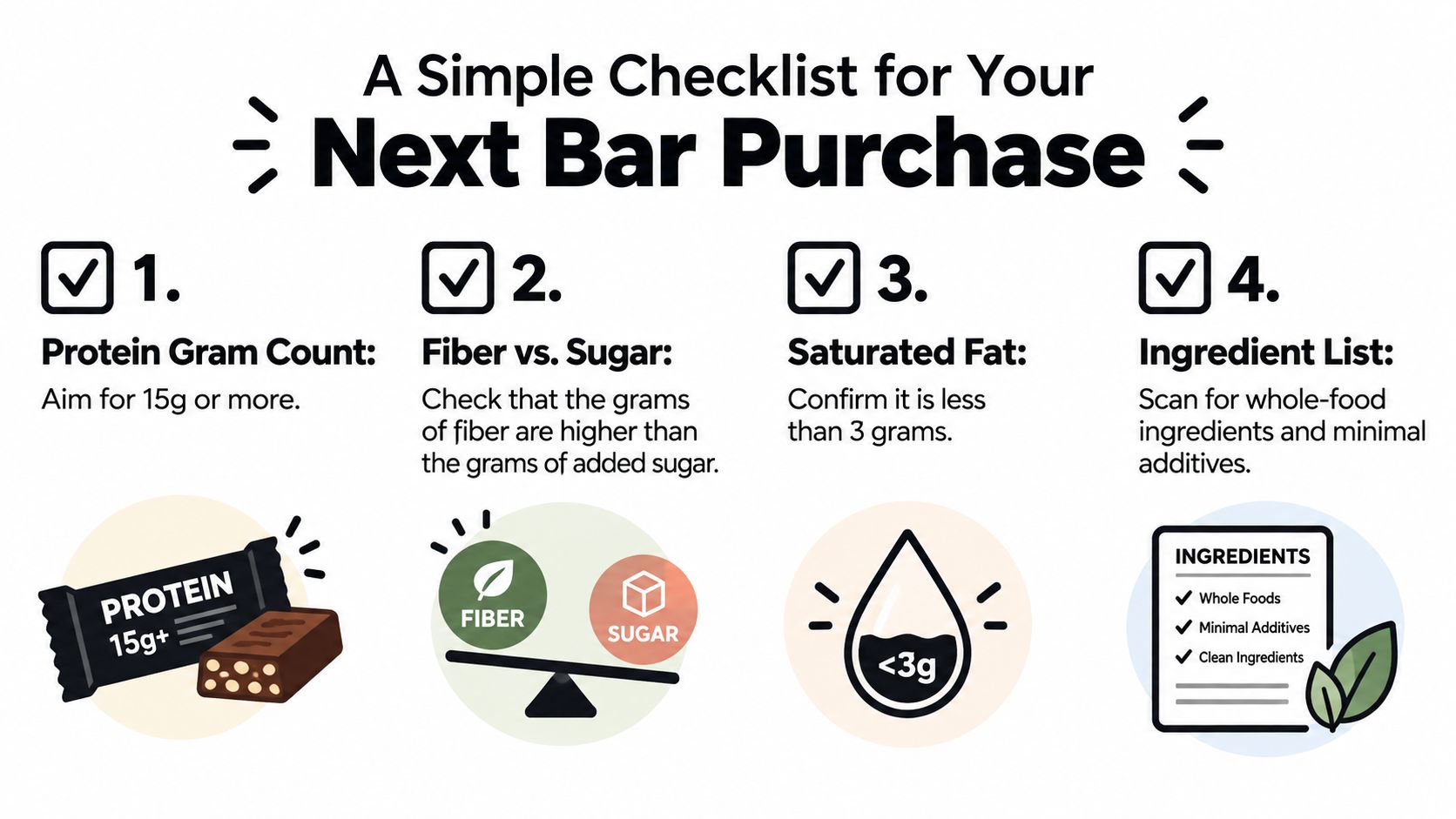
You can audit a bar in the store without memorizing every nutrition rule. Treat the process as a sequence of yes-or-no questions.
- Does it provide at least 15 grams of protein? If yes, continue. If not, decide whether you're buying a regular snack bar rather than a high-protein product.
- Does the protein source fit your needs? Check whether the formula uses whey, pea, rice, soy, collagen, nuts, or a blend. Match that source to your diet, allergies, and digestion.
- Does fiber support the intended use? Fiber may help a between-meal bar feel more substantial, but a concentrated dose can cause discomfort. If you haven't tried the product before, don't test it immediately before a hard workout.
- Is added sugar reasonable for the occasion? A bar used around demanding exercise may have a different carbohydrate role from one eaten at a desk. Don't let a low-sugar claim distract you from sugar alcohols that your stomach may not tolerate.
- Is saturated fat modest? A product can contain plenty of protein while still resembling a confectionery snack nutritionally. Check the panel rather than judging the wrapper.
- Do the calories match the job? A compact snack should fit the gap you're trying to fill. A bar intended as emergency travel food may need more energy than a small afternoon bite.
- Can you recognize most of the ingredients? A long ingredient list isn't automatically harmful, but unfamiliar syrups, coatings, fillers, and sweeteners deserve scrutiny.
This checklist is a filter for minimum standards, not a demand for perfection. Flavor and texture remain personal, and no label can predict whether a particular fiber or sweetener will suit your gut. Apply the same questions to alternatives such as roasted legumes, jerky, yogurt, eggs, or a protein shake.
The Case for Savory Plant-Based Alternatives
Sweet bars create a narrow flavor pattern. Chocolate, caramel, cookie, brownie, and fruit coatings can make protein feel like dessert, which works for some people but becomes tiring when every snack follows the same script. Sweetness may also fit poorly beside a balanced savory meal, and a bar with a large sugar contribution may not suit someone trying to manage appetite between meals.
Savory options solve a different problem. A crunchy pea-protein snack can feel closer to a chip or roasted legume than to soft dough covered in chocolate. That matters for people who want a salty, textured snack after work, before training, or during a long day when another sweet product sounds unappealing.
A different way to build the snack
A savory plant-based format can offer:
- Flavor contrast: Seasonings such as cheese-style, barbecue, or buffalo profiles avoid another dessert-style serving.
- Texture variety: Crunch changes the eating experience and may feel more satisfying than a dense, chewy bar.
- Dairy-free flexibility: Pea protein can suit people avoiding dairy, provided the complete ingredient and allergen statement fits their needs.
- Meal compatibility: A savory snack can sit beside fruit, vegetables, or a sandwich without turning the entire eating occasion sweet.
Gym Snack offers one example of this alternative format. Its savory pea-protein crisps provide 15 grams or more of protein per serving and 30 grams or more per bag, with no seed oils, no cholesterol, and a formulation free of dairy, soy, and gluten, according to the publisher information provided for this article. The available flavors include Cheddar Cheeze and Jalapeño Cheddar Cheeze, giving the product a crunchy, savory role rather than copying the usual dessert-bar format.
The broader vegan savory snack approach makes sense when your food pattern already contains sweet breakfasts, fruit, flavored yogurt, or dessert-style protein products. It isn't a universal replacement for bars. Match the format to the time of day, the meal around it, and the kind of craving you're trying to manage.
A final caution belongs on every high-protein shopping list. A 2026 Safefood survey found 77% of high-protein bars were high in saturated fat and also a source of added salt and sugar, while only 37% of adults on the Island of Ireland considered protein bars healthy. Safefood's protein bar report reinforces the central lesson: protein content is important, but it never gets to make the whole nutrition decision.
Gym Snack offers crunchy, savory pea-protein snacks with 15 grams or more of protein per serving, designed as a plant-based alternative to sweet bars for workouts, travel, and between-meal hunger. Visit Gym Snack to explore the available savory flavors and choose a format that fits your routine.