

At 6 a.m., your gym bag is open on the locker-room bench. You've got a bar, a banana, and a handful of something that looked nutritious at the checkout. By mid-morning, the bar is gone in three bites, the banana didn't quite hold you, and you're already negotiating with the vending machine.
That problem rarely comes from a lack of high-protein products. It comes from poor assembly. A useful snack pack needs enough protein to justify its space, enough fiber or carbohydrate for the occasion, and a portion that matches how hungry you'll be. Think of it as a deliberate mini-meal, not a collection of “healthy” items thrown into a bag.
The category has moved well beyond bodybuilding. One forecast values the global protein snacks market at USD 34.44 billion in 2026, with a projection of USD 49.62 billion by 2031, equivalent to a 7.58% CAGR. The same forecast reports that North America held 37.55% of the market in 2025, while Asia-Pacific is projected to grow at a 9.42% CAGR through 2031. Mordor Intelligence's protein snacks market forecast also reflects how widely protein-first snacking has spread across regions and eating styles.
Why High Protein Snack Packs Beat Grab-and-Go Habits
The practical filter is protein per bite. A snack can advertise a high protein number and still disappoint if the serving is tiny, the texture makes you eat it quickly, or the pack contains no fiber, produce, or carbohydrate to support the moment.
A deliberate pack solves three problems at once:
- Portion control: You decide how much belongs in the pack before hunger takes over.
- Macro pairing: You combine protein with fiber, carbohydrate, or fat according to the occasion.
- Reliable timing: You can eat the same type of pack before training, after training, or during a long work block without starting from scratch.
A protein bar can work. It just shouldn't get automatic priority because its front label says “high protein.” Compare it with a pack built around Greek yogurt, fruit, and a measured crunchy side. The second option may require more preparation, but it gives you a clearer eating experience and more control over speed, volume, and satisfaction.
Practical rule: Choose the protein source first, then add the item that solves the day's actual problem.
For a pre-workout pack, that problem might be easy carbohydrate and comfortable digestion. For a post-workout pack, it may be recovery protein plus a replenishing carbohydrate. For a desk pack, you may need a slower combination that can stand in for a missed afternoon meal.
Savory formats deserve more attention here. U.S. ready-to-eat protein sales reached USD 7.7 billion, and protein snacks contributed USD 0.4 billion in 2024. The same industry analysis reports 47.5% year-over-year growth for protein snacks, compared with 3.8% for protein bars. Glanbia's analysis of the rise of protein snacking points to a clear shift toward portable, salty, crunchy options rather than relying only on sweet bars and shakes.
Pre-built packs make this approach easier to repeat. Keep a few dry packs in your desk, prepare chilled packs alongside breakfast, and store separate training packs in your gym bag. If you want ideas that work outside the gym as well, Cartograph Coffee's camping breakfast guide is useful for thinking about portable food that has to perform without a full kitchen.
Setting Your Protein Target and Portion Size
Pick the protein target before you shop. Otherwise, the package size, marketing language, and flavor will make the decision for you.
Use these ranges as practical starting points, not medical prescriptions:
| Scenario | Protein Target (g) | Calorie Range | Example Portion |
|---|---|---|---|
| General daily fueling | 10 to 15 | 150 to 250 | Greek yogurt with berries and seeds |
| Training support | 20 to 30 | 250 to 400 | Edamame with rice cakes and a lean protein source |
| Weight-management or GLP-1 context | 15 to 20 | 150 to 300 | Jerky or tofu bites with a fibrous vegetable side |
The calorie ranges are working estimates for pack design, not universal requirements. Your total intake, training load, medical history, and appetite matter. People using GLP-1 medication should follow guidance from their prescribing clinician, particularly if nausea, early fullness, or difficulty meeting nutrition needs affects eating.
Match density to the container
Dense proteins make compact packs easier. Meat sticks and jerky deliver a lot of protein in a small volume, but sodium and added sugar can vary widely. Greek yogurt and cottage cheese are softer and often satisfying, though they need reliable chilling. Shelled edamame takes more space, yet it brings texture and plant protein that works well with fruit or crisp vegetables.
A simple sizing rule is one dense protein source plus one fibrous add-on. For example, pair jerky with an apple, cottage cheese with cucumber and whole-grain crackers, or edamame with snap peas. Add a second protein only when the first source can't reach the target without making the portion awkward.
The label matters more than the product category. Check protein per serving, serving size, sodium, added sugar, and the number of servings in the package. A large bag that contains several servings isn't a ready-made snack pack until you portion it.
For a broader framework on aligning food intake with a specific goal, use this guide to adjust macros for real weight loss. If you want to estimate your broader daily requirement before assigning snack targets, this resource on calculating daily protein needs can help you put individual packs in context.
Test the portion in real life
Pack the chosen amount and eat it on an ordinary busy day. Then ask:
- Did you finish it comfortably?
- Did hunger return quickly?
- Did the pack make you sluggish before training?
- Could you carry and store it without hassle?
If the pack fails to hold you for roughly two to three hours, adjust one variable. Add fiber, increase the protein portion, or include a small amount of fat. Don't immediately double everything. The goal is a predictable pack, not the largest possible snack.
Building Plant-Based Snack Packs for Macro Balance
Plant-based proteins work best when you assign each format a job. Pea crisps, edamame, lentil crackers, and blended protein bites don't provide the same eating experience, even when their labels look similar.
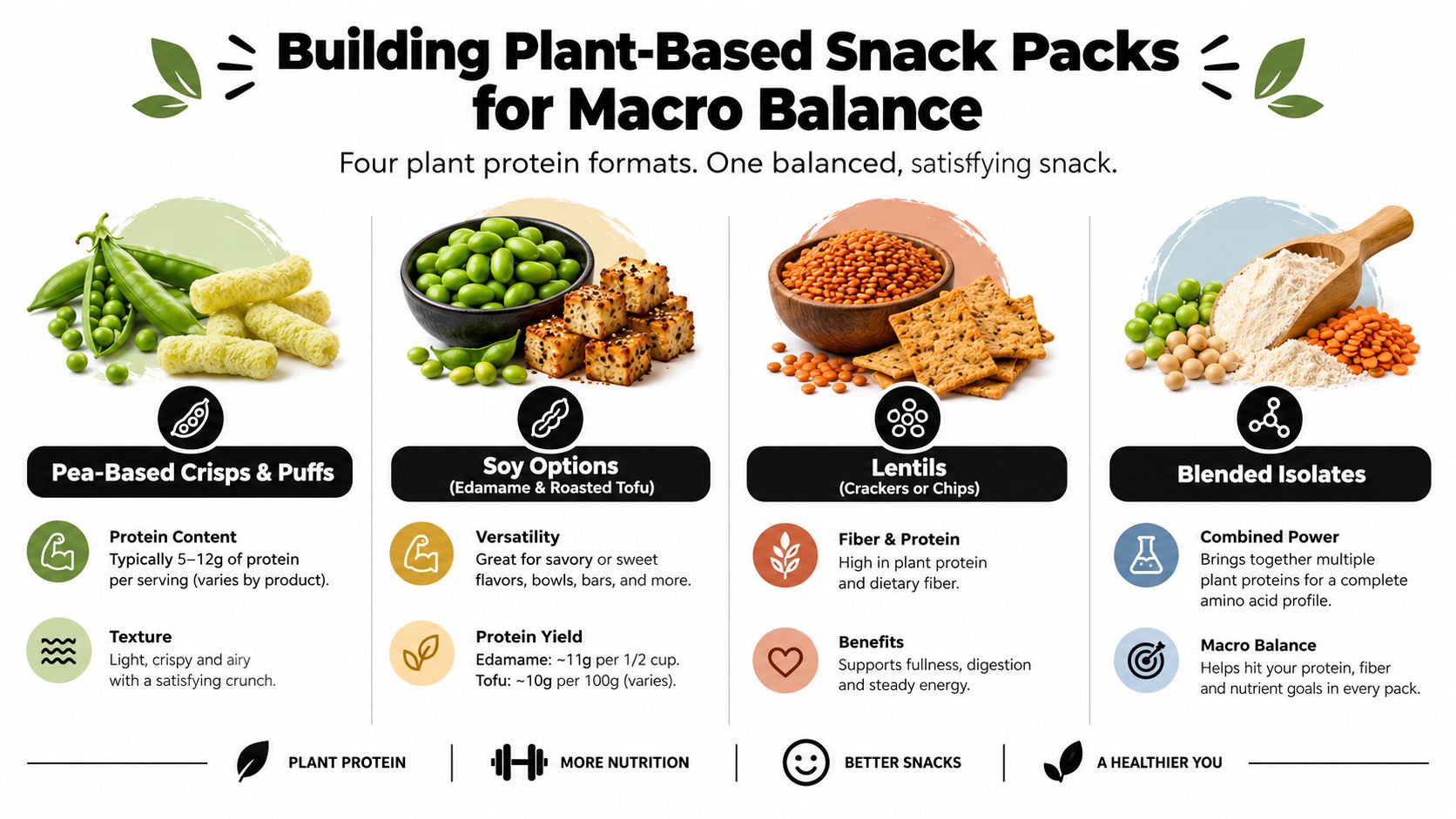
Pea formats bring crunch
Pea-based crisps and puffs are useful when texture is the reason you reach for a snack. They fit naturally into a pre-workout pack with a banana or rice cakes because they're dry, portable, and easy to portion. Their weakness is that some versions feel airy, so the serving can disappear quickly unless you pair them with a more substantial protein or fiber source.
Gym Snack is one example of a savory pea-protein format, offering 15g or more of protein per serving and 30g or more per bag, according to the publisher's product information. Its crisps are dairy-free, soy-free, and gluten-free, with Cheddar Cheeze and Jalapeño Cheddar Cheeze flavors. Treat that as one possible base, not a reason to skip label comparison.
Soy gives you density and flexibility
Shelled edamame has a firmer bite and works well in a chilled post-workout pack. Roasted tofu can fill the same role in a dry pack, though texture varies considerably between brands and cooking methods. Soy is a common allergen, so it isn't the right default for every plant-based eater.
The best use case is a pack that needs a substantial center. Add fruit or a grain-based side if you need carbohydrate, or pair it with vegetables and a tahini-style dip when the goal is a more meal-like snack.
Lentils add balance
Lentil crackers and chips can contribute both protein and fiber while keeping the pack savory. They're a strong choice for a desk pack because their crunch holds up better than moist ingredients, but they may not provide enough protein alone. Pair them with hummus, a tofu spread, or a blended protein bite.
Blended isolates are convenient for travel. Bars and bites can combine pea, rice, soy, or other sources in a compact format, but ingredient lists and sweeteners vary. They solve portability better than they solve texture, so use them when transport matters more than a fresh, meal-like feel.
A useful pairing rule is textured protein plus smooth protein, followed by fiber or fat. Try pea crisps with hummus, roasted tofu with avocado, or lentil crackers with a bean dip. If the pack still feels insubstantial, increase the total protein toward 20 to 30 grams and check whether the added calories are serving your goal.
For more background on how different plant proteins complement one another, see this guide to complete protein sources.
A simple macro check can keep the pack from becoming a bag of protein powder and crackers. Aim near 40% protein, 30% carbohydrate, and 30% fat when that balance suits your day. You don't need mathematical perfection. You need enough protein to anchor the pack, enough carbohydrate to support activity, and enough fat to improve staying power without making pre-workout digestion uncomfortable.
The video below offers another visual way to think about plant-based snack construction.
Four Ready-Made Snack Pack Templates for Real Days
A good template starts with the situation, not the food trend. The packs below use approximate macros because brands and serving sizes differ. Check the label on the exact products you buy.
Before a 90-minute cardio class
You want easy carbohydrate, moderate volume, and protein that won't sit heavily. A Greek yogurt tube paired with two rice cakes and a small banana creates a practical pre-workout combination.
| Item | Portion | Approximate role |
|---|---|---|
| Greek yogurt tube | 1 tube | Fast, compact protein |
| Rice cakes | 2 | Low-fiber carbohydrate |
| Banana | 1 small | Portable carbohydrate |
This pack lands around 15 to 20 grams of protein and roughly 250 to 350 calories, depending on the yogurt and rice cakes. It earns its place because every item is easy to eat, doesn't require utensils, and avoids turning the pre-class snack into a full meal.
During a long training session
During-workout eating should stay simple. A banana and electrolyte chews are often more useful than a heavy protein serving when the session demands continuous output.
Keep protein under 8 grams for this specific template. The banana supplies quick carbohydrate, while the chews provide a small, easy-to-carry option when plain water and food aren't enough for the session.
This pack is about 100 to 180 calories, depending on the chew serving and banana size. It isn't intended to replace a recovery meal. It prevents you from forcing a dense snack into a moment when your stomach wants something lighter.
After lifting
The post-lifting window is where a larger protein pack earns its space. Combine chocolate milk with a turkey jerky stick and a fast carbohydrate such as a banana or pretzels.
| Item | Portion | Why it stays |
|---|---|---|
| Chocolate milk | 1 single serving | Protein, fluid, and carbohydrate |
| Turkey jerky stick | 1 stick | Dense, portable protein |
| Banana or pretzels | 1 portion | Fast carbohydrate |
Together, the pack provides approximately 30 to 40 grams of protein and about 350 to 500 calories, depending on the drink and jerky. The milk handles hydration and carbohydrate more easily than a dry bar, while the jerky adds density without taking up much room.
Across meetings and travel
For an on-the-go day, choose foods that can be eaten in stages. A cottage cheese cup, a measured trail-mix portion, and a protein bar create a pack that can stretch across meetings rather than disappearing all at once.
This combination provides roughly 25 to 35 grams of protein and around 400 to 600 calories, depending on the trail mix and bar. The cottage cheese supplies a soft anchor, trail mix adds fat and crunch, and the bar gives you a sealed backup when the schedule changes.
| Pack Type | Key Items | Calories | Protein (g) | Best Timing |
|---|---|---|---|---|
| Pre-workout | Greek yogurt tube, rice cakes, banana | 250 to 350 | 15 to 20 | Before cardio or class |
| During-workout | Banana, electrolyte chews | 100 to 180 | Under 8 | During extended training |
| Post-workout | Chocolate milk, turkey jerky, banana or pretzels | 350 to 500 | 30 to 40 | After lifting |
| On-the-go | Cottage cheese, trail mix, protein bar | 400 to 600 | 25 to 35 | Meetings or travel |
The template only works if the portions match the day. A post-workout pack can be excessive before a short, easy session, while a pre-workout pack may be too small after demanding strength work.
Storing and Packing Snack Packs That Stay Fresh
A snack pack fails quickly when wet and dry foods share the same compartment. Roasted chickpeas turn soft beside fruit, crackers absorb moisture from cottage cheese, and bars can become messy in a hot car.
Use the container to protect the texture:
- Divided bento box: Keep fruit, dips, crisps, and crackers in separate compartments.
- Insulated lunch bag: Use it for yogurt, cottage cheese, eggs, milk, and other perishables.
- Small mason jar: Layer overnight combinations, keeping wetter ingredients at the bottom and crunchy toppings separate until eating.
- Silicone cups: Create small barriers inside a larger container and reduce bar melt or flavor transfer.
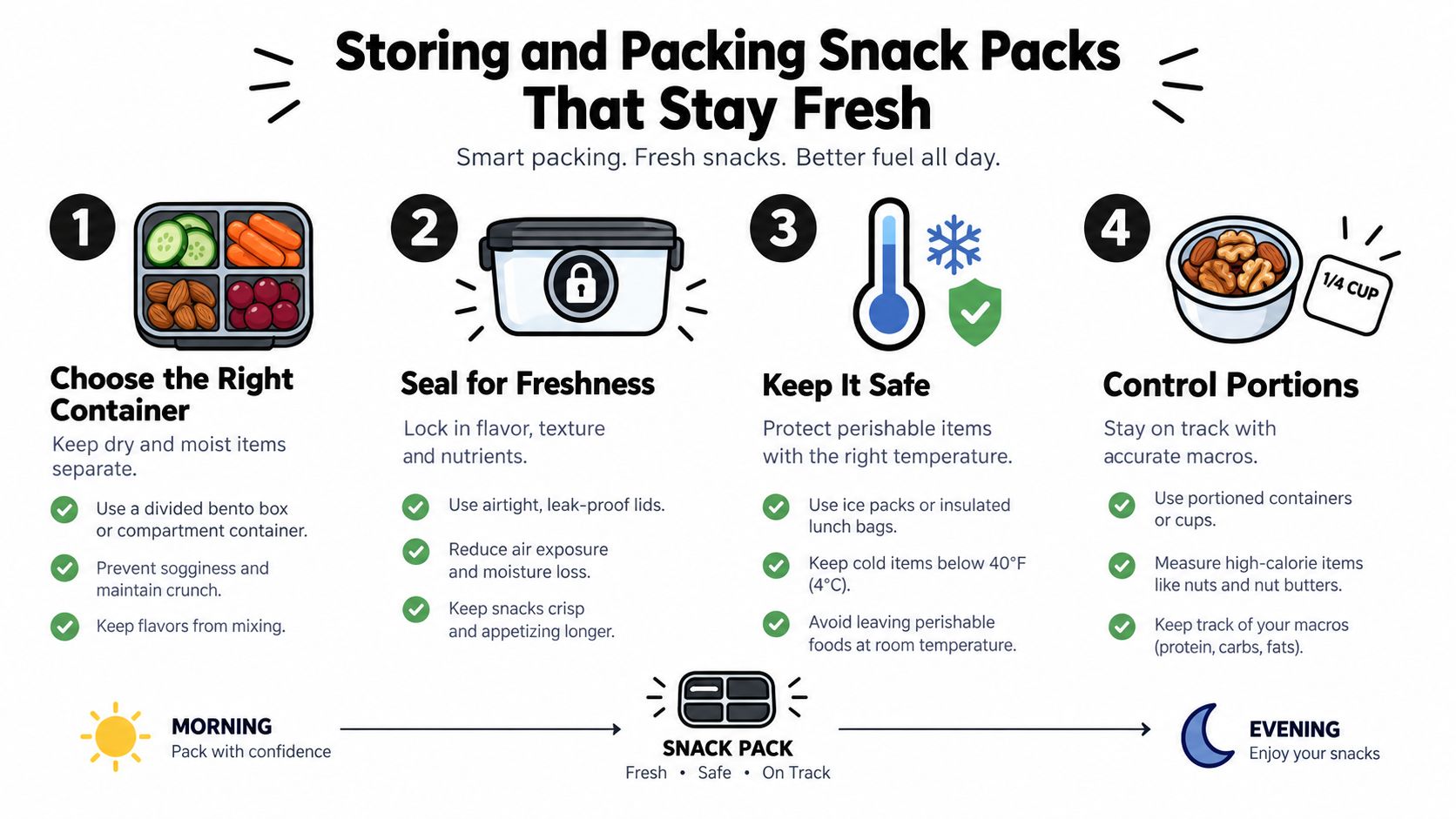
Food safety needs a fixed rule, not a guess. Keep perishable food at room temperature for no more than two hours, or no more than one hour when the temperature is above 90°F. An insulated bag with a reusable ice pack is essential for dairy, cooked proteins, and other chilled foods. If you're unsure whether a perishable item stayed cold enough, discard it rather than trying to rescue the pack.
Label the pack before it leaves the kitchen
Painter's tape and a Sharpie are enough. Write the date, the contents, and the protein total on the lid or bag. This prevents the common mistake of remembering the protein but forgetting how much trail mix or cheese went into the container.
For flights or long travel, nest dry items separately from wet items. Keep a shelf-stable backup such as jerky, roasted legumes, or a sealed protein snack in its own compartment. A resource on resealable snack bags can help if you portion several dry packs at once.
Use this 60-second routine each evening:
- Choose the next day's eating occasion.
- Select one protein anchor.
- Add one carbohydrate, fiber, or produce item.
- Portion the pack and label it.
- Put chilled food beside an ice pack and dry food in a separate container.
That small routine makes macro accuracy and food safety part of packing, rather than a decision you have to make while rushing out the door.
Customizing Snack Packs for Your Diet and Goals
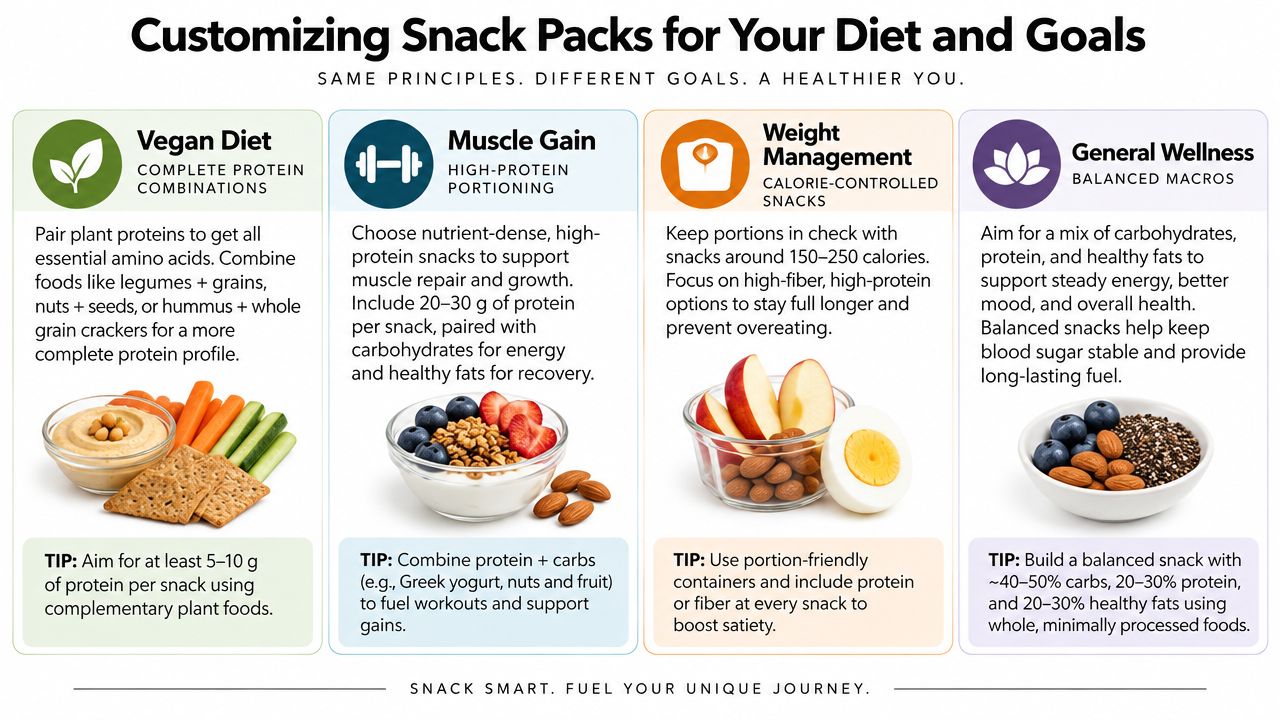
The same pack won't suit a vegan runner, a person managing appetite changes with GLP-1 medication, and someone trying to gain muscle. Keep the structure consistent, then change the protein anchor, portion size, and supporting items.
Vegan packs
Use complementary plant foods when you want a more complete amino acid pattern within the pack. Hummus with whole-grain pita and hemp seeds combines legumes, grains, and seeds in a format that feels like food rather than a supplement. You can also pair pea crisps with edamame or a soy-free bean spread, depending on allergies and tolerance.
Plant-based snack coverage still leans heavily toward bean-based and meat-style formats, while newer products are appearing across pea, soy, lentil, and mixed-protein categories. Dairy Reporter's coverage of protein in active nutrition is useful context for why savory, plant-based formats deserve a clearer role beside sweet bars and shakes.
Gluten-free packs
Read beyond the front label. Look for certified gluten-free products when cross-contact matters, and check shared-facility statements if you have celiac disease or a serious sensitivity. Rice-based jerky, certified chickpea puffs, edamame, fruit, and sealed nut portions can form a dependable base, but certification and ingredient details should guide the final choice.
GLP-1 and weight-management packs
Smaller portions need to deliver meaningful nutrition without creating unnecessary volume. A pack with 15 to 20 grams of protein, modest bulk, and a low-sugar, fiber-aware companion can suit people who experience early fullness, but medication users should personalize choices with their healthcare professional. Recent industry coverage describes a move toward smaller portions, protein-plus-fiber foundations, and reduced sugar as shoppers seek more value per bite. Food Ingredients First's healthy snacking coverage provides relevant category context.
For a fat-loss phase, many people find it useful to keep a pack around 200 to 300 calories while protecting protein density. For muscle gain, add a second protein source and calorie-dense nuts when your broader eating plan calls for more energy.
A flexible personal system is simple: choose one base protein, one crunch, one produce item, and one treat. Change only one component at a time. That makes it easier to identify which combinations keep you full, travel well, and fit your training schedule.
Gym Snack offers savory, plant-based high-protein snack packs and bundles built around crunchy pea protein, with dairy-free, soy-free, and gluten-free options. Visit Gym Snack to compare the available packs and build a portable savory option for training days, workdays, or travel.