

The most popular protein advice is also the least useful for most lifters: drink a whey shake within thirty minutes of your last set or your gains are gone. That narrow “anabolic window” turns a straightforward nutrition habit into a stressful ritual, and it distracts from the variables that matter more, namely adequate daily protein, progressive resistance training, and consistency.
Protein still matters. A major meta-analysis found that supplementation improved muscle strength and size when paired with resistance training, while the benefit flattened beyond about 1.6 g per kilogram of body weight per day. Higher intakes up to roughly 2.2 g/kg/day produced little additional gain in fat-free mass (British Journal of Sports Medicine meta-analysis). For a person weighing 75 kg, that practical range equals about 120 to 165 g per day.
You also don't need to build your diet around sweet shakes or animal foods. Well-planned plant proteins can fit a muscle-building diet, particularly when you eat enough total protein and use varied sources. The goal is a routine you can repeat on busy workdays, training days, and rest days. If your broader goal includes changing body composition, this guide on how to lose fat and gain muscle offers useful context for combining nutrition with training.
Rethinking the Rules of Muscle Building
A post-workout shake can be convenient, but the clock does not control your gains. Research on protein timing found no meaningful hypertrophy or strength advantage from taking protein immediately before or after training when total intake and other relevant factors were controlled (review of protein timing research). Later reviews also concluded that muscle remains responsive to protein for at least 24 hours after exercise, so the idea of a tiny window that closes quickly is misleading.
Timing still has a useful job. A protein-containing meal or snack near training can spread intake across the day, manage hunger, and prevent an impractical amount of food being left for the evening. Treat the workout clock as a scheduling tool, not as a rescue plan for a low-protein day.
Practical rule: Set your daily protein target first. Use workout timing to organize meals, not to rescue an otherwise low-protein day.
The foundation remains resistance training that gives muscle a reason to adapt. Protein supports that process, but it cannot replace progressive work, adequate recovery, or a program that gradually asks more of you. Random workouts and inconsistent eating rarely produce reliable results, regardless of how carefully a shake is timed.
Animal versus plant protein
Animal proteins often offer a complete amino acid profile and are highly digestible. Eggs, dairy, poultry, fish, and meat can make a protein-centered meal straightforward, especially for people who tolerate them well. Plant foods can also support muscle gain when the overall diet supplies enough protein and includes varied sources.
A more useful question is how much protein are you eating, and can you digest and repeat that intake? A review of animal and plant proteins found only a small overall muscle-mass advantage for animal protein. The difference was driven mainly by non-soy, single-source plant proteins rather than well-formulated plant protein patterns (Nutrition Reviews analysis of animal and plant proteins). Soy, lentils, peas, and other legumes can strengthen a mixed or plant-based eating pattern.
Savory options often improve adherence: tofu with rice and vegetables, lentils in soup, or beans folded into a grain bowl may be easier to eat regularly than another sweet shake. A meal you enjoy and tolerate is more useful than a theoretically perfect option that causes bloating or gets abandoned. Adherence beats mythology.
For readers also working on body composition, this guide on how to lose fat and gain muscle provides context for pairing nutrition with training.
Calculating and Distributing Your Daily Protein
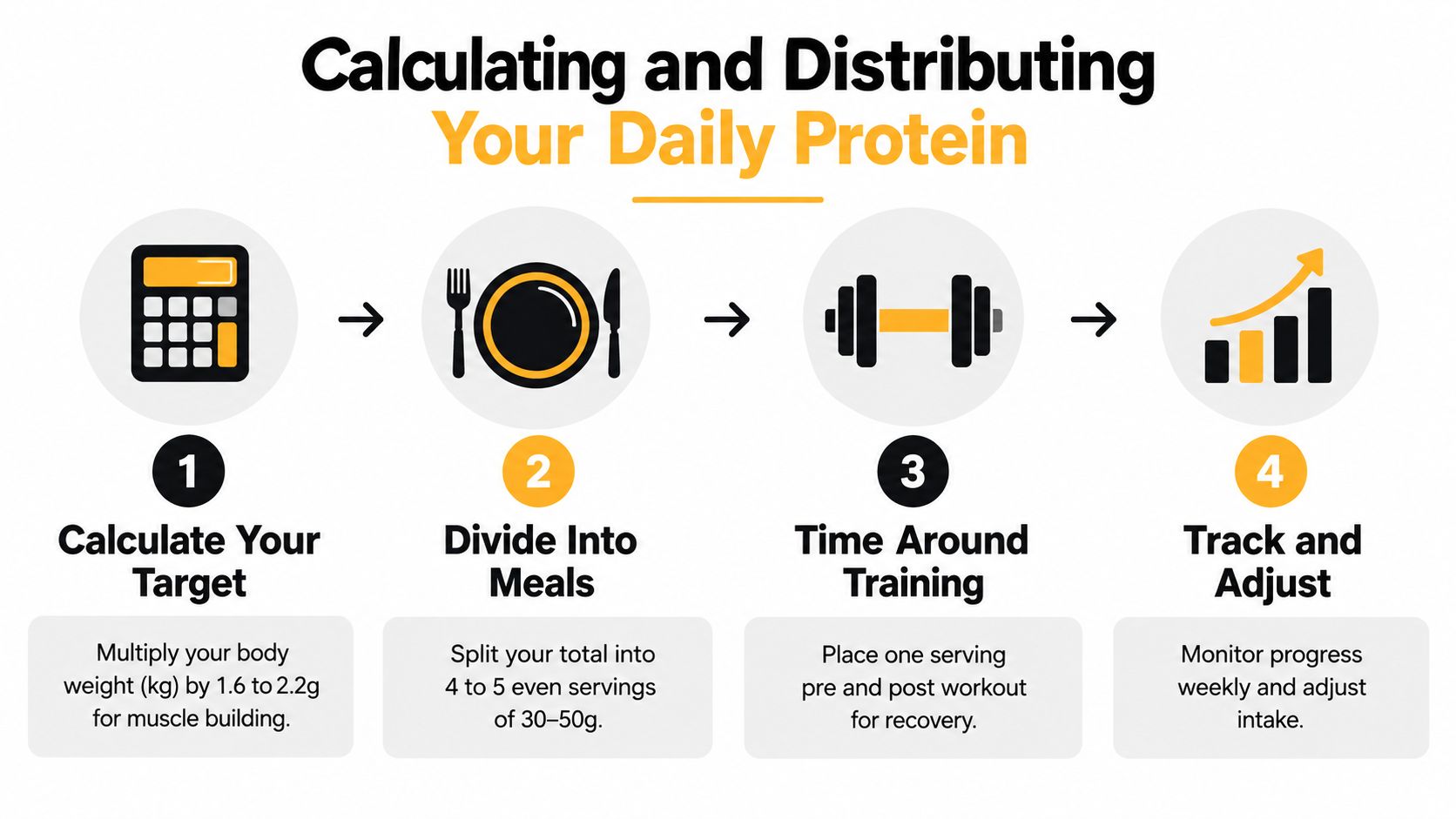
The post-workout window does not rescue a low-protein day. Start with body weight in kilograms, then set a daily target you can consistently meet. For most exercising adults building muscle, the International Society of Sports Nutrition recommends approximately 1.4 to 2.0 g/kg/day, while dose-response research often places a practical muscle-building target near 1.6 g/kg/day (ISSN position stand). Athletes eating in a calorie deficit may need approximately 2.3 to 3.1 g/kg/day to help preserve lean mass, as noted in the same position stand.
Use this process:
- Choose a target. Multiply body weight in kilograms by a daily protein figure that matches your training and calorie intake. A 75 kg lifter using 1.6 g/kg/day would target about 120 g. Using 2.2 g/kg/day would produce about 165 g. More is not automatically better once intake is already sufficient.
- Make the target operational. Decide how many meals and snacks fit your schedule, appetite, and digestion. Someone who struggles with large portions may need more eating occasions, while a compressed schedule may suit fewer, larger servings.
- Distribute the servings. A practical guideline is approximately 0.25 g/kg per meal, or 20 to 40 g of high-quality protein per feeding. Spread servings across the day rather than relying on one large dinner.
- Review adherence. Track actual intake long enough to see patterns. If breakfast contributes very little protein and dinner carries the whole target, improve the earlier meals instead of adding an uncomfortable bedtime portion.
Why distribution helps
Muscle protein synthesis responds to individual protein feedings, not only to the daily total. Moderate servings spaced across the day provide repeated opportunities to stimulate that process and make the target easier to reach without forcing one oversized meal.
A workable schedule could include protein at breakfast, lunch, an afternoon snack, and dinner, with an evening meal if needed. The exact meal count is flexible. The problem is allowing intake to remain low until dinner, then trying to correct the shortfall with a huge portion.
Use this daily protein needs calculator guide to set the target, then assign actual foods to it. “More protein” is too vague to guide behavior. Tofu at lunch, lentils at dinner, and a savory snack between meetings create a plan you can repeat, particularly when sweet shakes are tiring or difficult to digest.
Choosing High-Quality Protein Sources
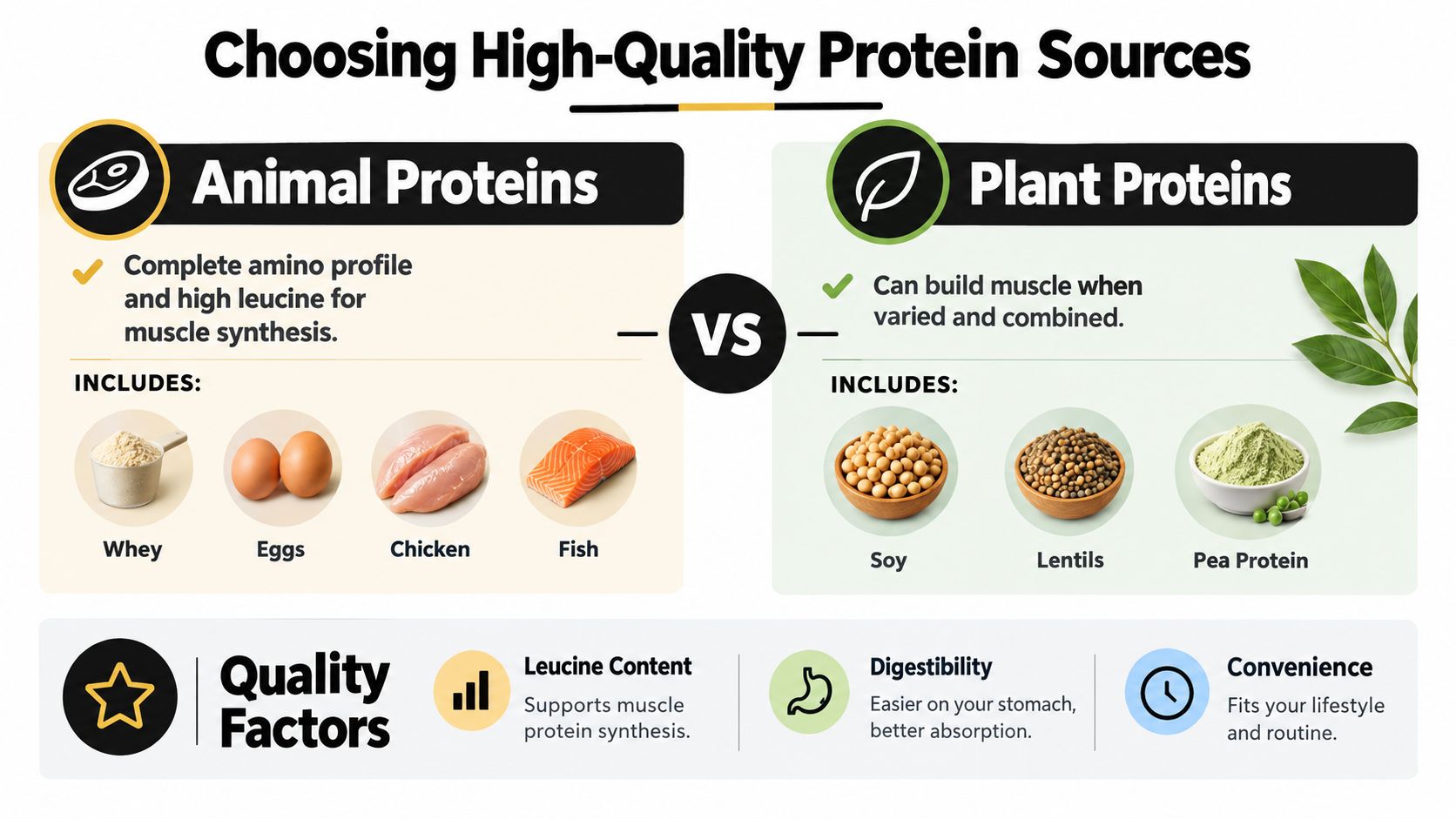
Protein quality has three practical dimensions: amino acid composition, digestibility, and adherence. A food can look excellent on paper, yet contribute little if you dislike it, cannot digest it, or rarely keep it available.
Animal proteins such as whey, eggs, chicken, and fish generally provide complete amino acid profiles in concentrated servings. Whey can suit post-training meals or days when appetite is low. If you are comparing supplement labels, VitzAi.com's whey isolate overview explains what to look for without treating every powder as interchangeable.
Plant proteins also work, with more attention to variety and preparation. Soy foods, lentils, peas, beans, and pea protein can all support a high-protein diet. The research reviewed earlier suggests that differences between animal and plant protein are influenced by the type and variety of plant foods used. A broader mix, rather than relying on one source, helps cover amino acid needs and makes meals easier to sustain.
Let digestion guide your choices
A nutritionally sound food may still be the wrong choice if it leaves you uncomfortable. Heavy dairy shakes bother some lifters, while a sudden increase in legumes can cause digestive issues. Begin with portions you tolerate, cook legumes thoroughly, and distribute higher-fiber foods through the day instead of forcing a large serving into one meal.
Savory proteins can improve adherence by breaking up the sweetness of shakes and bars. Tofu with rice and vegetables, lentil soup with bread, edamame alongside a meal, eggs with toast, and fish with potatoes are practical protein anchors. A useful snack does not need to taste like dessert.
Food quality is personal: Choose the protein source that provides the amino acids you need, fits your dietary restrictions, and leaves you comfortable enough to eat the next planned meal.
For more on amino acid profiles and complementary choices, use this guide to complete protein sources. Check the rest of the label too. If a shake or bar causes digestive discomfort, contains ingredients you avoid, or adds unplanned calories, its convenience may not translate into a routine you can maintain.
Building a Realistic Daily Meal Plan
A workable plan begins with meals you already understand, not with a perfect menu that requires constant cooking. Consider a busy lifter targeting roughly 120 g of protein per day. The person doesn't need to drink several sweet shakes. They can build the day around four or five predictable protein occasions and adjust portions according to appetite and training.
Breakfast might be eggs with toast and fruit, or tofu scrambled with vegetables and potatoes. Lunch could be a bowl built around chicken, fish, tempeh, or lentils, with rice and a large serving of vegetables. These meals provide a foundation, while snacks close the gaps that appear between meetings, classes, and training.
A savory day that survives a schedule
The afternoon is where many plans fail. Hunger arrives, the next meal is distant, and the available choices are usually sweet or low in protein. A prepared container of edamame, a portion of roasted legumes, cottage cheese if dairy works for you, or a savory pea-protein snack can keep the day moving without turning nutrition into a second job.
Gym Snack is one example of the last option. Its plant-based savory snacks use pea protein and provide 15 g or more of protein per serving, with 30 g or more per bag, according to the publisher's product information. The snacks are described as dairy-free, soy-free, gluten-free, free of seed oils, and available in Cheddar Cheeze and Jalapeño Cheddar Cheeze flavors. Treat those details as a convenience option, not a replacement for varied meals.
A post-workout meal might be salmon or tofu with rice, vegetables, and a sauce you enjoy. If training ends far from dinner, use a portable snack first and eat the full meal later. You don't need a special recovery formula. You need enough protein across the day and enough food to recover.
Build around friction: Keep one protein option at home, one at work, and one in your gym bag. The best plan is the one that still works when cooking isn't realistic.
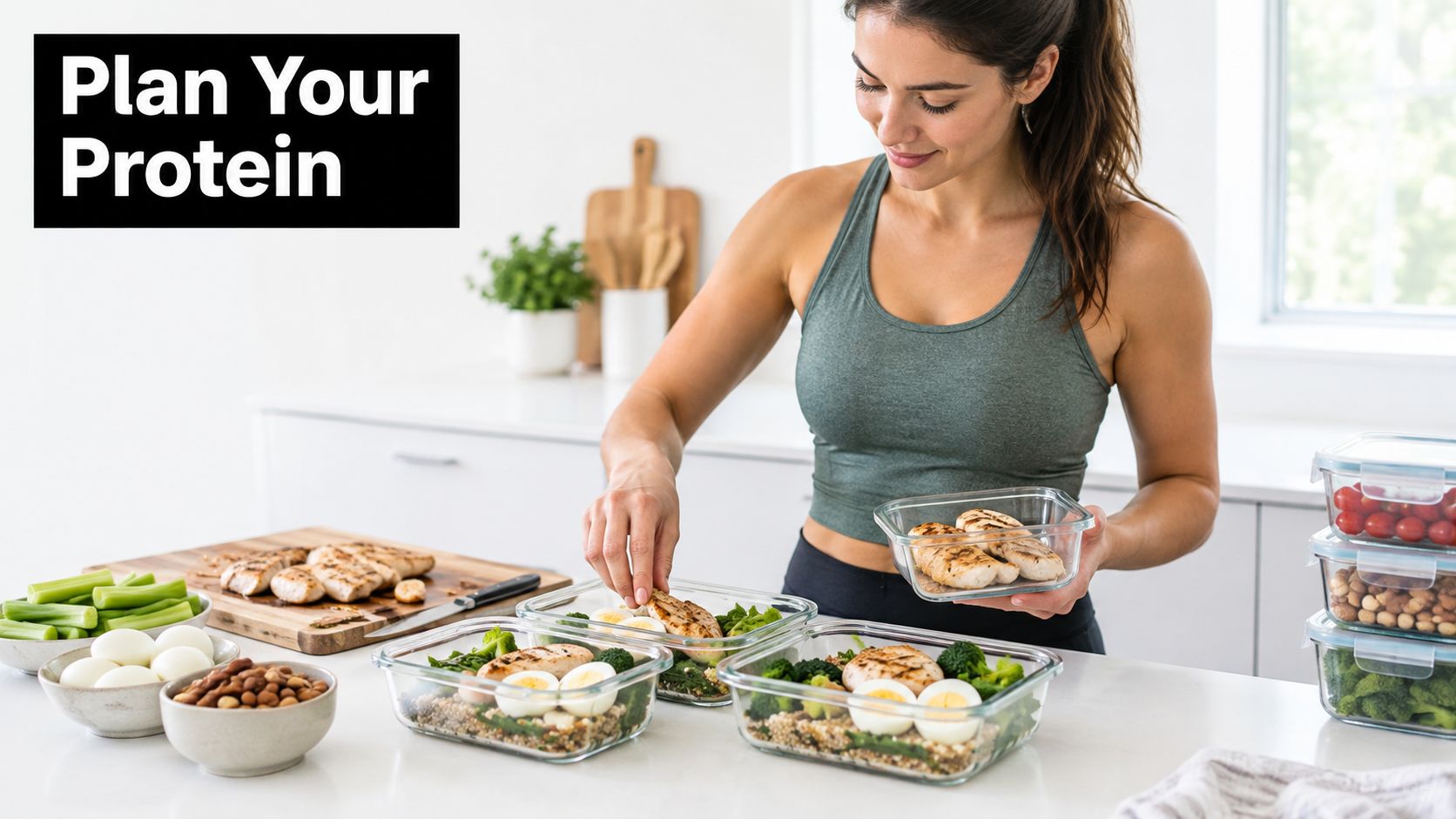
Meal preparation becomes easier when you cook components instead of rigid recipes. Prepare a protein, a carbohydrate, and vegetables separately, then change seasonings across the week. This meal-prep guide for muscle gain can help you turn that approach into a repeatable routine.
Pairing Protein With Training and Calories
Protein supplies building material, but resistance training provides the signal that directs adaptation. The combination supports muscle protein synthesis, as recognized in the ISSN position stand. Without progressive resistance work, extra protein has little reason to become new contractile tissue.
Progressive overload does not mean reckless loading. Add repetitions, improve technique, increase resistance, choose a harder variation, or accumulate more productive work while keeping sound form. Track enough of your sessions to judge whether strength and movement quality are improving. Feeling exhausted is not the same as making progress.
Calories set the conditions for recovery. Someone can reach a high protein intake and still struggle to gain muscle if total food is inadequate, particularly during demanding training. Adding unlimited calories creates a different problem, because faster weight gain does not guarantee useful muscle. For hypertrophy, adequate intake often means maintenance or a modest surplus, adjusted to the person's body-composition goal.
The plate around the protein
Build meals around a dependable protein source, then add carbohydrates to support training, vegetables and fruit for variety, and dietary fats based on preference, satiety, and calorie needs. Savory meals such as tofu with rice and vegetables, lentils with potatoes, or fish with grains can be easier to repeat than another sweet shake. Gut-friendly plant proteins also give people a practical way to keep protein intake consistent when dairy or frequent powders cause problems.
Protein does not need to become a contest. Evidence from a review of protein supplementation and resistance training suggests that benefits increase toward a moderate daily range, with little additional training-related benefit once intake reaches an effective level. At that point, pushing protein higher can displace carbohydrates, fats, and enjoyable foods without strengthening the training stimulus.
The useful question is simple: does your protein intake support the work you perform, while leaving enough room for the rest of the diet?
Common Mistakes and Quick Troubleshooting
Most protein problems aren't caused by a lack of advanced nutrition knowledge. They come from a missed breakfast, an oversized target, a supplement that upsets digestion, or a training plan that changes every week.
Find the bottleneck first
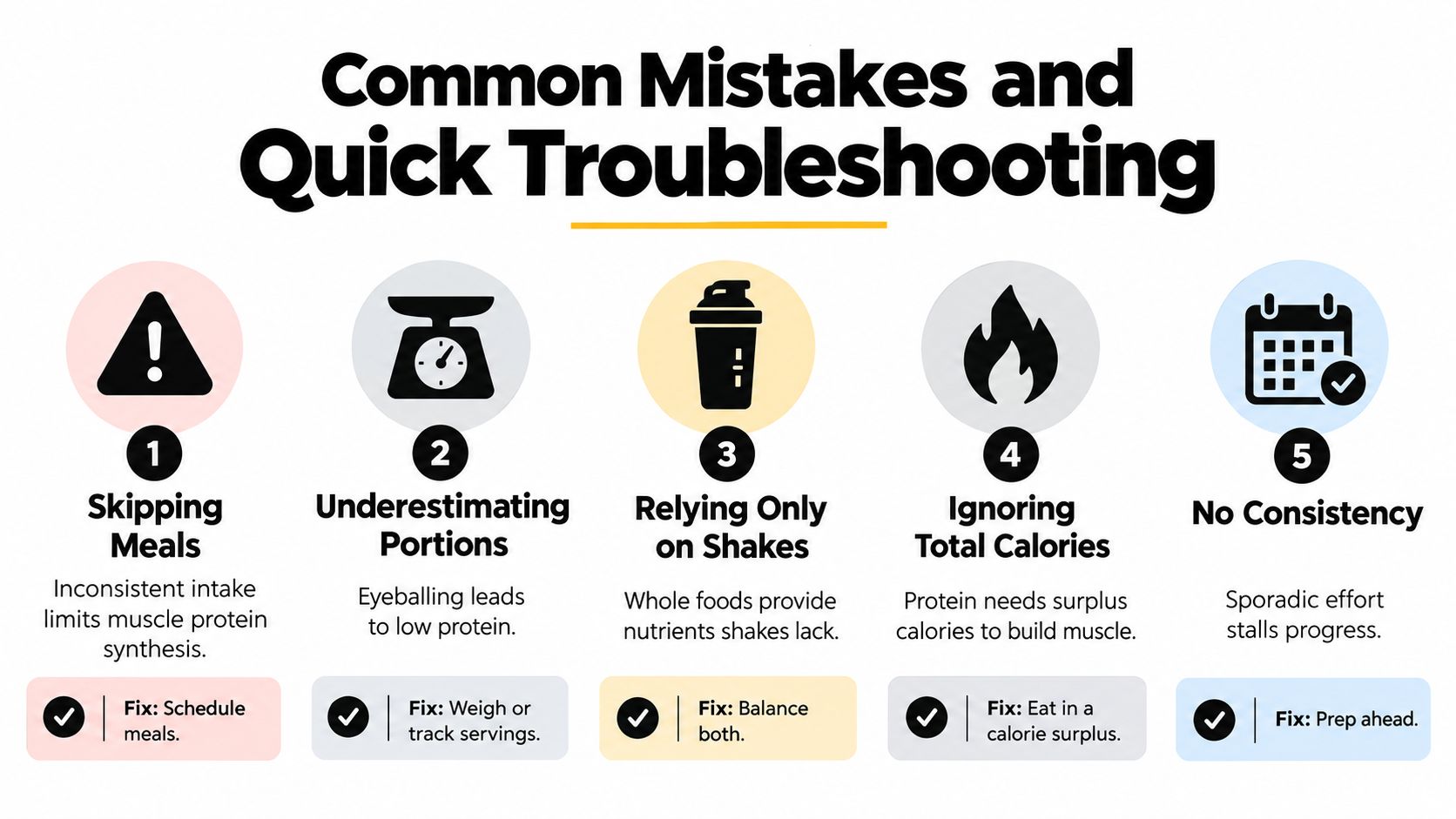
You consistently underdose. If your daily intake sits well below the practical target, add one reliable protein serving to breakfast or your afternoon routine. Don't begin by buying a more complicated supplement.
You chase the workout window. If you wait for a shake and then miss it, the ritual has failed you. Plan the full day's meals and place a normal protein serving near training when convenient. The timing review cited earlier found that immediate pre- or post-workout intake doesn't create a significant advantage once total intake is controlled.
You rely on shakes for every serving. Powders can fill gaps, but liquid calories may become repetitive and some products can aggravate digestion. Replace one shake with a savory whole-food meal or portable option and assess whether adherence improves.
You overestimate portions. Eyeballing protein-rich foods can lead to a lower intake than expected. Weigh foods temporarily or check package labels until you can recognize your usual serving sizes without guessing.
You ignore calories and training progression. Protein can't replace a progressive program or adequate total food. If body weight, performance, recovery, or gym logs aren't moving in the direction you want, audit training and overall intake together rather than adding endless protein.
A useful audit: Check your daily total, meal distribution, digestion, training progression, and total calorie intake. Change one variable at a time so you can identify what actually helped.
Finally, don't abandon the plan after a few inconsistent days. Muscle building depends on repeated training and eating habits maintained over weeks and months. A simpler target that you hit consistently will outperform a theoretically perfect target that makes every meal difficult.
Gym Snack makes plant-based savory protein snacks built around clean pea protein, with 15 g or more per serving and 30 g or more per bag, in crunchy Cheddar Cheeze and Jalapeño Cheddar Cheeze flavors. If you want a portable way to add protein without relying on another sweet shake, visit Gym Snack and explore the available snack options.