

If you're serious about getting a handle on food cravings, you have to look beyond simple willpower. The real solution lies in tackling the root causes: balancing your blood sugar, making protein a priority, managing your stress, and figuring out your personal triggers. This isn't about fighting your body; it's about working with its complex signals.
Understanding Why You Crave Certain Foods
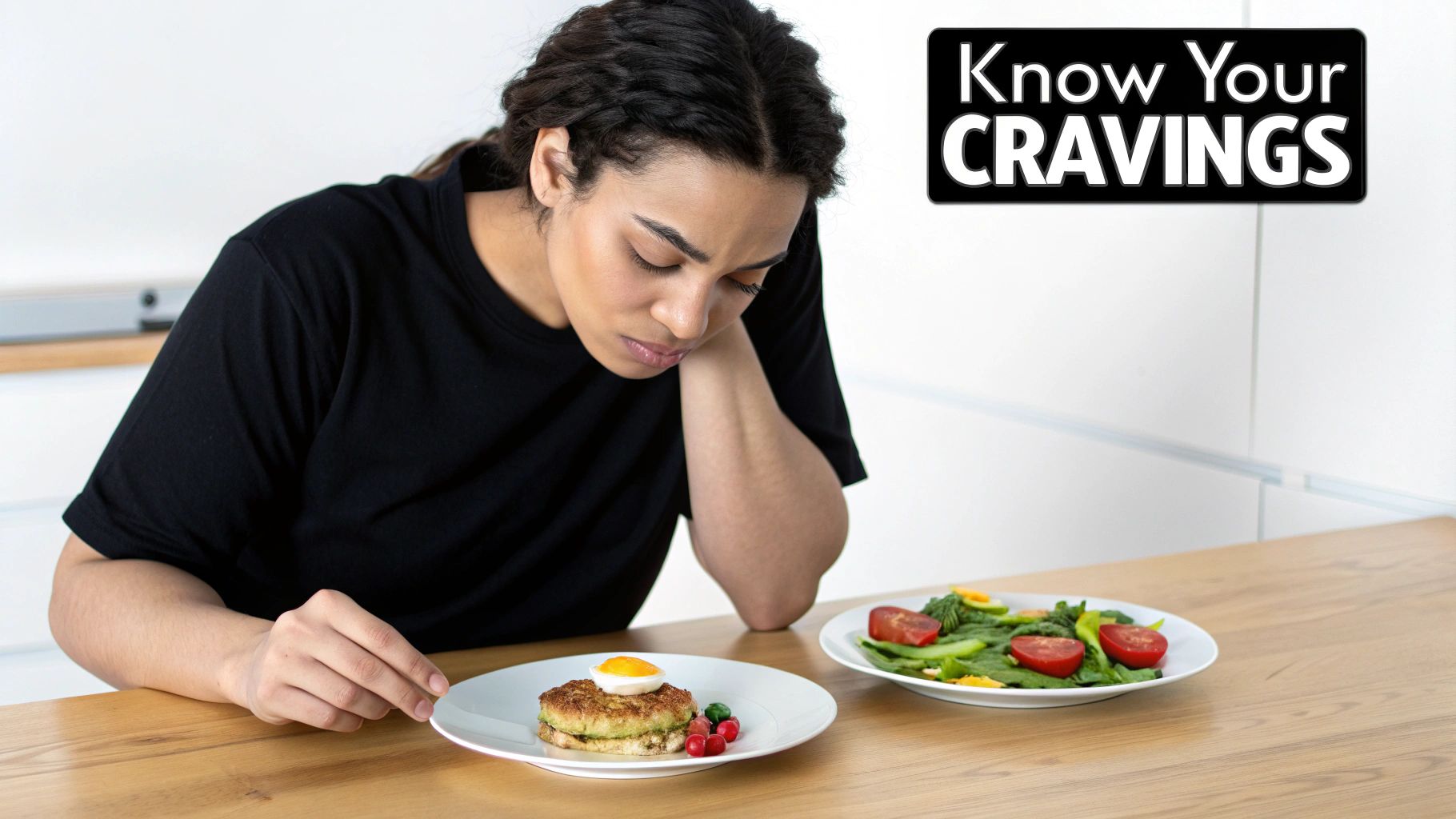
Feel like you're constantly battling an intense urge for certain foods? You're definitely not alone. Cravings aren't a moral failing or a sign of weakness. They're a tangled web of your body's internal chemistry and your brain's powerful reward circuitry. This gets even trickier with today's hyper-palatable foods, which are literally engineered to be irresistible, hooking us into a cycle that's tough to break.
The first step to regaining control is understanding what’s really driving these urges. It’s less about wrestling a craving into submission and more about preventing it from showing up in the first place.
The Brain and Body Connection
At its most basic level, a food craving is a powerful biochemical reaction. When you eat something you find delicious—especially something loaded with sugar, fat, and salt—your brain gets a hit of dopamine. This chemical is central to your brain's reward system, creating a feeling of pleasure that makes you want to repeat the experience.
To really tackle cravings, it helps to understand these deep-seated physiological drivers, like dopamine's role in motivation and the wiring of our internal reward system. With enough repetition, your brain forges a strong link between that specific food and that feel-good rush, compelling you to seek it out again and again.
But it's not all happening in your head. Your hormones are major players in this game, too.
- Ghrelin: Think of this as your "go" hormone. It’s the one that tells your brain it's time to eat.
- Leptin: This is your "stop" hormone. It signals to your brain that you're full and satisfied.
When you're running on too little sleep or are under a lot of stress, this delicate hormonal symphony gets thrown way out of tune. Cortisol, the classic stress hormone, climbs, which amps up your appetite for those high-calorie "comfort" foods. At the same time, ghrelin can spike while leptin dips, a combination that leaves you feeling ravenous and much less satisfied, even after a meal. It's the perfect storm for intense, hard-to-ignore cravings.
Cravings are not random. They are predictable biological and emotional responses. Once you decode your body’s signals, you can start responding with intention instead of impulse.
This guide is designed to give you practical, science-backed strategies to work with your body, not against it. By getting smart about meal composition, lifestyle habits, and your unique triggers, you can build a system that makes cravings show up less often and with far less power when they do.
Before we dive in, let's look at the big picture. These four pillars are the foundation of everything we'll cover for getting cravings under control.
Four Pillars of Craving Control
| Pillar | What It Means | Why It Works |
|---|---|---|
| Blood Sugar Balance | Eating in a way that prevents sharp spikes and crashes in your glucose levels. | Stable blood sugar prevents the "hanger" and desperate need for a quick energy fix (like sugar). |
| Protein-First Approach | Prioritizing protein at every meal and snack. | Protein is highly satiating and helps regulate appetite hormones like ghrelin, keeping you fuller for longer. |
| Stress & Sleep Management | Actively working to lower cortisol and get quality rest. | This helps rebalance appetite hormones and reduces the emotional drive for "comfort" eating. |
| Trigger Identification | Becoming aware of the situations, emotions, or times of day that spark cravings. | Knowing your triggers allows you to create specific strategies to navigate them without giving in. |
Focusing on these core areas provides a robust framework for lasting change, moving you from reacting to cravings to proactively managing them.
Building Meals That Prevent Cravings
The best way to deal with food cravings is to stop them before they even start. Seriously.
Instead of constantly fighting the urge for something sweet or salty, you can build your meals in a way that keeps your body satisfied and your mind off of food. This is all about being proactive, focusing on specific nutrients that work together to keep your energy steady and make you feel full for hours. It’s about working smarter, not harder.
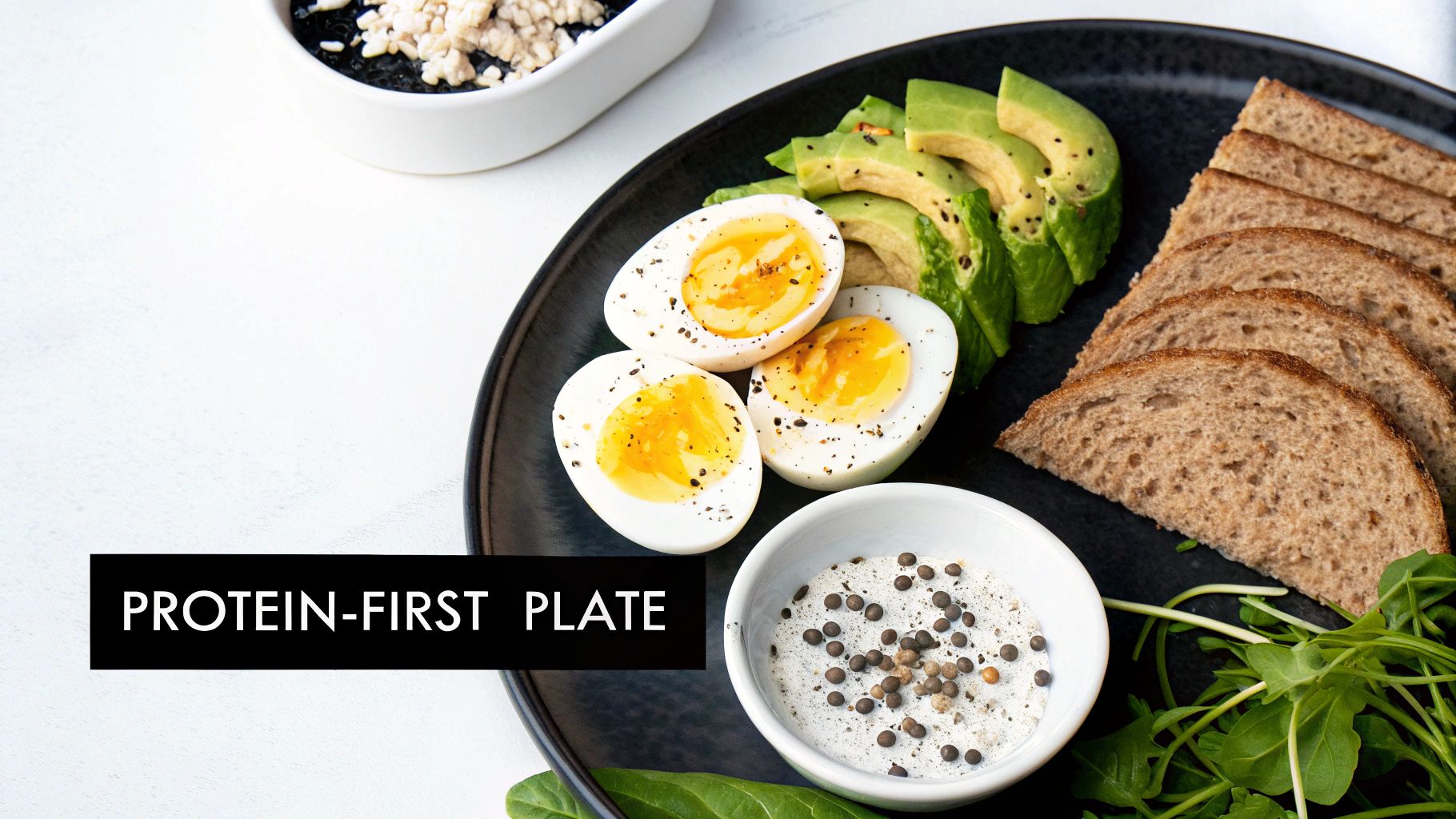
This isn't about some miserable, restrictive diet. It’s simply strategic eating. When you prioritize protein, fiber, and healthy fats, you create meals that digest slowly, preventing that dreaded blood sugar rollercoaster that's behind so many of our most intense cravings.
Adopt a Protein-First Mentality
If you take one thing away from this, let it be this: protein is your most powerful tool against cravings. It's the most satiating of all the macronutrients, which is just a fancy way of saying it keeps you feeling fuller for longer than carbs or fats do.
When you eat a protein-rich meal, your body releases hormones like Peptide YY (PYY) and GLP-1 that send powerful "I'm full" signals straight to your brain. At the same time, this process quiets down ghrelin, the pesky "hunger hormone" that drives you to raid the pantry.
A protein-first approach just means you make protein the star of every meal and snack. Don't start with the carbs; start with your protein source and build the rest of the plate around it.
This one simple shift can completely change your hunger patterns. Think about a typical carb-heavy breakfast, like a pastry or sugary cereal. It gives you a quick blood sugar spike, but then comes the inevitable crash, leaving you ravenous and craving more sugar by 10 a.m.
Now, compare that to a protein-packed breakfast that provides sustained energy.
- Instead of: A morning muffin and a sugary latte.
- Try: Two scrambled eggs with a side of avocado and a slice of whole-grain toast.
That swap gives you high-quality protein and healthy fats that stabilize your blood sugar and will actually keep you satisfied until lunchtime. To get this right, it helps to know your numbers; a protein intake calculator can help you figure out the ideal amount for your body and goals.
Building your plate with protein at its core is a non-negotiable strategy for craving control. It’s the difference between feeling satisfied for hours versus searching for a snack in 60 minutes.
The Power Duo: Fiber and Healthy Fats
While protein is the headliner, fiber and healthy fats are the essential supporting acts. They work right alongside protein to slow down digestion and add another layer of blood sugar stabilization. It’s this slow, steady release of energy that prevents the afternoon slump that has you reaching for a quick-fix candy bar.
Fiber, which you’ll find in vegetables, fruits, legumes, and whole grains, adds bulk to your meals without piling on the calories. It literally fills up your stomach and slows down how quickly sugar enters your bloodstream, which is key to avoiding those energy spikes and crashes.
Healthy fats from foods like avocados, nuts, seeds, and olive oil also play a big role in satiety. They take longer for your body to break down, helping you feel full and keeping those "eat now!" hormonal signals at bay.
Here are a few easy ways to get this power duo into your day:
- Boost Your Breakfast: Add a tablespoon of chia seeds or ground flaxseed to your morning yogurt or smoothie for a quick hit of fiber and omega-3 fats.
- Snack Smarter: Instead of just an apple, pair it with a handful of almonds or a spoonful of peanut butter. The protein and fat from the nuts will slow the digestion of the fruit's natural sugars.
- Upgrade Your Lunch: Toss a quarter of an avocado into your salad or sprinkle on some sunflower seeds for extra crunch, fiber, and healthy fats.
For anyone who’s active and fitness-focused, a savory, high-protein snack can be a secret weapon. A sweet protein bar can sometimes just make you want more sweets, but something like pea protein puffs can kill that craving for a crunchy, salty snack while delivering the protein you need to crush afternoon hunger. You can learn more about the best foods for appetite control in our detailed guide.
By consciously building every meal around these three key players—protein, fiber, and fats—you create a powerful buffer against cravings and set yourself up for a day of stable energy and mindful choices.
Lifestyle Habits That Secretly Drive Cravings
What happens outside the kitchen often has the biggest impact on what you crave inside it. You can build the most perfectly balanced plate, but if your daily habits are working against you, you'll still be fighting off those intense, hard-to-ignore urges for something sweet, salty, or fatty.
This isn't about willpower. It’s about biology. Things like poor sleep and chronic stress quietly disrupt your body's delicate hormonal balance, creating a biological state that makes junk food seem irresistible. Understanding these connections is the first step to getting your cravings under control for good.
The Sleep-Craving Connection
Think of a good night's sleep as a master reset button for your appetite hormones. When you skimp on it, even for one night, those hormones go haywire, setting you up for a day of intense cravings.
Here’s what’s happening behind the scenes:
- Ghrelin, the "I'm hungry" hormone, spikes. Your body starts screaming for food, even when it doesn't physically need it.
- Leptin, the "I'm full" hormone, plummets. This means you don't get that crucial signal telling your brain to stop eating, making it easy to overdo it.
This hormonal double-whammy doesn't just make you feel hungrier; it also changes what you crave. Research consistently shows a sleep-deprived brain is laser-focused on high-calorie, energy-dense foods. It’s a primal survival mechanism—your tired brain is desperately searching for the quickest possible fuel source.
"A bad night's sleep doesn't just make you tired; it biochemically primes you to crave junk food. Fixing your sleep is one of the most effective, yet overlooked, strategies for appetite control."
If you’re constantly fighting off cravings, start with a sleep audit. Hitting that 7-9 hour sweet spot isn't a luxury; it's a non-negotiable for anyone serious about managing their appetite.
How Stress Puts Your Cravings into Overdrive
Stress is another major saboteur. When you're constantly on edge, your body floods your system with the hormone cortisol. Back in the day, this was a lifesaver, gearing you up for a "fight or flight" situation by making quick energy available.
Today, that same response sends you straight to the pantry.
Elevated cortisol revs up your appetite and, more specifically, makes you crave foods high in fat and sugar. Your body thinks it's under threat and is demanding the most efficient fuel possible to cope. This is why "comfort food" feels so good in the moment—it delivers a temporary hit of dopamine that can soothe feelings of anxiety, creating a powerful feedback loop where you learn to eat your emotions.
Actionable Stress Management Techniques
You don't need a week-long yoga retreat to get your stress in check. Small, consistent actions can make a world of difference.
- Box Breathing: This is my go-to for immediate calm. Inhale for four counts, hold for four, exhale for four, and hold again for four. A few rounds of this can quiet your nervous system in under five minutes.
- Take a Quick Walk: Getting away from your desk for just 10-15 minutes, especially outside, can do wonders for lowering cortisol. It creates a physical and mental separation from whatever is stressing you out.
- Try a Mindful Moment: Instead of grabbing a snack, pause. Take five minutes to just notice your surroundings. What can you see, hear, or smell? This simple act grounds you in the present and helps the wave of stress pass without acting on it.
Weaving these small breaks into your day helps regulate your cortisol response, making you far less vulnerable to stress-eating.
Are You Hungry or Just Thirsty?
Finally, let's talk about one of the most common—and easily fixed—craving culprits: dehydration.
The signals for hunger and thirst both come from the hypothalamus, the same part of your brain. It's incredibly easy for your body to get its wires crossed. You feel a pang of hunger, but what your body is actually asking for is water.
Before you give in to a sudden craving, especially one that pops up between meals, try this simple test: drink a full 8-10 ounce glass of water and wait 15 minutes. I've seen this work for countless clients. More often than not, the craving just melts away.
Staying consistently hydrated is a proactive strategy. Keep a water bottle handy and sip throughout the day, rather than waiting until you're parched. This simple habit can dramatically cut down on unnecessary snacking and keep your energy levels far more stable.
Decoding Your Personal Craving Triggers
While balancing your meals and dialing in your lifestyle habits builds a strong foundation, the final piece of the puzzle is understanding your own mind. Cravings often have surprisingly little to do with actual hunger. They’re usually driven by your thoughts, emotions, and deeply ingrained routines.
The key is to become a detective of your own patterns. These triggers are rarely random; they're predictable responses to specific cues in your life. Once you can see them coming, you can choose a different path. The goal isn't to fight the urge with brute willpower, but to sidestep the trigger before it even gets a foothold.
Identify Your Unique Craving Categories
Most of the time, craving triggers fall into one of three main buckets. Figuring out which ones get you most often is the first step toward building a smart strategy.
- Environmental Triggers: These are cues in your surroundings that spark a craving out of nowhere. Think about the smell of popcorn at the movies, walking past your favorite bakery, or even just seeing a snack ad on TV.
- Emotional Triggers: This is when a feeling, not hunger, sends you to the kitchen. Stress is a massive one, but so are boredom, loneliness, sadness, and even happiness. The food offers a quick hit of comfort or a welcome distraction.
- Habitual Triggers: These cravings are just baked into your daily schedule. Do you always crave something crunchy while watching your favorite show at night? Or feel that powerful pull for a sugary snack at 3 PM, right on cue? That’s your brain running on autopilot.
If you know sugar is your main culprit, you can dig deeper with our guide on how to stop sugar cravings naturally.
Are You Truly Hungry or Is It Something Else?
Learning to tell the difference between physical hunger and an emotional craving is a critical skill. Real, physical hunger tends to build gradually and can be satisfied by a variety of foods. A craving, on the other hand, often feels sudden, urgent, and is almost always for one specific thing (like that bag of chips or a bar of chocolate).
This decision tree shows just how easily things like sleep deprivation, stress, and even simple thirst can disguise themselves as hunger.
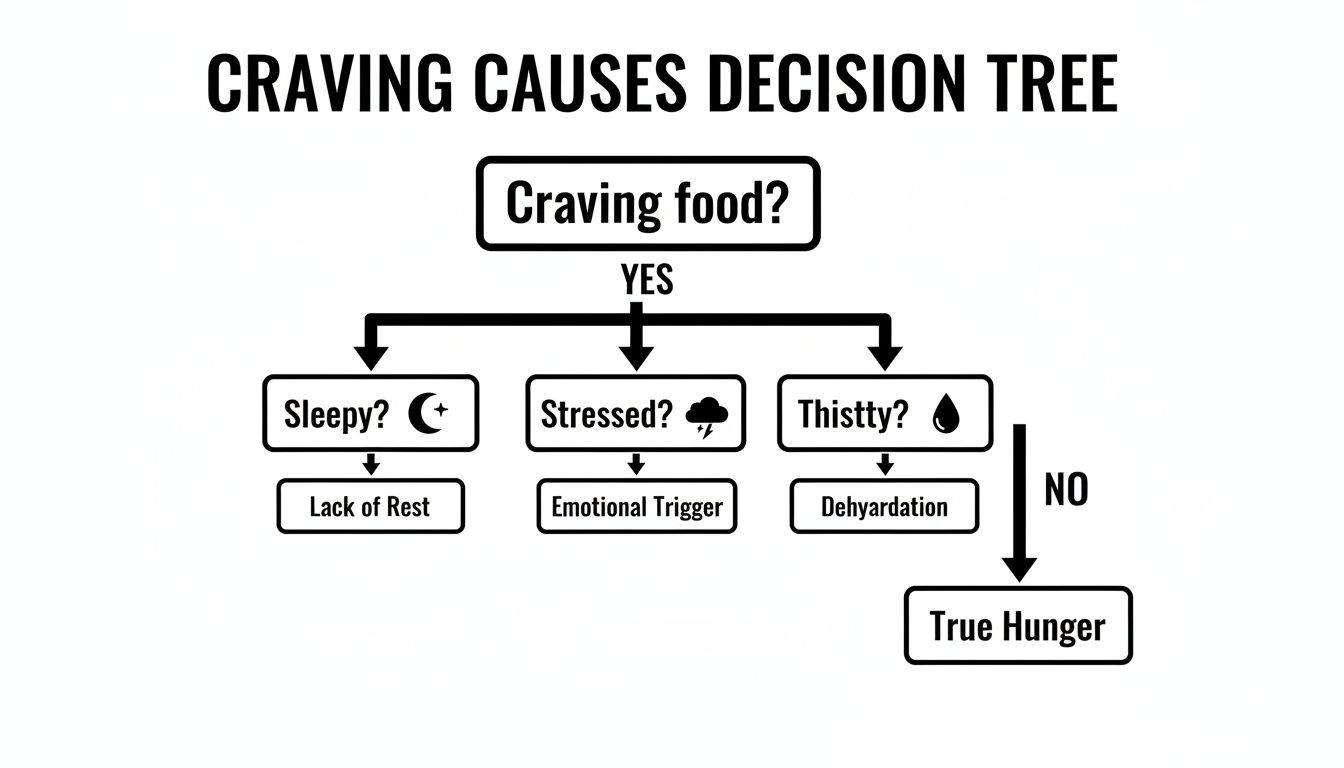
Before you act on a craving, it’s worth checking in with your body's other basic needs. You'd be surprised how often a big glass of water or a few deep breaths is all you really needed. For some, these patterns can feel incredibly powerful. In fact, recent research suggests that about one in eight Americans over 50 (13%) show signs of what could be considered food addiction.
Master the Art of the Urge Surf
When a craving hits hard, your first instinct is probably to either fight it or give in immediately. But there's a third, much more effective option: urge surfing. It's a mindfulness technique where you simply observe the craving without judgment and ride it like a wave until it passes.
Instead of battling the feeling, just acknowledge it. Notice where you feel it in your body. Observe the thoughts that pop into your head. By watching the craving with genuine curiosity, you create a little distance from it. You start to realize that you are not the craving; it's just a temporary sensation that will eventually fade on its own.
A craving is just a wave of sensation and thought. You can't stop the waves, but you can learn to surf. This practice puts you back in the driver's seat, proving that an urge doesn't have to lead to an action.
Create Your Proactive "If-Then" Plan
Once you’ve identified your main triggers, you can get proactive. This isn't about restriction; it's about having a better, pre-planned option ready to go before the craving even shows up. The easiest way to do this is with a simple "if-then" statement.
Think through your personal trigger points and write down a plan.
- If I feel bored and want to raid the pantry, then I will put on my favorite five-minute podcast.
- If I start craving sweets after dinner, then I will make myself a cup of herbal tea.
- If I feel stressed at work and want chips, then I will step outside for a two-minute walk and some fresh air.
Having these actions decided ahead of time removes the need for in-the-moment willpower. You just execute the plan. It's a conscious approach that helps rewire your brain's automatic responses, empowering you to make choices that actually align with your goals.
Your Practical Anti-Craving Toolkit
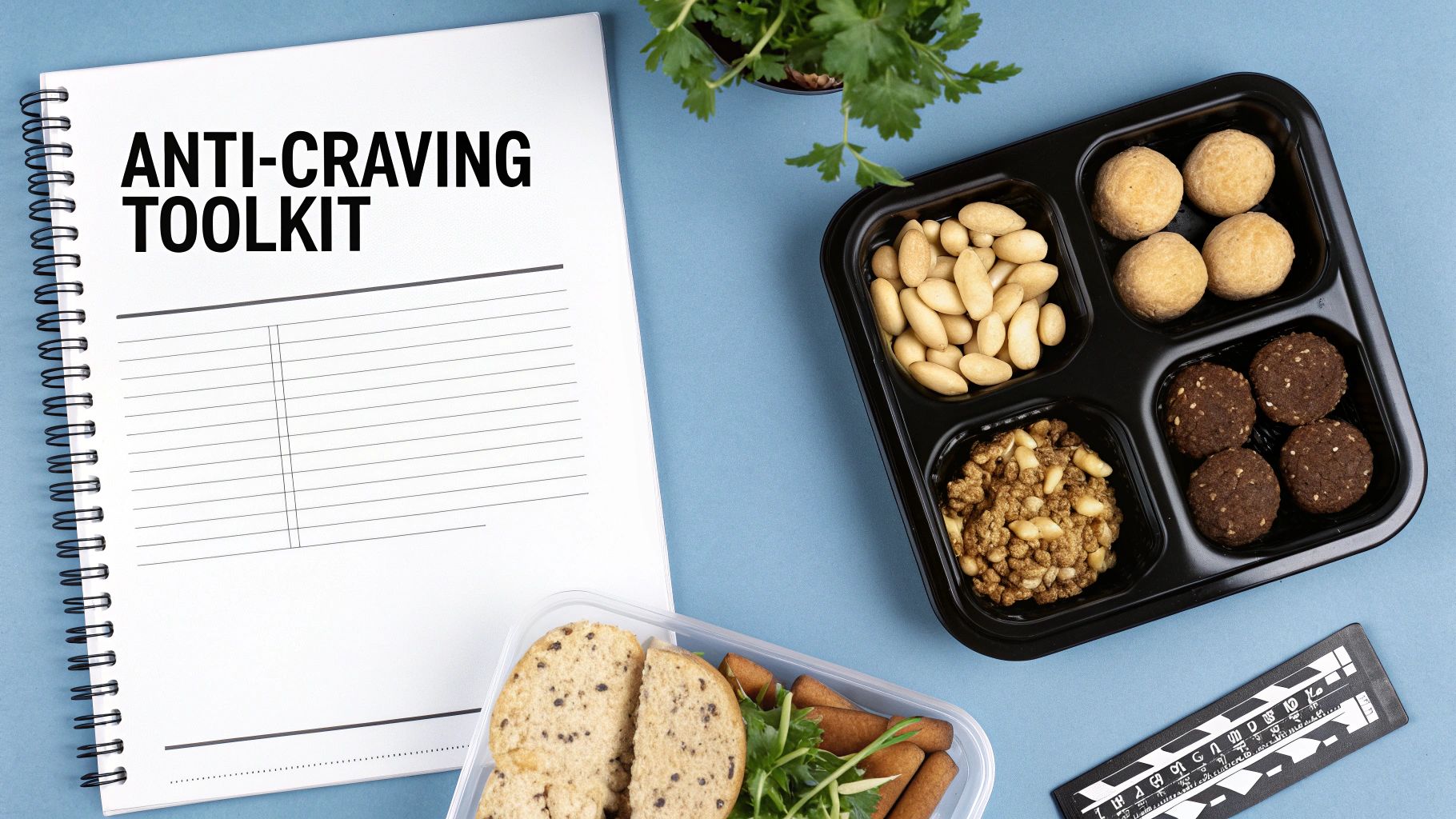
Understanding the why behind cravings is great, but let's be honest—real change happens when you have a plan. This is where we get practical. Think of this section as your hands-on toolkit, filled with actionable strategies you can put to work today. From meal ideas to smart food swaps, this is about making craving control feel less like a constant battle and more like a well-executed game plan.
A Sample Day of Craving-Proof Eating
This isn't some rigid diet you have to follow perfectly. It's a blueprint to show you what a day built around stable blood sugar and steady energy looks like. Notice how every meal and snack is intentionally designed with protein, fiber, and healthy fats to keep you full, satisfied, and in control.
- Breakfast (7:30 AM): Two scrambled eggs with a handful of spinach and a quarter of an avocado. Add a small bowl of berries on the side. This combo gives you high-quality protein and fats right from the start, which is your best defense against a mid-morning energy crash.
- Lunch (12:30 PM): A big salad loaded with grilled chicken, mixed greens, chickpeas, cucumber, and bell peppers, all tossed in a simple olive oil vinaigrette. The chicken brings the protein, while the veggies and chickpeas deliver a serious dose of fiber to keep you full all afternoon.
- Snack (3:30 PM): An apple sliced up with two tablespoons of almond butter. This is a classic for a reason—the protein and fat from the almond butter slow down the sugar absorption from the apple, preventing a spike and subsequent crash.
- Dinner (6:30 PM): Baked salmon with roasted broccoli and a side of quinoa. You're getting brain-boosting omega-3s and protein from the salmon, plus a ton of fiber and nutrients from the broccoli and quinoa.
This kind of meal structure is especially helpful for anyone on weight-management medications like GLP-1 agonists. The focus on high-protein, high-fiber meals works with the medication to amplify those feelings of fullness and satisfaction.
Smart Swaps to Satisfy and Succeed
Sometimes a craving isn't for a specific food but for a certain texture or taste—salty, crunchy, sweet, creamy. This is where smart swaps come in. Having a healthier alternative ready to go can satisfy that immediate urge without derailing your progress. It's about upgrading your choice, not depriving yourself.
You don't eliminate cravings by fighting them; you outsmart them by having a better option locked and loaded. A smart swap satisfies the immediate urge while nourishing your long-term goals.
Here’s a look at some common cravings and the simple swaps you can make to stay on track.
Smart Swaps to Beat Cravings
| Instead Of This... | Try This... | Why It Works Better |
|---|---|---|
| Potato Chips | Savory Pea Protein Puffs | Delivers the same satisfying crunch and salty flavor but with 15g+ of protein to crush hunger, not just temporarily satisfy a craving. |
| Ice Cream | Greek Yogurt with Berries | Provides a creamy, sweet texture with a significant protein boost that stabilizes blood sugar, unlike the sugar spike from ice cream. |
| Candy Bar | A Handful of Almonds & 2 Dark Chocolate Squares | Gives you a touch of sweetness while the protein and healthy fats from the almonds provide sustained energy and satiety. |
| Sugary Soda | Sparkling Water with a Squeeze of Lime & Mint | Satisfies the desire for carbonation and flavor without any added sugar, preventing a blood sugar rollercoaster. |
Making these small upgrades consistently can have a massive impact over time.
Protein Strategies for Plant-Based Eaters
If you're plant-based, getting enough protein is the secret weapon against cravings. Without a solid protein anchor at each meal, it's easy to fall into a cycle of blood sugar spikes and crashes, which almost always leads to intense cravings for sugary, quick-energy carbs.
The key is to be strategic and make protein-dense plant foods the star of every plate.
- Make Legumes Your Foundation: Lentils, chickpeas, black beans, and edamame are non-negotiable. They should be staples in your kitchen. Toss them into salads, blend them into soups, or make them the base for a hearty curry.
- Embrace Tofu and Tempeh: These soy-based powerhouses are incredibly versatile. You can marinate and bake tofu until it's crispy for a salad topper, or crumble tempeh into a pasta sauce for a "meaty" texture and a major protein boost.
- Get Smart with Snacks: This is where many people slip up. Instead of just grabbing a piece of fruit, pair it with a handful of nuts or seeds. For that crunchy, salty craving, a plant-based option like pea protein puffs can be a game-changer, offering a convenient way to get 30g+ of protein per bag.
By weaving these high-protein plant sources into your day, you create that same craving-crushing, blood-sugar-stabilizing effect that keeps you feeling energized and in control.
Tying It All Together for Lasting Change
At the end of the day, getting a handle on food cravings isn't about finding a magic bullet. It's about building a strong, sustainable foundation, one habit at a time.
Think of it like this: all the strategies we've covered work as a team. Eating enough protein and fiber keeps your blood sugar from going on a rollercoaster ride. Getting enough sleep and managing stress helps get your appetite hormones, ghrelin and leptin, back on your side. When you combine those powerful physiological shifts with staying hydrated and knowing your personal triggers, you've created a system that works for you, not against you.
The most important thing to remember is that this is all about progress, not perfection. It’s the small, consistent steps that add up to massive results over time.
What to Do Next
Simply knowing what to do is only half the battle. The other half is being prepared. Having a go-to healthy snack ready when a craving hits can make all the difference. For more ideas on what to eat, check out our guide on how to stay full longer.
The goal isn’t to erase cravings from your life completely—that’s unrealistic. The real win is taking away their power and reducing how often they show up. You gain control by nourishing your body so well that cravings no longer run the show.
So, here’s your final task: Pick just one strategy from this guide. Just one. Commit to trying it this week. That’s it. That’s how real, lasting change gets started.
Your Questions, Answered
Let's tackle some of the common questions that pop up when you start getting serious about managing food cravings. It's totally normal to have these thoughts, so let's get you some clear, straightforward answers.
How Long Until My Cravings Actually Go Away?
There’s no magic switch, but most people feel a real difference in both the intensity and frequency of their cravings within one to two weeks of making consistent changes. This is especially true once you start front-loading your meals with protein and getting better sleep.
Remember, consistency is everything here. These patterns took time to build, and they'll take a little time to unwind. Focus on making good choices one day at a time, and you'll be surprised how quickly you start to feel more in control.
The goal isn't perfection overnight. It's progress. If a craving feels a little less urgent this week compared to last, that's a massive win. It’s proof that what you're doing is working.
Do I Have to Give Up My Favorite Foods Forever?
Not at all. In fact, thinking that way usually backfires. This isn't about restriction; it's about empowerment. The whole point is to take away the power cravings have over you, not to banish foods you genuinely enjoy.
When you're consistently nourished, hydrated, and well-rested, your blood sugar stays stable. From that place of control, you can choose to have a treat and actually enjoy it without feeling like you've opened the floodgates to a binge. You're in the driver's seat, not the craving.
Why Am I Always Craving Salty Stuff Instead of Sugar?
Sugar cravings seem to get all the press, but that intense urge for something salty and crunchy is incredibly common. It's often driven by things that have nothing to do with true hunger.
- You might just be thirsty. Dehydration can trigger a desire for sodium to help your body rebalance its fluids. Before you tear open a bag of chips, try drinking a big glass of water and see how you feel in 15 minutes.
- It could be pure habit. Is there anything more automatic than grabbing a crunchy snack while watching TV? Sometimes the craving is for the act of snacking, not the food itself.
- Stress is a major culprit. Just like it does with sweets, the stress hormone cortisol can send you searching for high-fat, salty foods for a quick hit of comfort.
Instead of reaching for empty-calorie snacks, try a savory, high-protein option. It'll satisfy that desire for salt and crunch while actually helping you feel full and stable.
Ready to conquer your savory cravings with a smarter snack? Gym Snack delivers the satisfying crunch you want with over 30g of plant-based protein per bag to keep you full and energized. Try our delicious Cheddar Cheeze flavors and feel the difference at https://gymsnack.com.