

Ever grab a protein bar, thinking you’re doing something good for your body, only to end up feeling bloated and gassy an hour later? If that sounds familiar, you’re definitely not alone. The hunt for no dairy protein bars is on, and for a good reason. More and more of us are realizing that whey protein, the go-to ingredient in countless snacks, might be the source of our digestive woes.
This isn't just some fleeting health trend. It’s a conscious shift toward finding smarter fuel that actually works with our bodies, not against them.
Why Everyone’s Talking About Dairy-Free Protein Bars
For what felt like forever, whey protein was the undisputed king in the fitness world, hailed for its muscle-building power. But here’s the thing: a huge number of people simply can’t digest dairy all that well. That leads to bloating, gas, and inflammation—pretty much the exact opposite of what you want when you're trying to feel strong and perform at your best.
The growing demand for no dairy protein bars is a direct answer to this problem. People are tired of the trade-off. They want high-quality protein, but without the gut-wrenching side effects. It’s less about demonizing dairy and more about finding a fuel source that genuinely supports your goals from the inside out.
What's the Deal with Traditional Whey Bars?
Whey and casein, the two main proteins in milk, can be tough for many bodies to break down. This difficulty can completely derail your health and fitness efforts.
The main issues usually boil down to a few things:
- Lactose Intolerance: A lot of adults don't produce enough lactase, the enzyme that breaks down milk sugar (lactose). The result? Major digestive drama.
- Dairy Sensitivity: Even if you’re not technically lactose intolerant, you might still react to the milk proteins themselves, which can trigger inflammation and an unhappy gut.
- The "Heavy" Feeling: Even people without a clear intolerance often report feeling weighed down or bloated after a whey bar, which is the last thing you need before a workout or during a busy day.
Switching to a dairy-free option is such a simple fix. You sidestep all these common triggers, letting your body focus on what it's supposed to do: absorb nutrients and repair muscle, instead of fighting off digestive stress. It's a small change that can make a huge difference in how you feel every day.
The Plant-Powered Revolution
This collective search for better-feeling fuel has sparked some incredible innovation in the plant-based space. The global protein bar market is massive, and it’s the plant-based options that are really driving the growth. Health-conscious people want clean ingredients, better digestion, and more sustainable choices.
In fact, the market for plant-based bars is set to grow at a staggering 8.1% CAGR through 2030. That number tells a story: consumers are voting with their wallets for effective, dairy-free fuel. If you're curious, you can explore more about these market trends and their drivers.
What's Actually In A No-Dairy Protein Bar?
So, you’ve decided to ditch the whey and casein. Great choice. But what are you getting instead? The world of plant-based protein is surprisingly deep, and each source brings its own unique strengths to the table. Think of it like building a championship team—you need different players with specialized skills to win.
The real goal here is to find a protein source that not only fuels your muscles but also plays nice with your digestive system. Getting familiar with these plant-based powerhouses is the key to finding your perfect bar.
A Quick Refresher On Muscle-Building Blocks
Every protein, whether from a cow or a pea, is made of smaller components called amino acids. Your body uses a total of 20 different amino acids to build and repair everything from muscle tissue to hair and nails. Out of those 20, nine are considered "essential" because your body can't produce them on its own—you have to get them from what you eat.
A protein is called "complete" when it contains all nine of these essential amino acids in the right proportions. It’s like having a full set of tools for a big construction project. If you're missing a hammer or a screwdriver (an essential amino acid), the whole job slows down.
While most animal proteins are complete by themselves, plant proteins sometimes need to work together. That's why you'll often see smart blends in no dairy protein bars, ensuring you get the full toolkit for muscle recovery without any compromises.
The Heavy Hitters Of The Plant Protein World
Let's pull back the curtain and look at the most common ingredients you'll find in high-quality, dairy-free bars. Each one offers something a little different.
-
Pea Protein: This is the current MVP of the plant-based world, and for good reason. Sourced from yellow split peas, it's packed with iron and delivers a serious dose of Branched-Chain Amino Acids (BCAAs), which are absolute gold for muscle growth. Better yet, it’s hypoallergenic, making it a safe bet for just about everyone.
-
Brown Rice Protein: You'll often see this one paired up with pea protein. It's the perfect sidekick because it fills in the amino acid gaps that pea protein has, creating a powerful, complete protein when they're combined. It's also known for being incredibly easy on the gut.
-
Hemp Protein: Don't sleep on hemp. Derived from hemp seeds, this protein is a true nutritional workhorse. Not only is it a complete protein, but it’s also loaded with healthy omega-3 and omega-6 fats and a good dose of fiber to keep your digestion on track. It adds a pleasant, slightly nutty flavor to the mix.
-
Soy Protein: As one of the original plant proteins, soy has a long track record and is a proven complete protein. While it’s certainly effective for building muscle, it’s also a common allergen. To make their products accessible to more people, many modern no dairy protein bars are now choosing soy-free formulas.
This flowchart really simplifies the journey—showing how you can sidestep common issues with whey and still crush your fitness goals using plant-based alternatives.
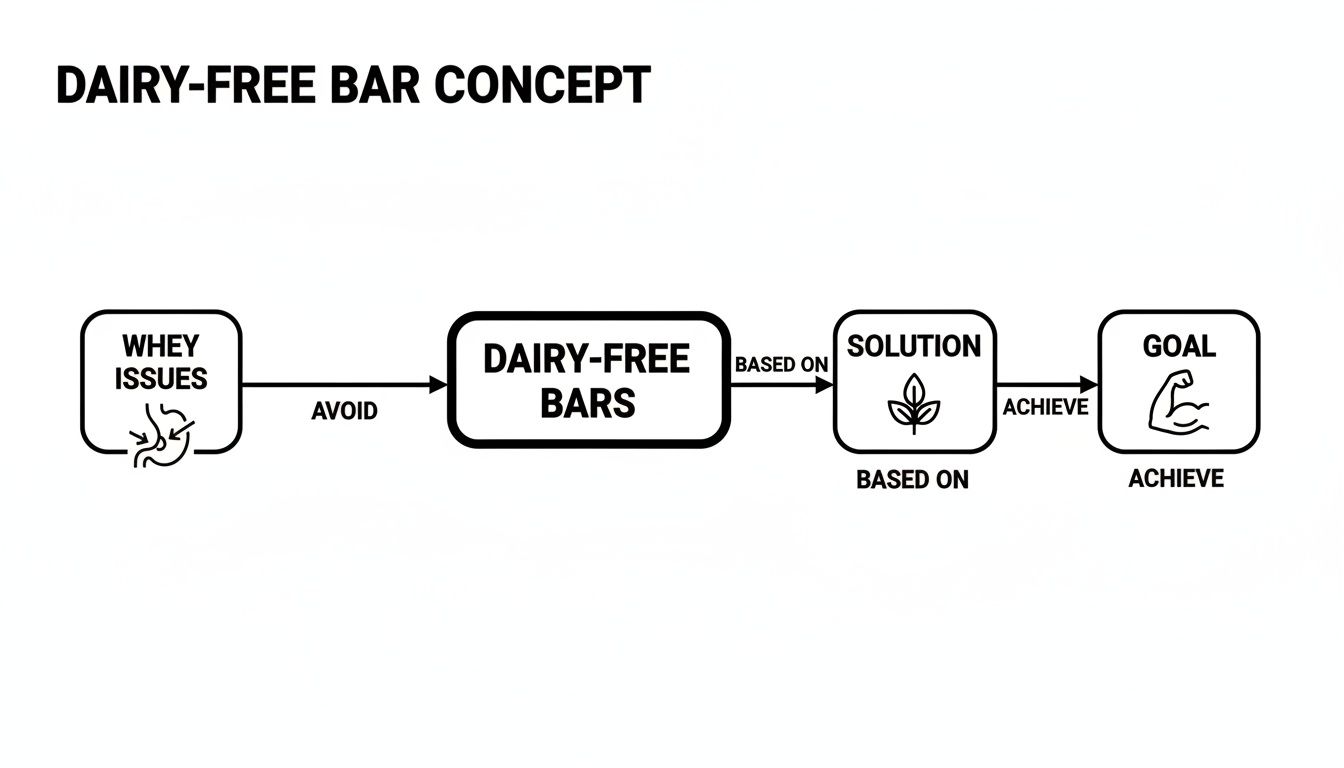
It’s easy to see why so many people are making the switch. The path from digestive discomfort to a high-performance solution is clear when you use thoughtfully formulated plant proteins.
A Quick Comparison Of Plant-Based Proteins
To make it even clearer, here's a simple table breaking down the key players you'll find in no dairy protein bars. This helps you see at-a-glance what each source brings to the table.
| Protein Source | Key Benefit | Amino Acid Profile | Common Allergens |
|---|---|---|---|
| Pea Protein | High in BCAAs, hypoallergenic | Nearly complete, low in methionine | None |
| Brown Rice Protein | Gentle on digestion, hypoallergenic | Good profile, low in lysine | None |
| Hemp Protein | Complete protein with omegas and fiber | Complete | None |
| Soy Protein | Complete protein, well-researched | Complete | Soy |
This breakdown shows why combining sources like pea and brown rice is such a popular and effective strategy for creating a well-rounded, powerful protein bar.
Why Blends Are The Smart Choice
While a single plant protein source can be good, a strategic blend is almost always better. When you combine proteins like pea and rice, you get a synergistic effect. The resulting amino acid profile is just as potent for building muscle as whey, but you get to skip all the dairy-related bloating and discomfort. Digging into the best plant protein for muscle gain can give you an even deeper understanding of how these combinations work.
This blending approach guarantees your body has everything it needs to perform at its best. It's no surprise that the demand for dairy-free options is exploding. With over 70 million Americans reporting some form of dairy sensitivity, brands are racing to create innovative, pea protein-based bars that deliver 15g+ of protein per serving.
A well-formulated plant protein blend delivers the complete amino acid toolkit your muscles need for repair and growth. It offers all the benefits of traditional protein sources while being significantly easier on your digestive system.
As you explore no-dairy protein bars, it's also helpful to get familiar with the wider world of dairy-free options, like the different plant-based milk substitutes. The more you understand the landscape, the more empowered you'll be to make choices that truly support your health and fitness goals.
How to Read Nutrition Labels Like a Pro
The front of a protein bar box is prime real estate. It's plastered with flashy claims like "high protein," "low sugar," and "plant-based fuel." But the real story? That’s always on the back, tucked away in the nutrition facts panel.
Learning to scan and understand that little white box is the most important skill you can develop for choosing the best no dairy protein bars. This isn't about becoming a nutritionist overnight. It's about having a simple, repeatable system to see past the hype and evaluate what you're actually putting into your body.
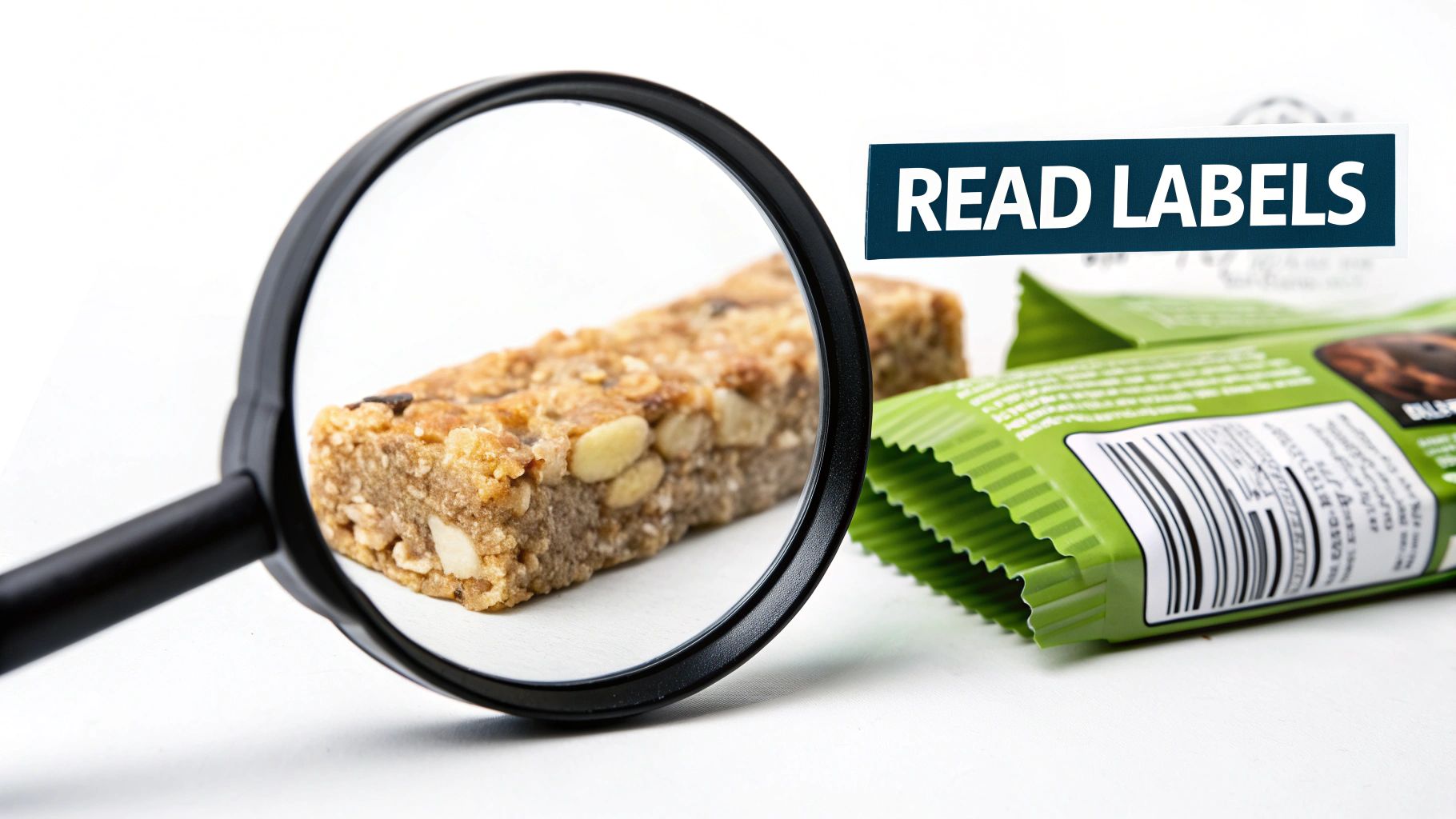
Think of it as a bit of detective work. You’re looking past the appealing wrapper to get to the cold, hard facts. The goal is to make choices based on data, not just clever marketing.
First, Nail Down the Serving Size and Protein
Before you look at anything else, find the serving size. Is the entire bar one serving? Or are the numbers based on just half of it? This is a classic trick that can make a bar's stats look much better than they actually are.
Once you know what you're working with, find the protein. For a bar to do its job—whether that's helping you recover after a workout or keeping you full between meals—you want to see at least 15-20 grams of protein. Anything less just won't cut it for triggering muscle repair or keeping hunger at bay for very long.
Second, Hunt for Hidden Sugars
Okay, now jump straight to the sugar content. This is where so many "healthy" bars completely fall apart. You need to look at two lines specifically: "Total Sugars" and "Includes Added Sugars."
- Total Sugars: This number includes everything—sugars from natural sources like fruit and the stuff added in later.
- Added Sugars: This is the one to watch like a hawk. These are the syrups and refined sugars thrown in during processing that bring zero nutritional value and often lead to an energy crash.
A good rule of thumb? Aim for a bar with less than 5 grams of added sugar. It's shocking, but many popular bars pack in over 15 grams, which is more than you'd find in some donuts. Also, keep an eye out for sugar alcohols like maltitol or erythritol, which can cause serious digestive upset for a lot of people.
Third, Scrutinize the Fat Sources
Not all fats are bad; in fact, some are essential. The "Total Fat" number itself isn't nearly as important as where that fat is coming from. Ideally, you want to see healthy fats from whole-food sources like nuts, seeds, or avocado oil.
What you really want to avoid are seed oils. Scan the ingredients list for things like:
- Sunflower oil
- Canola oil
- Soybean oil
- Safflower oil
These oils are typically highly processed and can be inflammatory for some people. A truly clean no dairy protein bar will use better fats and will often be proud to state it's free from seed oils. While you're there, also glance at the saturated fat—keeping that number low is always a good move for your heart health.
Finally, Check the Fiber Content
Last but not least, check the fiber. Fiber is a powerhouse for gut health, blood sugar control, and feeling full. A high-quality protein bar should also be a good source of fiber, which helps slow down digestion and provides more sustained, steady energy.
Look for a bar that offers at least 5-7 grams of fiber. This ensures it’s more than just a protein delivery vehicle; it's a genuinely well-rounded snack that supports your overall health.
This simple four-step process—protein, sugar, fat, and fiber—is your new toolkit. It turns a confusing label into a clear roadmap. If you want to dive even deeper, you can learn more about how to read nutrition labels and apply these skills to everything you eat.
The Gut Health and Performance Connection
Peak performance isn't just built in the gym with heavy weights and cardio. It actually starts somewhere most of us overlook: our gut. Think of your digestive system as your body's engine room. When it's running smoothly, everything else—from your energy levels to how quickly your muscles recover—just works better.
But when you fuel your body with something it struggles to break down, like dairy for a lot of people, it throws a wrench in the works. This isn't just about feeling a little uncomfortable. It's about actively sabotaging your physical potential. That bloating, cramping, and inflammation? Those are signals your body is wasting precious energy on damage control instead of using it to power your workout or repair your muscles.
Why Dairy Can Derail Your Goals
For a huge slice of the population, dairy is a primary cause of digestive trouble. The two main culprits are lactose intolerance and a more general dairy sensitivity. Figuring out the difference makes it clear why switching to no dairy protein bars can be such a game-changer.
-
Lactose Intolerance: This is incredibly common. It happens when your body can't produce enough lactase, the enzyme that breaks down lactose (the sugar in milk). When lactose goes undigested, it ferments in your gut and leads to gas, bloating, and that all-around awful feeling. In fact, an estimated 68% of the world's population has trouble absorbing lactose.
-
Dairy Sensitivity: This is a bit different. It's a broader reaction where your immune system doesn't get along with the proteins in milk, like casein and whey. The result can be inflammation, brain fog, skin problems, or just a general sense of sluggishness that tanks your performance and slows down recovery.
If you deal with either of these, that standard whey protein bar is working against you.
Your gut microbiome—the trillions of bacteria living in your digestive tract—is the foundation of your health. Choosing easily digestible, dairy-free protein sources helps foster a healthy environment for beneficial bacteria, leading to better nutrient absorption, reduced inflammation, and more consistent energy.
Fueling a Healthier Gut Microbiome
A happy gut isn't just about dodging discomfort. It’s about unlocking your body's ability to absorb nutrients and recover like a pro. When your digestive system is calm and working as it should, it can efficiently break down food and shuttle vital amino acids, vitamins, and minerals to your muscles right when they need them.
Opting for a well-formulated, no dairy protein bar does more than just help you avoid potential allergens. It can actively contribute to a healthier gut. Many plant-based proteins are also a good source of prebiotic fibers, which are basically food for your good gut bacteria. This partnership strengthens your immune system and improves your overall metabolic health.
Ultimately, making this switch is about working with your body, not against it. You’re removing a major source of stress and inflammation, freeing up your system to focus on what you want it to do: build strength, endurance, and resilience. It's a simple change that can make a massive difference in how you feel, not just in the gym, but all day long. A calmer gut means sharper focus, steadier energy, and a body that's truly ready to perform.
Supporting Satiety and Weight Management Goals
While protein is famous for repairing muscles, the right no dairy protein bar plays another massive role in your health journey: keeping you full and supporting your weight management goals. This is about more than just counting calories. It’s about understanding how your food choices work with your body’s hunger signals, not against them.
A well-made, high-protein snack can be your secret weapon against cravings. It helps you avoid that ravenous, out-of-control hunger that leads to overeating by tapping into the hormones that tell your brain when you’re full.
The Science of Feeling Full
Ever notice how a donut leaves you crashing and hungry an hour later, but a protein-packed snack keeps you going for hours? That’s not just a feeling—it’s science. High-protein foods are incredibly effective at increasing satiety, which is the feeling of being satisfied and full after you eat.
This happens because protein is a pro at stimulating specific gut hormones:
- Glucagon-like peptide-1 (GLP-1): This hormone is a powerhouse. It slows down digestion and sends strong "I'm full" messages to your brain.
- Peptide YY (PYY): Another key player released after eating that dials down your appetite.
When you eat a protein-rich snack, you're essentially flipping the switches in your body to turn down hunger and ramp up satisfaction. It makes sticking to your nutrition plan feel a whole lot easier.
Why Savory Beats Sweet for Appetite Control
Let’s be honest, many protein bars are just candy bars with a health halo. They're loaded with sugar and sweeteners that can light up your brain's reward centers and make you crave even more sweet stuff. It’s a vicious cycle that can completely derail your goals.
A savory snack hits different. It satisfies a deeper, more substantial craving, signaling to your brain that you've had a real, satisfying mini-meal, not just a sugary treat. That crunch and cheesy flavor can feel way more fulfilling than another dose of sweetness.
Choosing a savory, high-protein snack like Gym Snack helps you sidestep the "craving cascade" that sweet bars often trigger. It’s a smarter, more strategic move for managing your appetite and cutting back on calories without feeling like you're missing out.
Opting for savory also helps reset your palate, giving you a much-needed psychological break from the constant pull of sugary foods.
A Practical Tool for All-Day Energy
A no dairy protein bar is a simple, practical way to keep your hunger and energy levels stable throughout the day. The blend of protein and fiber slows down how your body absorbs carbs, which helps you avoid those nasty blood sugar spikes and crashes that leave you feeling tired and reaching for more snacks.
Think about how you can use it strategically:
- Beat the Mid-Afternoon Slump: Instead of grabbing a sugary coffee or a bag of chips, a protein bar gives you sustained energy to power through until dinner.
- Manage Pre-Dinner Hunger: If you’re usually starving by dinnertime and end up overeating, a protein snack an hour or two beforehand can help you make calmer, more mindful choices at the table.
- Fuel for a Busy Life: When you're constantly on the move, it’s easy to make poor food choices. Keeping a clean, high-protein bar in your bag means you’re always prepared with a healthy option that supports your goals, rather than sabotaging them.
Ultimately, using a savory, no dairy protein bar for satiety is about playing offense with your hunger. You're giving your body the steady fuel it needs to feel full, energized, and in control—making it a powerful ally on your fitness and weight management journey.
Choosing the Right No Dairy Protein Bar

Walking down the snack aisle can feel like a pop quiz you didn't study for. With dozens of bars all screaming "healthy" from their shiny wrappers, how do you pick the right one? The secret isn't just grabbing the one with the highest protein number; it's about matching the bar to what your body needs in that exact moment.
Think about it: the fuel you need to power through a workout is totally different from what you need to repair your muscles afterward. One is about quick energy, the other is all about recovery.
Matching Your Bar to Your Goal
Before you even look at the options, ask yourself a simple question: "What am I eating this for?" Pinpointing your goal makes the choice crystal clear.
-
For Pre-Workout Energy: You're looking for sustained fuel, not a brick in your stomach. A bar with a good balance of protein and easily digestible carbs is perfect. Aim for around 10-15g of protein paired with a bit more in carbs to get you going without feeling sluggish.
-
For Post-Workout Recovery: Now, protein is the main event. Your muscles are crying out for repair, and a high-protein bar is the perfect first responder. Look for 20g or more of protein, ideally from a complete source like a pea and rice protein blend, to kickstart that muscle-building process.
-
For All-Day Satiety: To keep hunger at bay and avoid that 3 p.m. slump, you need a team effort from protein, fiber, and healthy fats. This trio slows down digestion and keeps your blood sugar steady. A bar with at least 15g of protein and 5g of fiber will do the trick beautifully.
Your Quick-Reference Shopping Checklist
Keep this simple checklist in your back pocket (or on your phone) next time you're at the store. It cuts through the noise and helps you spot a truly high-quality bar.
The goal is to find a bar that’s more than a candy bar in disguise. You want clean, whole-food ingredients that provide balanced nutrition and actually make you feel good.
- Protein Power: Does it pack at least 15g of protein?
- Sugar Check: Is it low in added sugar, with fewer than 5g?
- Clean Fats: Is it free from inflammatory seed oils like canola or soybean oil?
- Fiber First: Does it have a solid 5g or more of dietary fiber?
- Simple Ingredients: Can you actually recognize and pronounce everything on the label?
Now you're equipped to walk into any store and confidently pick a bar that fits your health goals and lifestyle. Whether you’re an athlete pushing your limits or a busy professional just trying to eat better, you know what to look for.
For more great ideas, check out our complete guide to the best dairy-free protein snacks to keep your kitchen stocked with smart choices.
Frequently Asked Questions
Stepping into the world of no dairy protein bars can feel a bit like learning a new language, especially if you've only ever known whey. It's totally normal to have questions, so let's clear up some of the most common ones we hear.
Are Plant-Based Protein Bars As Effective As Whey?
Absolutely. A high-quality plant-based protein bar is more than capable of holding its own against whey for muscle building and recovery. The secret lies in one key concept: a complete amino acid profile. Your muscles can't rebuild properly without all nine essential amino acids.
The best dairy-free bars get this right by blending different plant proteins, like pea and rice. Think of it like a puzzle—one protein source might be missing a piece, but combining it with another completes the picture. This smart blending ensures you get the full spectrum your body needs, making them a fantastic alternative to whey without sacrificing results.
Can I Eat No Dairy Protein Bars Every Day?
You certainly can, but it's wise to think of them as a convenient part of a bigger picture, not the whole meal. Having a bar each day is a great way to nail your protein targets, especially when you're short on time or need a quick post-workout refuel.
That said, variety is the spice of life—and the foundation of good health. Your body thrives on the wide range of vitamins, minerals, and nutrients found in whole foods like fruits, vegetables, and other lean proteins.
A protein bar is like a reliable pinch hitter on your nutrition team. It's there to step up when you need a boost, but it shouldn't be your starting lineup every single day. Balance is always the goal.
Do All Dairy-Free Protein Bars Taste Chalky?
Thankfully, no. That reputation is a leftover from the early days of plant-based foods. Food science has come a long way since then, and the gritty, chalky textures of the past are pretty much ancient history for any quality brand.
Today's top-tier no dairy protein bars are a completely different ballgame. Companies now use sophisticated protein isolation methods and carefully chosen ingredients to create bars that are smooth and genuinely delicious. Whether you're craving something sweet and chocolatey or savory and cheesy, there's an option out there with a texture and taste that'll make you forget all about dairy. You no longer have to choke something down just to get clean, plant-based fuel.
Ready to try a savory, crunchy, and genuinely satisfying protein snack that leaves the dairy, soy, and chalky texture behind? Gym Snack delivers chef-inspired, plant-based protein snacks with 15g of clean pea protein in every serving. Find your new go-to fuel at https://gymsnack.com.