

A standard 2-tablespoon serving of peanut butter contains about 7 to 8 grams of protein. That sounds solid until you look at what comes with it, because peanut butter isn't a protein-first food for anyone trying to hit serious fitness, weight-loss, or GLP-1-driven nutrition goals.
That's the part most advice skips. People hear “peanut butter has protein” and treat it like a shortcut for recovery, satiety, or muscle support. In practice, peanut butter works better as a flavorful fat source with some protein attached than as a primary protein food. If you're tracking macros, trying to stay full on fewer calories, or building meals around protein targets, that distinction matters.
Is Peanut Butter Really a High Protein Food
Peanut butter has enough protein to earn a healthy reputation. It does not have the macro profile of a protein-dense food.
A typical serving gives you 7 to 8 grams of protein per 2 tablespoons, but peanut butter's overall macro split is still dominated by fat. One analysis cited in this article notes that peanut butter's macronutrient ratio is about 72% fat and 14% protein according to Healthline's peanut butter nutrition breakdown. That changes how you should use it.
Why the label is misleading
Calling peanut butter “high protein” isn't exactly wrong. It's incomplete.
For a casual eater, 7 to 8 grams might feel meaningful. For someone trying to organize meals around recovery, muscle retention, or appetite control, the better question is whether the food gives enough protein relative to the calories and fat that come with it. Peanut butter often loses on that test.
Practical rule: If a food is marketed to you as protein, check whether protein is the main macro or just one of them.
What works and what doesn't
Peanut butter works well when you use it for:
- Flavor and satisfaction: It makes simple meals feel more complete.
- Calorie support: It helps people who need energy-dense foods.
- Plant-based variety: It adds some protein to meals that otherwise lack it.
It doesn't work well when you rely on it for:
- Post-workout protein targets: The protein adds up too slowly.
- Low-calorie dieting: The calorie cost climbs fast.
- Protein-first snacking: Better options exist.
That's why the important conversation around peanut butter grams of protein shouldn't stop at the number on the spoon. The smarter question is whether those grams arrive in a form that fits your goal.
The Exact Protein Count in Peanut Butter
The headline number is smaller than the food's reputation suggests.
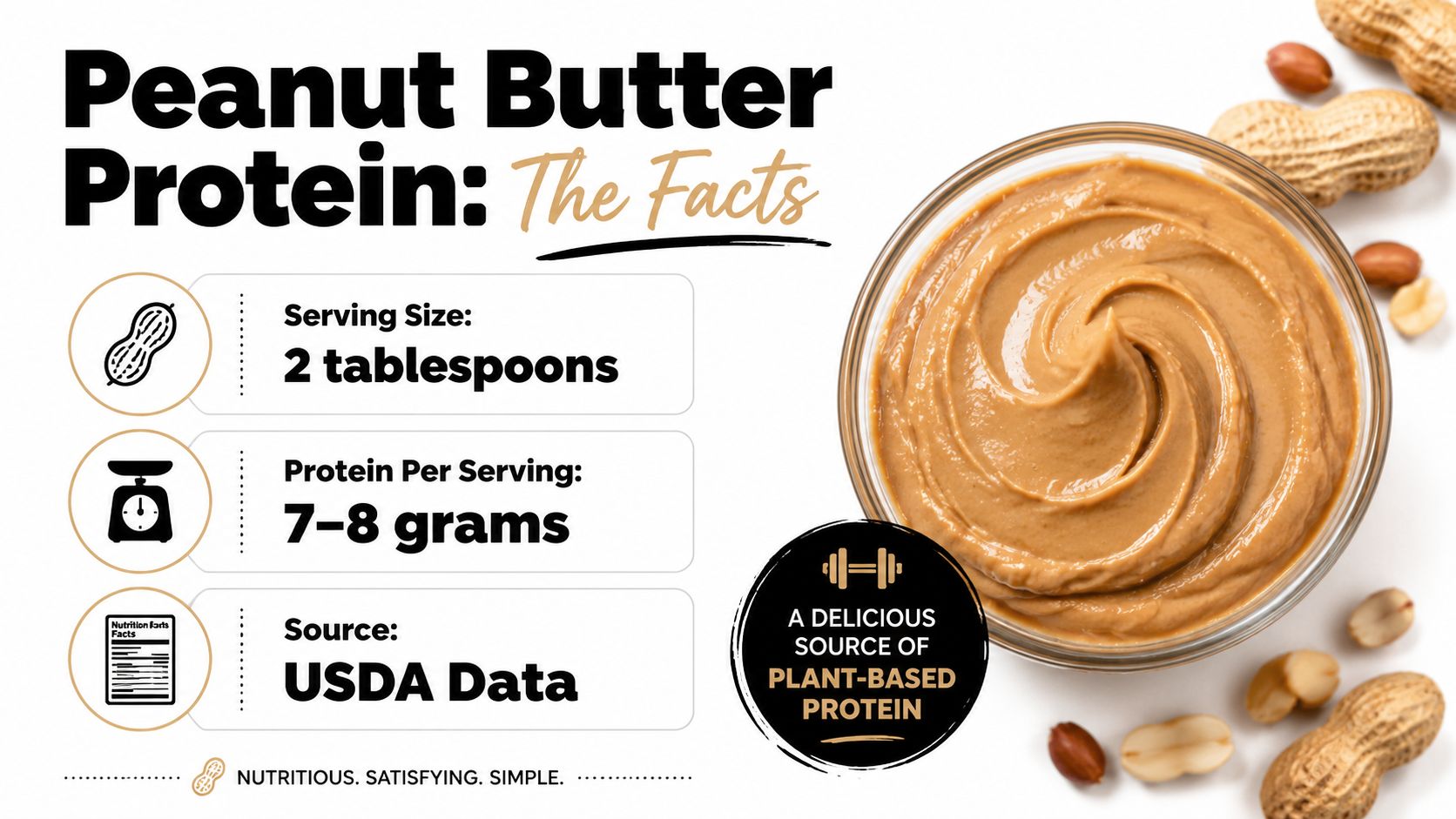
A standard serving of peanut butter is 2 tablespoons, or about 32 grams, and that serving provides 7 to 8 grams of protein. One tablespoon, or about 16 grams, provides 3.5 to 4 grams. Those serving figures come from Vitals Hub's peanut butter nutrition entry.
By tablespoon and by serving
For day-to-day tracking, tablespoons matter more than 100-gram charts because that is how people usually eat peanut butter.
- 1 tablespoon: 3.5 to 4 grams of protein
- 2 tablespoons: 7 to 8 grams of protein
That same 2-tablespoon serving also brings 190 to 200 calories, with most of those calories coming from fat, based on the same Vitals Hub entry. For anyone trying to build meals around complete protein sources, that distinction matters. Peanut butter adds protein, but it does not give much protein per spoonful.
By weight for macro tracking
If you log food by weight, the cleaner benchmark is 100 grams.
Conventional creamy peanut butter contains 25.2 grams of protein per 100 grams and 588 kcal per 100 grams according to the USDA-linked peanut butter macro guide. The same source lists organic creamy peanut butter at 25.3 grams of protein per 100 grams, which is close enough that it does not change meal planning in practice.
That sounds strong on paper. It is less impressive on a plate.
A 100-gram portion is a large serving of peanut butter, not a normal add-on. In real diets, peanut butter usually shows up as a spoonful on toast, mixed into oats, or blended into a smoothie. In those portions, the protein contribution is moderate. The calorie load climbs faster than the protein total.
That is the number readers should keep in mind. Peanut butter can support a high-protein diet, especially in plant-based eating patterns outlined in Yuve's plant-based protein guide, but the actual protein count per typical serving is much lower than its “high protein” label implies.
How Peanut Butter Compares to Other Protein Sources
Peanut butter compares well against other spreads if your main question is, “Which nut or seed butter gives me some protein?” It compares poorly if your real question is, “What should I eat to hit a protein goal efficiently?”
The right comparison matters
A lot of nutrition confusion comes from comparing foods in the wrong category.
If you compare peanut butter to jam, butter, or chocolate spread, it looks protein-rich. If you compare it to foods people use to anchor a high-protein diet, it becomes a support food rather than a lead food. That's why I separate protein-containing foods from protein-forward foods.
Here's a simple side-by-side view.
| Food Item | Protein (g) | Fat (g) | Calories |
|---|---|---|---|
| Peanut butter, 2 tbsp (32g) | 7 to 8 | High, fat-dominant | 190 to 200 |
| Greek yogurt | Protein-forward | Lower than peanut butter | Lower or comparable in many plain versions |
| Eggs | Protein-forward | Moderate | Moderate |
| Savory plant-based protein snack | Protein-forward | Often more macro-efficient | Often easier to fit into a protein target |
| Almond butter | Similar category, not a lean protein source | Fat-dominant | Calorie-dense |
| Sunflower seed butter | Similar category, not a lean protein source | Fat-dominant | Calorie-dense |
I'm keeping the non-peanut-butter rows qualitative because this article can only cite verified numbers provided for peanut butter. Even without extra stats, the pattern is obvious in meal planning. Foods like Greek yogurt, eggs, cottage cheese, tofu, tempeh, seitan, or protein-focused savory snacks usually make it easier to prioritize protein first.
Nut butter versus protein food
Peanut butter is one of the better options within the nut-butter lane. That still doesn't make it a top-tier protein source overall.
Use this quick filter:
- If you want spreadability and taste: peanut butter is useful.
- If you want a meal anchor: it's weak on protein efficiency.
- If you want help building a plant-based strategy: Yuve's plant-based protein guide is a practical resource because it frames protein sources by role, not hype.
- If you want to understand why some proteins are more useful for recovery and muscle support: this guide to complete protein sources gives helpful context.
A food can be nutritious and still be the wrong tool for a specific macro goal.
A better way to think about peanut butter
I don't classify peanut butter as a “bad” protein source. I classify it as a secondary protein source.
That means it's best when it rounds out a meal that already has a stronger protein base. Add it to a bowl, shake, toast, or snack because you want texture, taste, and staying power. Don't build the whole protein plan around it.
That single shift fixes a lot of frustration. People stop wondering why they're eating a calorie-dense snack and still missing their protein target.
The Hidden Calorie Cost of Peanut Butter Protein
Peanut butter gets overrated in high-protein meal plans because people focus on the word protein and ignore the calorie bill attached to it.
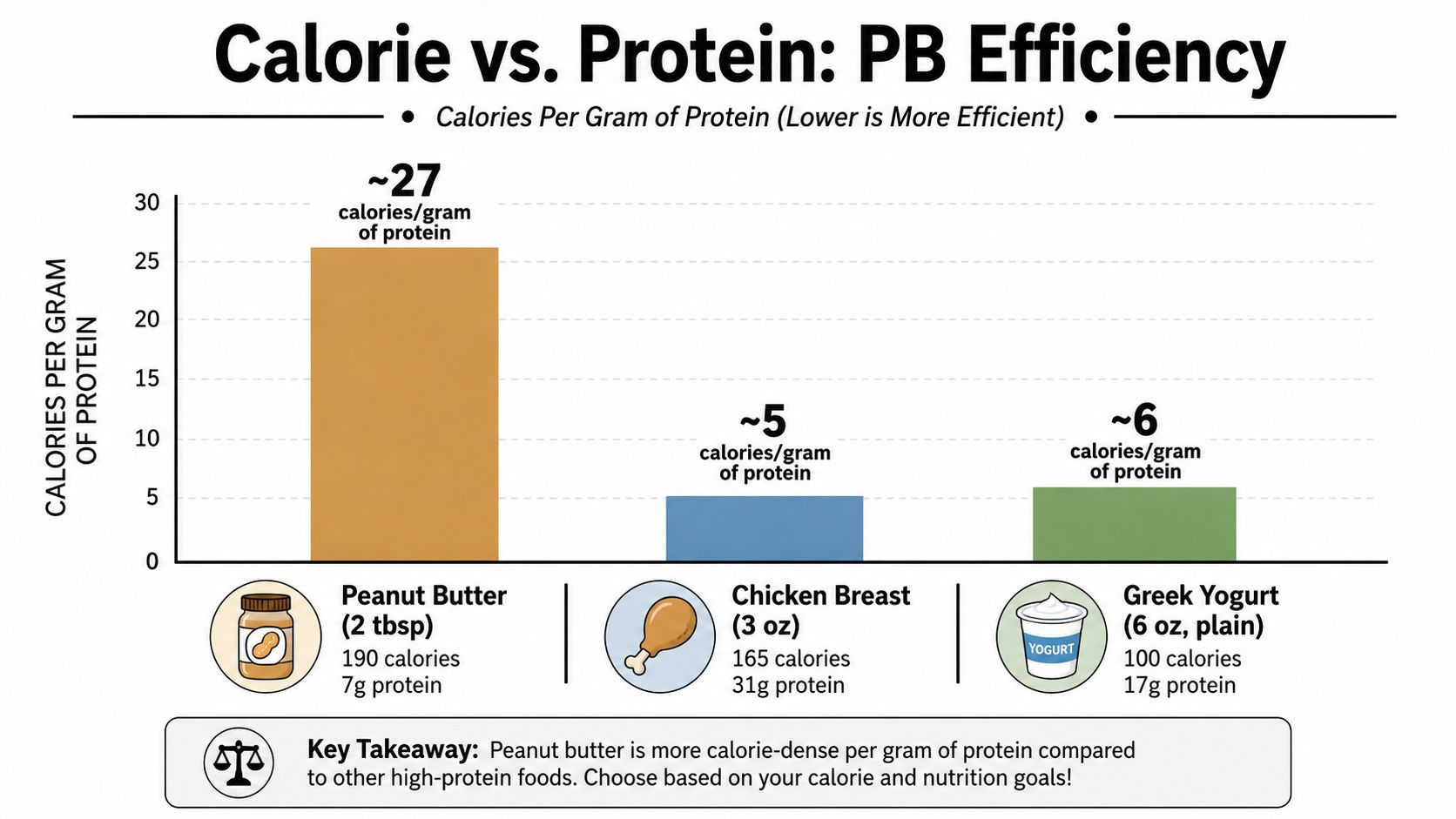
A meaningful protein serving from peanut butter takes far more calories than many lifters, dieters, and GLP-1 users expect. That is the primary concern. The protein is there, but it comes bundled with a lot of fat, which changes how useful it is if the goal is protein efficiency.
Why protein efficiency matters
Protein efficiency is a practical question. How many calories do you need to spend to get enough protein to support your goal?
That question matters more when calories are limited, appetite is reduced, or protein targets are high. In a gaining phase, peanut butter is easier to fit because calorie density can help. In fat loss, body recomposition, or GLP-1-supported eating, the trade-off gets harsher fast. You can use a lot of your daily calories and still need another protein source to finish the job.
This comes up often in strength training too. Anyone following a higher-volume plan like Evermost LLC's powerbuilding guide usually benefits from foods that deliver more protein per calorie, because recovery targets climb quickly.
Where peanut butter creates problems
The common mistake is treating peanut butter like a primary protein food instead of a calorie-dense add-on.
That usually shows up in a few situations:
- Lifters trying to hit 130 plus grams of protein: Peanut butter looks helpful on paper, but it barely moves the total without adding a lot of calories.
- People in a deficit: Two generous spoonfuls can take a noticeable chunk out of the calorie budget while doing little for satiety compared with leaner protein foods.
- GLP-1 users eating smaller portions: Every bite has to work harder, and peanut butter often loses on protein return.
- Plant-based eaters building meals by intuition: Foods that contain some protein can still be poor anchors for a high-protein diet.
A better use case is performance fuel or taste. Peanut butter works well in snacks where carbs and fats are both useful, like these peanut butter and honey oat bars for training days. It just should not get counted on as the main protein source in that meal.
Bottom line: Peanut butter is usually a fat-dominant food with some protein, not a protein-dominant food with some fat.
That distinction helps with meal planning. Once you classify it correctly, it becomes easier to use peanut butter for flavor, texture, and staying power without letting it crowd out more efficient protein choices.
Smart Ways to Use Peanut Butter in a High Protein Diet
Peanut butter works best in a high-protein diet when it plays a supporting role. Treat it like a flavor and calorie add-on, then build the meal around a stronger protein source first.
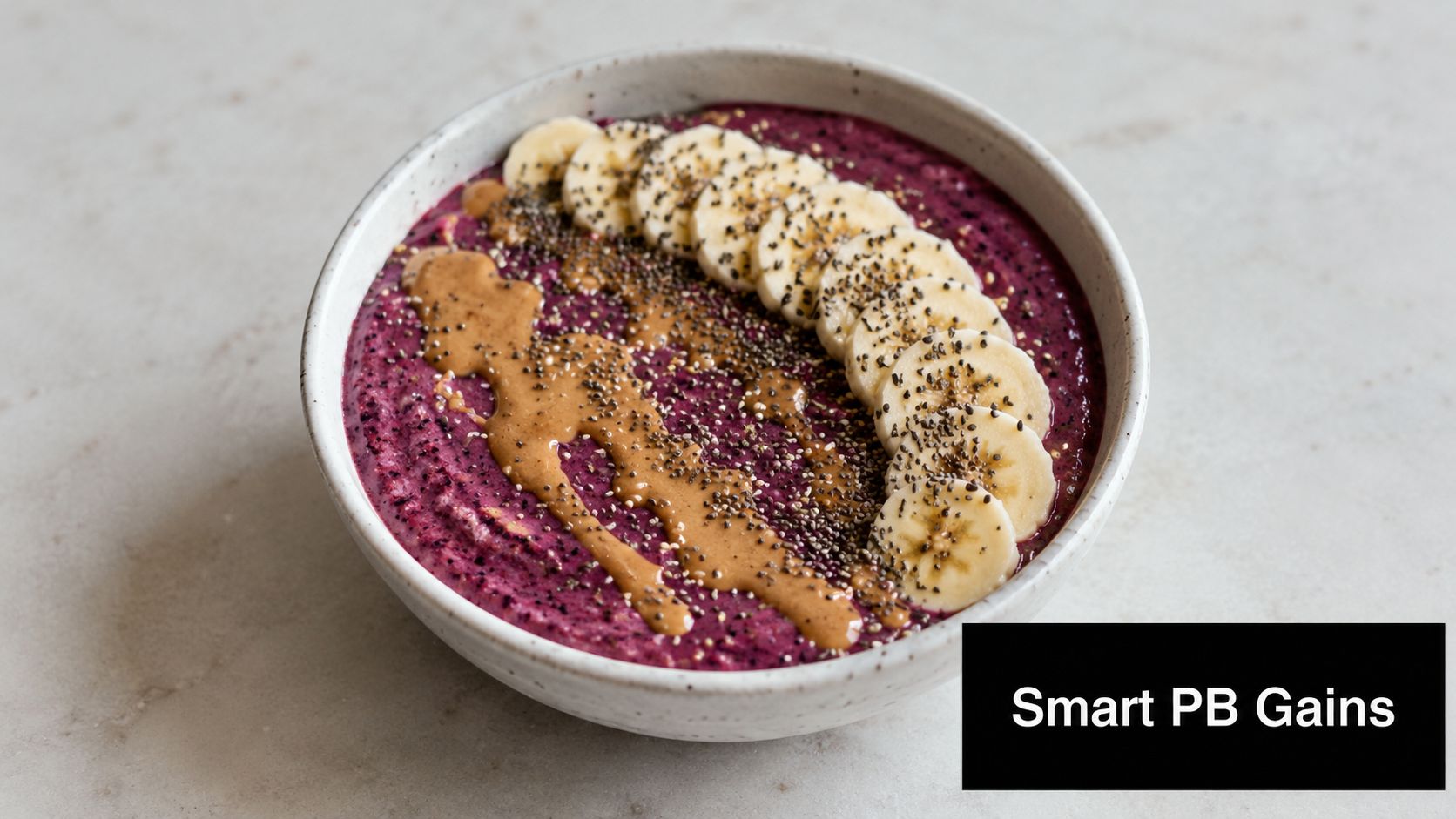
That distinction matters in real meal planning. Peanut butter can make food more satisfying and easier to stick with, but it does not solve a protein gap efficiently. For lifters, people dieting, and GLP-1 users with smaller appetites, that trade-off matters fast.
Build the meal around protein first
Start with the food doing the main protein work. Then add peanut butter if it improves taste, texture, or staying power.
That usually looks like this in practice:
- Greek yogurt bowl with a small spoonful of peanut butter: the yogurt handles the protein target, and the peanut butter adds richness.
- Protein oats with a drizzle of peanut butter: better than relying on oats and peanut butter alone.
- Toast with eggs or cottage cheese plus a thin spread of peanut butter: a balanced breakfast beats toast and peanut butter by itself.
- Chicken, tofu, or shrimp with peanut sauce: the sauce adds flavor, while the main protein keeps the meal macro-friendly.
This approach keeps peanut butter in the diet without letting it crowd out more efficient foods.
Use smaller servings on purpose
Portion size is where peanut butter goes sideways for a lot of people. A casual scoop can turn into a heavy calorie add-on without changing the protein total much.
Use enough to make the meal better, not enough to pretend it became high protein. In coaching, that usually means measuring it instead of eyeballing it, especially during a cut or when appetite is low.
Pair it with foods that cover what it lacks
Peanut butter gets more useful when it is paired with foods that bring either lean protein or more volume.
Good combinations include:
- Peanut butter plus Greek yogurt or cottage cheese
- Peanut butter plus fruit or celery for more volume
- Peanut butter in a shake that already includes protein powder
- Peanut butter added to a meal with eggs, tofu, chicken, or another clear protein source
Training context matters too. Athletes running hard strength and hypertrophy blocks often do well with calorie-dense add-ons around training, especially when total intake is high. If that is your setup, Evermost LLC's powerbuilding guide is a useful read for matching nutrition habits to a performance-focused plan.
Here's a helpful visual if you want a simple food-prep idea:
Best use cases for peanut butter
Peanut butter earns its spot when the goal is not protein efficiency alone.
It fits well when:
- Calories need to come up
- Meals need better taste and adherence
- A snack already has a solid protein base
- Training fuel matters more than keeping fat intake low
Homemade bars are a good example. In recipes like these peanut butter and honey oat bars for training days, peanut butter works because it supports the texture, energy density, and flavor of the snack. It still should not be mistaken for the main protein engine.
Situations where peanut butter is a weak choice
Choose something else when the job is straightforward:
- You need a protein-first snack
- You want more fullness for fewer calories
- You need post-workout protein that digests lighter
- You are tight on daily calories and still behind on protein
Used well, peanut butter can make a high-protein diet easier to follow. Used carelessly, it can take up calories that would have been better spent on foods that deliver more protein per bite.
Rethinking Peanut Butter in Your Meal Plan
Peanut butter has protein. It also has a job description people exaggerate.
The smarter way to view it is as a calorie-dense fat source with a moderate protein bonus. That makes it useful, enjoyable, and easy to fit into a balanced diet. It just doesn't make it your best primary option when your day is built around hitting protein targets efficiently.
A simple decision filter
Use peanut butter when:
- You want flavor and staying power
- You need extra calories
- You're rounding out an already solid meal
Lean away from it when:
- You're short on protein and calories
- You need a cleaner post-workout option
- You're trying to make every bite count
Peanut butter is a helpful add-on. It's rarely the best protein centerpiece.
If you're unsure how much protein you should aim for, start with a clear target first. This guide on how to calculate daily protein needs is a practical next step because it helps you judge foods by whether they move you toward the target or just sound healthy.
Peanut butter grams of protein matter. Protein efficiency matters more. Once you separate those two ideas, your meals get easier to build and your results get easier to support.
If you want a protein-first snack that's built for training, not disguised as dessert, Gym Snack is worth a look. It offers chef-inspired, plant-based savory protein snacks with 15g+ protein per serving and 30g+ per bag, giving you a more direct way to support your goals without relying on calorie-dense spreads to do the heavy lifting.