

You're probably doing one of two things right now. You're either standing in Walmart staring at a shelf full of tubs that all promise “clean,” “lean,” and “high protein,” or you've got six browser tabs open trying to figure out which one is worth buying.
It's common to make the same mistake: purchasing a tub based on the loudest label or cheapest sticker price, only to get home and realize it tastes chalky, upsets the stomach, or barely aligns with one's dietary habits. A good plant protein powder should make your day easier, help you hit your protein target, and not feel like a punishment.
Navigating the Wall of Tubs at Walmart
Walmart isn't treating plant protein like a fringe wellness trend anymore. It's a real retail category with enough depth that you need a filter before you buy. That lines up with the broader market too. The global vegan protein market was valued at USD 10.90 billion in 2024 and is projected to reach USD 18.96 billion by 2032, according to Data Bridge Market Research's vegan protein market report.
That growth explains why the Walmart aisle feels crowded. Plant based protein powder at Walmart now covers budget tubs, greens blends, pea-forward formulas, and products aimed at basic protein intake instead of hardcore bodybuilding only.
What most shoppers get wrong
They focus on the front label.
“20g protein.” “Organic.” “Greens.” “No sugar added.” None of those claims are useless, but none of them tell the whole story either. Two powders can both look healthy and serve completely different jobs. One might work as a simple post-workout shake. Another might be better for breakfast because it has more fiber and keeps you full longer.
Don't shop by branding. Shop by what the powder helps you do at 7 a.m., after training, or during that long stretch between lunch and dinner.
Your job in the aisle
Keep it simple. You only need to answer three questions:
- What's your main use case: post-workout, breakfast add-in, meal bridge, or convenience protein?
- How sensitive is your stomach: some blends sit well, some don't
- What matters more today: clean ingredients, higher protein density, or lower cost
If you answer those thoughtfully, the wall of tubs stops looking random. It starts looking like a set of tradeoffs you can evaluate.
Decoding Protein Powder Labels What Really Matters
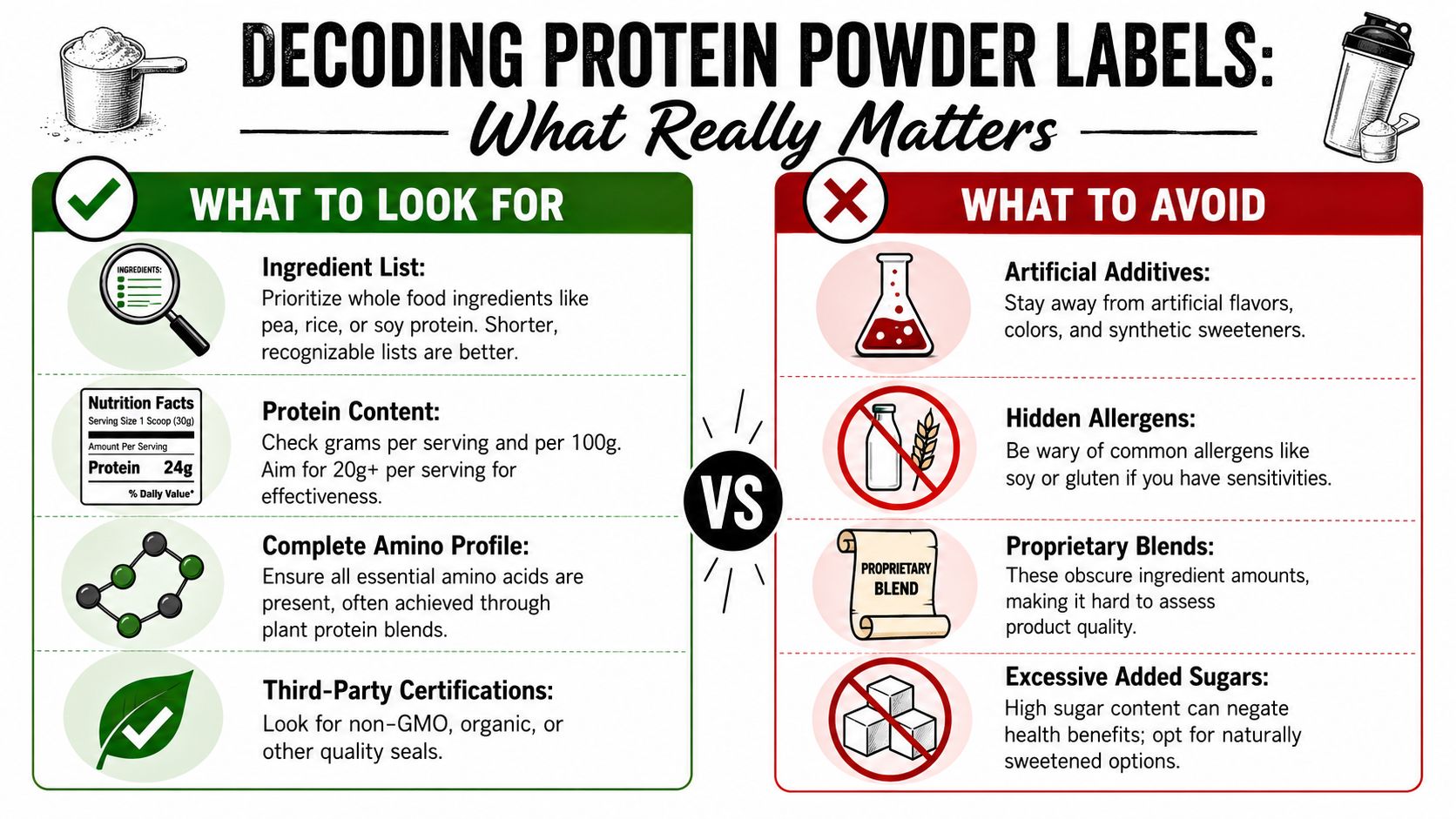
Front-of-package claims are marketing. The back label is where the truth lives.
When I look at a plant based protein powder at Walmart, I care about five things first. Protein source, grams per serving, added fiber, sugar level, and the ingredient list. Everything else comes after that.
Start with the protein source
Not all plant proteins behave the same way.
Some powders use a pea-only or pea-dominant system. Others blend pea, quinoa, rice, mung bean, or chia, which can improve amino acid balance and create a more complete-feeling formula. Walmart's assortment clearly shows both approaches, as described on the Equate plant-based protein listing.
Blends usually make more sense if you want a broader amino acid profile. Single-source formulas can still work, but they need to justify themselves with clean ingredients, good digestion, or a strong value case.
Then check the functional extras
A lot of shoppers ignore the details that affect daily use.
For example, Orgain lists 21 g protein with 4 g fiber and less than 1 g sugar, while other formulas stay more stripped down. That added fiber can make a powder more filling and thicker. It can also change texture and how your stomach handles it. The same Walmart source above also notes that formulations vary widely, and that difference matters in real life.
If you want a shake that feels more like a mini-meal, fiber helps. If you want something light and fast after training, too much extra bulk may be annoying.
My label-reading checklist
Use this when you're comparing tubs fast:
- Protein first: If the protein grams are weak for the serving size, move on.
- Recognizable sources: Pea, rice, quinoa, or a sensible blend are easier to evaluate than vague buzzwords.
- Fiber on purpose: More fiber can support fullness, but it also changes texture and digestion.
- Low sugar is useful: Especially if you're already adding fruit, oats, or milk.
- Shorter ingredient lists usually win: Fewer surprises, less fluff.
If you want to get better at scanning labels in seconds, read this practical guide on how to read nutrition labels.
Practical rule: If a powder needs a huge story on the front of the tub to sound impressive, the nutrition panel usually tells a less exciting story.
Red flags I'd treat cautiously
Many “healthy” powders often lose me here:
- Proprietary blends: If the formula hides amounts, you can't judge it properly.
- A kitchen-sink formula: Too many extras often means worse taste, worse mixability, or more digestive complaints.
- Sweetness overload: If it tastes like melted birthday cake, it probably isn't something you'll want every day.
- Fillers over function: Gums and add-ins aren't automatically bad, but they should earn their place.
You don't need perfection. You need a formula that matches your goal and doesn't create problems you didn't have before.
Comparing Popular Plant Protein Powders at Walmart
The careful attention to labels yields results. Walmart carries enough variety that you can find a decent fit, but the right pick depends on what you expect the powder to do.
What the shelf is actually showing you
Walmart's assortment includes formulas aimed at different outcomes, not just different flavors. Vega Protein & Greens offers 20 g of protein per serving, while Equate's pea-and-quinoa blend provides 21 g of protein and 3.9 g of BCAAs per serving, based on the Vega Walmart listing and related assortment details.
That tells you something important. Walmart shoppers aren't being offered one generic “vegan protein.” They're being offered different tools. Greens-inclusive. Fiber-inclusive. Blend-based. Basic protein delivery.
Walmart Plant Protein Powder Comparison
| Brand | Protein Per Serving | Protein Source(s) | Primary Sweetener | Key Feature |
|---|---|---|---|---|
| BetterBody Foods Organic Plant Based Protein Powder | 16 g | Plant-based blend | Not clearly specified in the provided data | Lower-protein option with organic positioning |
| Vega Protein & Greens | 20 g | Plant-based blend with greens | Not clearly specified in the provided data | Includes greens, vegan and gluten free |
| Equate Plant-Based Protein Powder | 21 g | Pea and quinoa blend | Not clearly specified in the provided data | Includes 3.9 g BCAAs per serving |
| Orgain Plant-Based Protein Powder | 21 g | Plant-based blend | Not clearly specified in the provided data | Includes 4 g fiber and less than 1 g sugar |
My honest take on each type
BetterBody Foods looks more like an entry-level option than a high-performance one. If your goal is basic supplementation and price matters, it may be fine. If you're trying to maximize protein without using big scoops, it's not the strongest play.
Vega Protein & Greens is for the shopper who wants their shake to do more than deliver protein. If you like the idea of a broader wellness-style formula, this is the lane. If you want a dead-simple post-lift powder, the greens angle may not matter much.
Equate is the budget-minded practical choice. The pea-and-quinoa blend and listed BCAA content suggest Walmart is trying to offer something functional, not just cheap. I'd give this a hard look if you want value without dropping down to a weak formula.
Orgain fits people who want a more filling shake. The fiber and very low sugar profile make it more useful as a bridge between meals than as a pure minimalist recovery shake.
For muscle-focused shoppers, it also helps to compare your options against broader guidance on the best plant protein for muscle gain.
A powder isn't “best” in the abstract. It's best only if it matches the job you need it to do.
Smart Shopping Strategies for Protein at Walmart
Buying the right tub is one thing. Buying it intelligently is another.
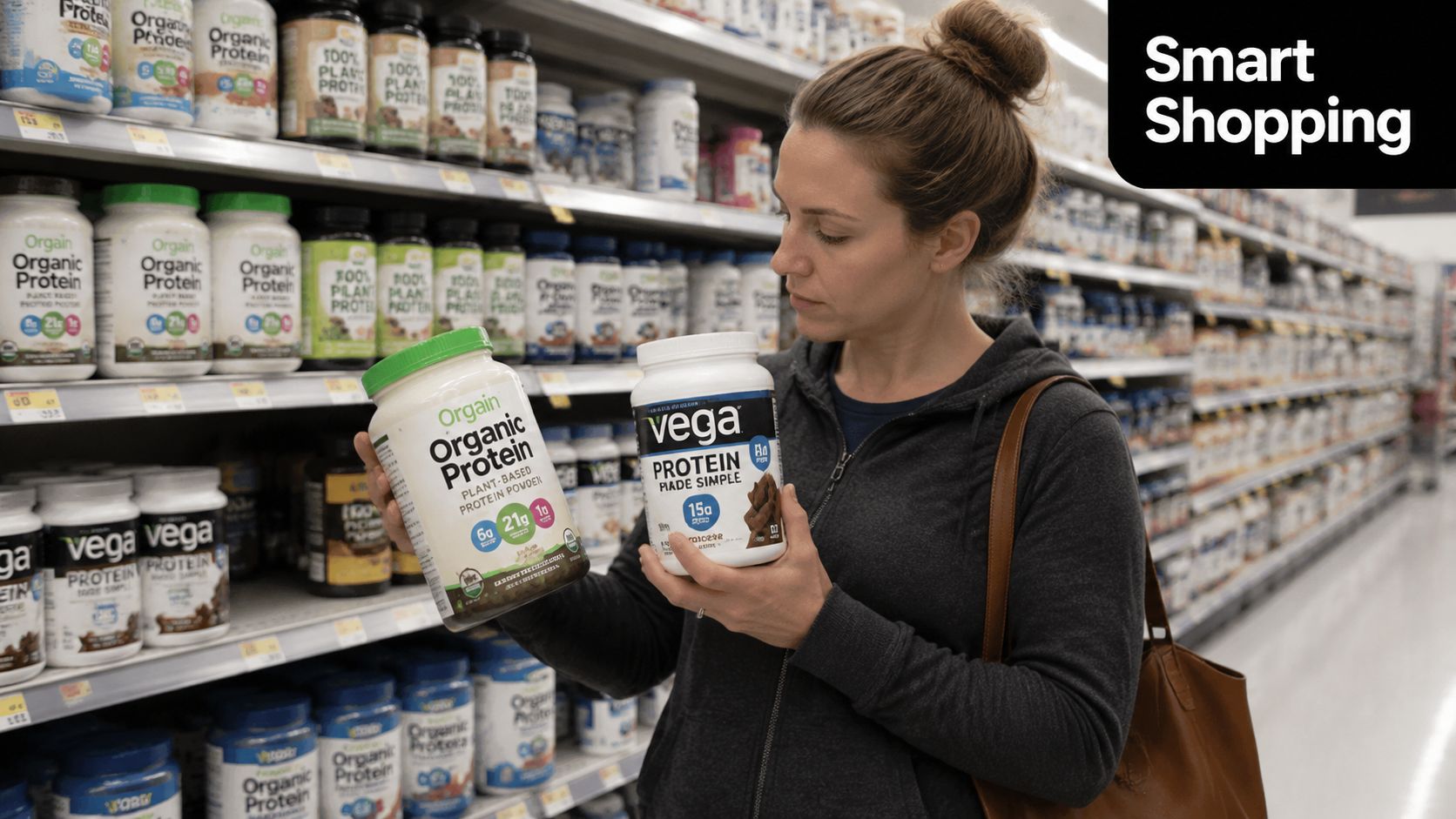
Walmart's plant-based protein category is big enough that you shouldn't buy blindly. Its browse results have shown 24 items in one result and 157 in another, which tells you the selection is deeper online than what you'll see in a single store. A concrete example of entry pricing is BetterBody Foods Organic Plant Based Protein Powder at $12.96 for a 12.7 oz container on Walmart's product listing.
In-store versus online
In-store shopping is better if you want the tub today and don't want to gamble on flavor based on a product page. You can compare container size, serving count, and label details in your hand.
Online usually wins on selection. If your local Walmart has a weak shelf, the website often gives you a broader look at blends, flavors, and price points.
The value calculation that matters
Ignore the sticker shock for a minute. The useful question is this: how much usable protein are you getting for the price?
Do the math yourself:
- Find protein per serving
- Find total servings
- Multiply those numbers
- Compare that total against the listed price
That simple check will stop you from overpaying for a pretty container with underwhelming nutrition.
If you're trying to tighten up your food budget overall, this guide to clean eating on a budget is worth your time.
When private label makes sense
Equate deserves a fair look. A private-label powder doesn't need to beat premium brands at everything. It just needs to offer solid protein, a sensible ingredient list, and a price that makes repeat buying realistic.
If a name-brand tub tastes slightly better but costs enough that you hesitate to rebuy it, that's not a win. Consistency beats a perfect product you only buy once.
This walkthrough can help you think more critically while you shop.
How to Use Your Protein Powder for Best Results
A good powder can still disappoint if you use it badly. Most mixing issues and most “I got bored of it” complaints come from routine, not the tub itself.
Make the shake correctly
Start with liquid first. Then add powder. Then shake or blend.
That one change cuts down on clumps fast. If you throw powder into a dry bottle first, it cakes at the bottom and corners. Nobody enjoys drinking that.
For a smoother result:
- Use cold liquid: texture is better
- Shake in stages: half the liquid first, then powder, then the rest
- Let it sit briefly: some plant powders need a moment to hydrate
- Blend when needed: especially for thicker, higher-fiber formulas
Don't limit it to a shaker bottle
Protein powder works best when it disappears into meals you already eat.
Try it in oatmeal, overnight oats, pancake batter, or a smoothie with fruit and nut butter. If you keep forcing yourself to drink sweet shakes when you're tired of sweet flavors, compliance drops. Food routines have to fit your preferences, not the other way around.
The best protein routine is the one you can repeat without negotiating with yourself every day.
Timing matters less than consistency
Post-workout is convenient, and for many people it's the easiest time to use protein powder. But that's not the only useful slot.
A scoop in breakfast can help if your mornings are low-protein. A mid-afternoon shake can stop the random snack spiral that wrecks appetite control later. Some people also do well with a light protein serving before training if they haven't eaten in a while.
Recovery isn't just about macros on paper. Sleep, training stress, and hormonal recovery matter too. If you want a practical read on that side of the equation, MedEq Fitness's hormone insights offer useful context.
Match the use to the formula
Use simpler formulas when you want quick digestion and convenience. Use more filling formulas, especially those with fiber, when you need a meal bridge.
That's the smart way to think about powder. Not as one product for every situation, but as a tool you place where it actually solves a problem.
When Powder Isnt Practical The Savory Protein Alternative
Protein powder is useful. It's not always practical.
Some days you don't want a shaker bottle in your backpack. You don't want vanilla sludge at your desk. You don't want another sweet drink before or after training. This is the big weakness in the protein powder category. It assumes everyone wants dessert-flavored convenience.
The satiety gap nobody explains well
A lot of protein-powder content talks about grams and flavors but ignores actual appetite control. That matters if your goal is body composition, hunger management, or staying on plan during a busy day.
According to the verified data provided for this article, a 2024 meta-analysis found that only 12% of plant-protein studies measured satiety hormone responses, which leaves shoppers guessing about how well a powder supports fullness in real life. The same verified data also notes that 28% of consumers actively avoid seed oils, while many powders still don't make this issue easy to evaluate.
That's why some people keep buying powder and still end up snacking on whatever's nearby an hour later.
Why a savory option can work better
Savory, crunchy protein solves a different problem than powder. It gives you portability, texture, and a break from constant sweetness.
If you're choosing between another dessert-style shake and a ready-to-eat savory option, the savory option often fits real life better. It's cleaner for the car, easier at the office, and more satisfying when you want food instead of a beverage.
Here's my blunt take:
- Use powder when you need speed: post-workout, breakfast add-in, smoothie base
- Use savory protein when you need convenience: commuting, workday snacking, travel, late-afternoon hunger
- Choose based on behavior, not ideals: the better option is the one you'll eat consistently
If your routine keeps failing at the same time each day, don't blame discipline. Fix the format of the food.
A lot of people don't need more tubs. They need a protein option that feels like a snack, not a chore.
Frequently Asked Questions About Plant Protein
Is Walmart's Equate plant protein worth buying
Yes, if the label matches your needs. Based on the verified product details in this article, Equate offers 21 g of protein and 3.9 g of BCAAs per serving, which makes it a credible option for shoppers who want a practical blend without paying only for branding.
Is plant-based protein good for weight loss
It can help, especially if it replaces lower-protein meals or random snack foods and keeps you full. The bigger point is that some formulas are built to be more filling than others. Added fiber can make a difference in how satisfied you feel after using it.
Why do some plant proteins make people feel bloated
Usually it comes down to formula choice, serving size, or how quickly you increase intake. Fiber, gums, and certain blends can bother some people more than others. Start with a smaller serving, use more liquid, and test one product at a time instead of switching constantly.
Should I choose a blend or a single-source powder
Usually, I'd lean blend. A blend often gives you a better amino acid balance and a more complete-feeling product. A single-source powder can still be useful if you digest it well and the rest of the label is clean.
What matters more, price or protein grams
Both matter. A cheap tub that delivers weak protein isn't a bargain. A premium tub that tastes great but wrecks your budget isn't smart either. Buy the one you can use consistently and afford to repurchase.
If you're tired of sweet shakes and want a protein option that fits real life, take a look at Gym Snack. It gives you a savory, crunchy plant-based way to hit your protein goal without the usual dessert-bar vibe, messy shaker bottle, or junk-heavy ingredient profile.