

You're standing in a grocery aisle with a shaker bottle in one hand and a wrapper in the other, trying to answer a simple question that never feels simple enough: is this snack safe, or does it just look safe? For anyone sorting out snacks without soy, the confusion usually starts right there, at eye level, under bad lighting, with a label full of terms that seem helpful until you realize they aren't.
That confusion is common because soy-free eating isn't just about skipping tofu or edamame. It's about learning which ingredients count as soy, which derivatives matter for your situation, and which snacks are built without soy from the start. The market reflects that shift too, with the global soya-free products market estimated at USD 5.6 billion in 2024 and projected to reach USD 10.2 billion by 2033 at a 7.5% CAGR verified market report. That growth sits alongside broader plant-based snack demand, where plant-based snacks grew nearly 20% in dollar sales from 2022 to 2023 and granola bars and snacks rose 32.8% year over year in that same environment Food Institute reporting.
What Snacks Without Soy Really Means
The clearest way to define snacks without soy is practical, not poetic. These are snacks formulated without soybeans or soy derivatives as intentional ingredients, which means the question isn't just whether the snack contains tofu. It's whether the recipe uses soy protein, soy flour, soy oil, soy lecithin, or another soy-based ingredient anywhere in the build.
That matters because a wrapper can look friendly while still hiding soy in the fine print. A granola bar might seem like a straightforward oat snack, but a closer read can reveal soy lecithin in the chocolate layer or soy protein in the crisped bits. A trail mix can look harmless until you notice seasoning powder, candy coating, or a shared processing warning.
For a gym bag, office drawer, road trip cooler, or kids' lunchbox, the category is broader than most shoppers expect. A person choosing soy-free snacks might be managing an allergy, avoiding a digestive trigger, or wanting cleaner, easier-to-parse ingredients. In all of those cases, the label needs to answer the same question, fast.
Practical rule: if you can't tell what makes the snack soy-free in one quick scan, it probably needs a second look.
The language also gets messy because brands use “soy-free” in different ways. Some mean no soy ingredients in the recipe. Others are trying to communicate a broader absence of soy, but the ultimate test is still the ingredient list and allergen statement, not the front-of-pack claim. That's why people who eat this way learn to treat the label as the actual product, and the front of the bag as just the marketing layer.
Why People Choose to Avoid Soy in Snacks
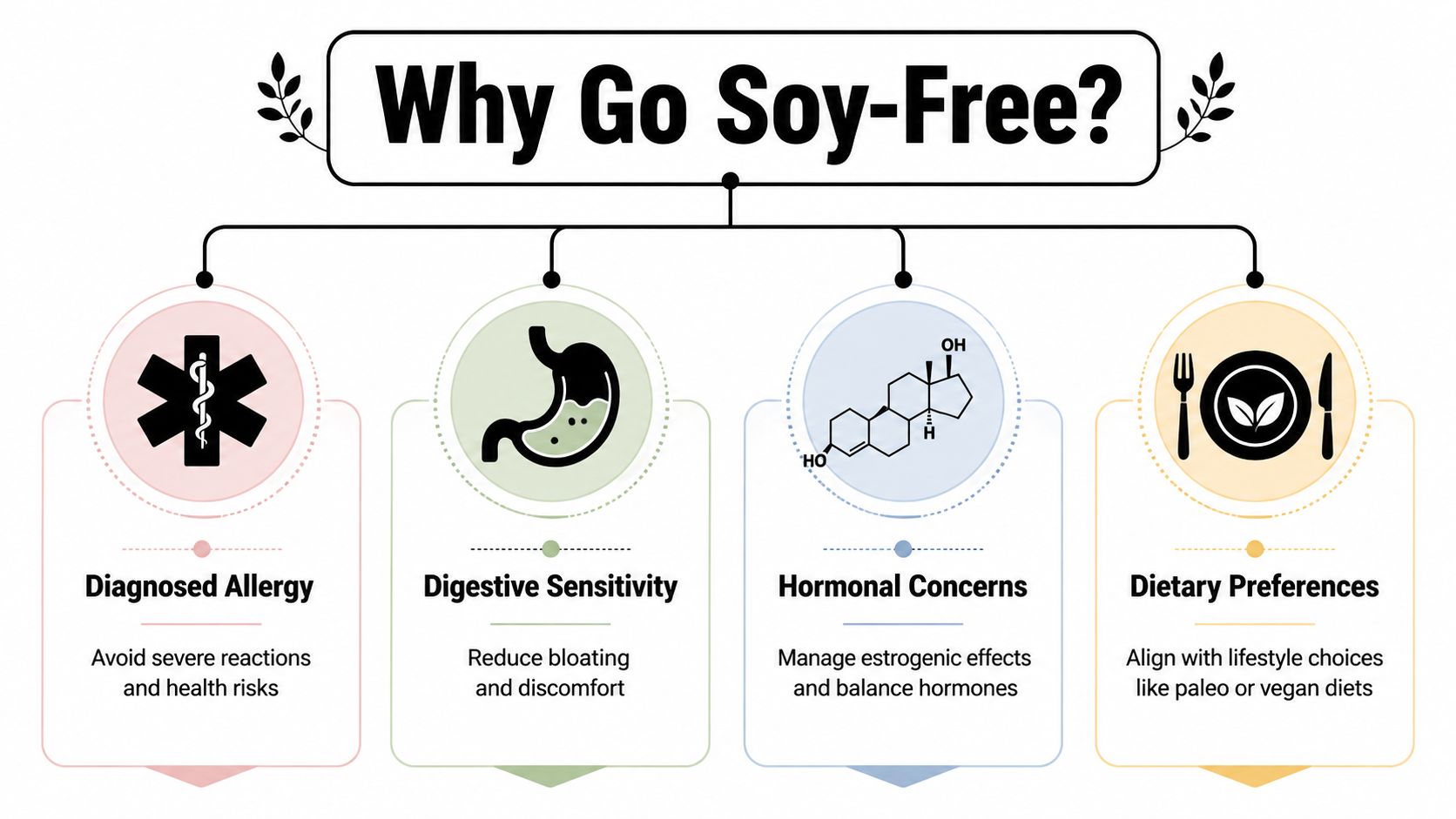
Soy-free eating starts with different motivations, and the label-reading strategy changes depending on the person. A diagnosed soy allergy demands the strictest approach. Someone with digestive sensitivity may be reacting to certain forms of soy or to heavily processed snack formulas. Others prefer the taste, texture, or ingredient style of soy-free products.
Allergy comes first for the most cautious reader
A soy allergy isn't the place for guessing. That's why people with diagnosed allergies tend to scan every ingredient line, every allergen statement, and every “may contain” note before a snack goes in the cart. The concern is not theoretical, it's about avoiding accidental exposure through a hidden derivative or shared equipment.
Digestive comfort changes the shopping list
Some shoppers avoid soy because it doesn't sit well with them. They may not be looking for a formal allergen-safe product, but they still want snacks that feel light, digestible, and predictable. That often leads them toward simpler ingredient lists, roasted legumes, seed-based crackers, or protein snacks built around pea or dairy proteins instead of soy.
Preferences and lifestyle goals matter too
Some people go soy-free for taste, texture, or personal diet style. A vegan athlete might want a savory protein snack that isn't built on soy crisps. Another shopper may follow a paleo-leaning or low-ingredient approach and just prefer options where the ingredient list reads like food, not a chemistry set.
Hormone concerns show up in real life
You'll also hear shoppers mention hormone-related concerns. Those concerns aren't all the same, and they aren't a reason to generalize about soy for everyone, but they do influence buying behavior. For those readers, soy-free snacks feel like a simpler fit with their own comfort level and personal rules.
If you're comparing choices for a family member, a client, or yourself, the motivation tells you how strict to be. A diagnosed allergy calls for maximum caution. A preference-based soy-free diet gives you more flexibility. The snack aisle doesn't care why you're shopping, but your threshold does.
How to Read Labels and Spot Hidden Soy
The fastest soy check starts at the ingredient list, not the front of the package. Look first for the obvious items, soybean oil, soy protein, soy flour, tofu, edamame, tempeh, miso, natto, and soy sauce. If any of those appear, the snack is not soy-free.
Then move to the quieter forms of soy that show up in protein products, sauces, coatings, and baked snacks. The ingredients that catch people off guard are usually soy lecithin, TVP or textured vegetable protein, hydrolyzed vegetable protein, tamari, and soy-based emulsifiers or fats. Some labels also list mono- and diglycerides without saying whether they come from soy, so the only safe answer there is to verify the source if your threshold is strict.
A separate allergen statement often appears near the ingredient panel. In many packaged foods, that line says Contains: soy if soy is present as an allergen. That's useful, but it doesn't replace the ingredient scan, because the ingredient list tells you exactly which soy form was used.
For food-service settings, the same logic applies. If you're checking menus, a resource like EU-allergen compliance for menus can help you think in terms of ingredients, not just dish names. The same habit works in retail, cafeterias, and snack bars.
Don't trust the word “protein” on the front of the package. A protein bar can still be built around soy crisps, soy lecithin, or soy isolate.
A simple routine helps: scan the ingredient list from top to bottom, check the allergen statement, then look for cross-contact language. If a package says “may contain soy,” that's the manufacturer telling you the snack was made with shared equipment or in a shared environment. For someone with a highly sensitive allergy, that warning matters as much as the ingredient list.
If you want a slower walkthrough of label logic, the guide at how to read nutrition labels fits well with this approach. The more often you practice the sequence, the quicker you'll spot what belongs and what doesn't.
Soy-Free Versus Refined Soy Derivatives
Not every soy-related ingredient carries the same practical meaning, and that's where many shoppers get stuck. Whole soy ingredients sit at one end of the spectrum, while highly refined derivatives sit closer to the other. The right decision depends on your own threshold, not on a one-size-fits-all rule.
The NSW allergy guidance notes that some people with soy allergy can tolerate highly refined soy lecithin or soybean oil because the residual protein is very low, but conservative soy-free shoppers often still avoid those ingredients. It also defines soy-free products as excluding soy protein, soy flour, soy oil, and soy lecithin NSW Health allergy guidance. That's a useful reminder that “soy-free” on a snack label can be stricter than the way some consumers talk about soy avoidance in daily life.
| Ingredient | Typical Use | Protein Residue | Caution Level |
|---|---|---|---|
| Soy protein | Protein boost in bars, crisps, and meat alternatives | High | High |
| Soy flour | Baking and structure | High | High |
| Soy lecithin | Emulsifier in chocolate, bars, and coatings | Low | Moderate to high, depending on sensitivity |
| Soybean oil | Frying, texture, shelf stability | Low after refining | Moderate to high, depending on sensitivity |
| Tamari | Flavoring and seasoning | Variable | High |
| Hydrolyzed vegetable protein | Savory flavor enhancement | Variable | High |
The “may contain soy” warning is a different issue. That line points to cross-contact, not intentional formulation. If you're shopping for a highly sensitive eater, that warning can matter even when the recipe itself looks clean. If your own threshold is looser, you may choose differently, but the label still deserves a full read.
Takeaway: whole soy ingredients, hidden soy derivatives, and shared-facility warnings are three separate questions. Don't collapse them into one.
High-Protein Soy-Free Snack Ideas
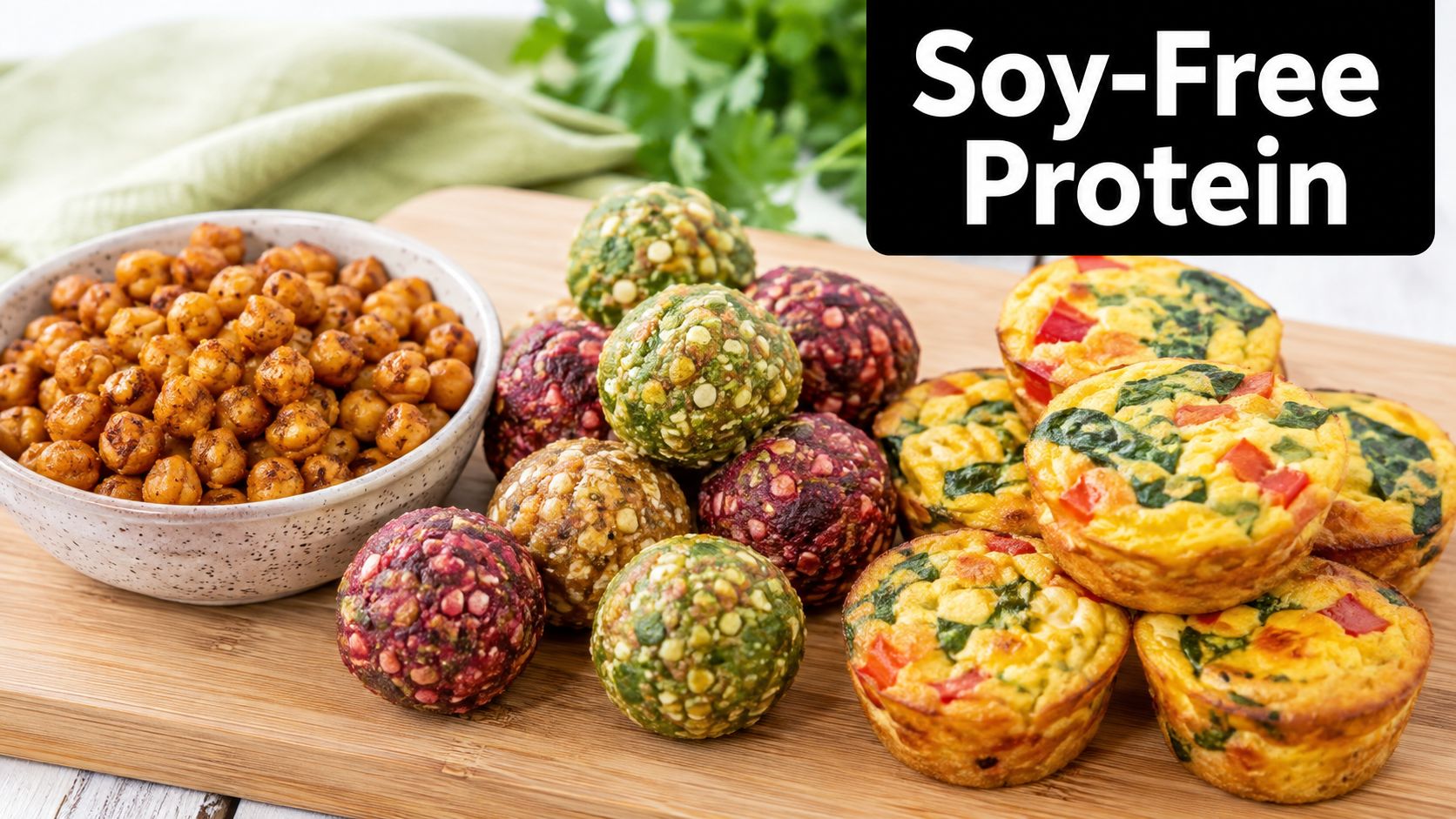
A soy-free snack works best when it can do more than satisfy a label check. The useful choices are the ones that bring protein, texture, and real staying power, especially if you want something that feels more like a small meal than a sweet treat in disguise. Pea protein, eggs, dairy, meat snacks, and crunchy legumes all earn their place here because they contribute to fullness.
Homemade options that travel well
A simple starting point is a no-bake protein bite. Build it from oats, nut or seed butter, and a soy-free protein powder, and you get something that holds up in a desk drawer or gym bag without turning into dessert. Chickpea crunchies work the same way in savory form, since roasting them with spices gives you crisp texture and a snack that feels more deliberate than a handful of crackers.
Egg-based savory muffins are another practical option for meal prep. They travel well, and they stay naturally soy-free as long as the ingredient list stays simple. They also help if you want a snack that behaves more like a mini meal, because eggs bring more protein per bite than many packaged snack foods. If you are trying to replace roasted edamame, fava beans or lupini beans can provide a similar crunch without depending on soy.
For a single-ingredient option that fits a soy-free builder mindset, Loyaltie independent maker protein is the kind of product that can be folded into recipes without adding a long list of extras.
Store-bought categories that actually fill you up
The shelf is more useful when you sort by category instead of getting distracted by branding. Pea-protein crunchy snacks, beef jerky and biltong, certain Greek yogurt cups, cheese crisps, roasted chickpeas, and seed-based crackers are all common fits for soy-free shoppers. The important question is not only whether they avoid soy, but whether they leave you satisfied long enough to matter between meals.
Many plant-based snack buyers want savory crunch instead of another soft bar. That helps explain why snack makers keep expanding beyond sweet formats. Food Institute reporting shows that crunchy and portable products continue to draw attention in the broader plant-based snack market, which matches what shoppers often reach for in real life. That trend does not define soy-free snacks on its own, but it does explain why texture keeps showing up as a deciding factor.
For a broader list of plant-based protein options, the guide at soy-free vegan protein sources is a useful companion read. The main point is simple, protein-first snacks work better when the base ingredient does real nutritional work instead of acting like filler with a health halo.
A good shelf test is straightforward. If a snack tastes like lunch, it is usually more useful than one that tastes like candy and only looks protein-forward. A crunchy pea-protein snack, a yogurt cup, or a jerky stick usually holds up better for hunger than a rice cake with hopeful marketing. The shopper who wants soy-free and protein-forward should check both the ingredient list and the actual eating experience.
Evaluating Protein and Macros in Soy-Free Snacks
A soy-free snack can still miss the mark if it does not bring enough protein to matter. One common swap is to choose a product that avoids soy but ends up being mostly starch, fruit puree, or decorative seeds. The better question is whether the snack supports your training, your hunger, and your schedule.
A snack that looks clean on the front can still behave like candy in your body.
Use three checks before you buy
Start with protein per serving. A snack with a meaningful protein hit is easier to build around, especially if you are trying to avoid grazing all afternoon. Then read the ingredient list and ask whether the protein source is doing real work or just padding the label.
Next, check the protein-to-calorie ratio in plain language. You do not need to turn every purchase into a math problem, just a quick sanity check. A snack that brings protein without a lot of sugar or filler usually feels more useful between meals, especially after training.
Then match the snack to the moment. Pre-workout snacks can lean a little more on carbs if that fits your routine. Post-workout snacks, or the ones you keep in a desk drawer, usually need more protein and more staying power.
If you want a quick benchmark for your own needs, how much protein you need can help you think in daily targets before you start judging single snacks.
A simple way to compare bars and crunchy snacks
Read a typical bar like a coach, not a marketer. If it is sweet, soft, and mostly dates or syrups, it may work as an energy snack, but it probably will not hold you for long. Compare that with a pea-protein crunchy snack or a cheese crisp, where the protein base is often easier to spot and easier to trust.
Macro rule: if a snack is soy-free but leaves you hungry an hour later, it solved the allergy question and ignored the nutrition question.
That is why protein-forward savory snacks matter for weight management and GLP-1 users too. They can feel more satisfying between meals without forcing you into dessert-style eating. In other words, the right soy-free snack is the one you can count on when hunger shows up.
Cross-Contact and Allergy-Safety Habits
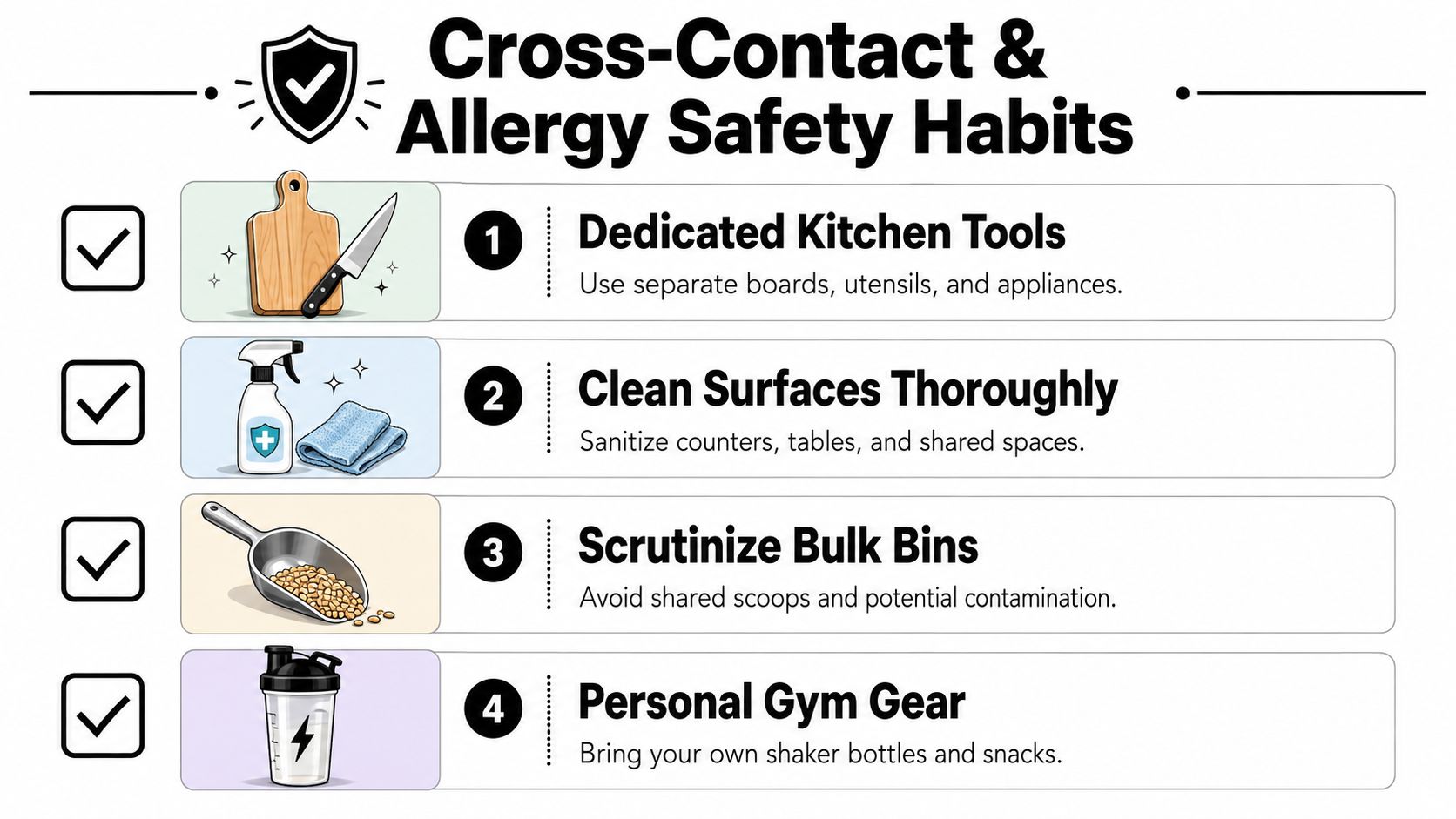
A clean label doesn't protect you if the kitchen or snack station is contaminated. Cross-contact happens on cutting boards, in toasters, around bulk bins, and on shared gym surfaces. For a soy-allergic eater, that matters as much as the recipe itself.
Make the environment match the label
Use separate tools for snacks you trust, especially if the household also cooks with soy ingredients. Dedicated boards, knives, and storage containers reduce the chance that crumbs or residue become a problem. In shared kitchens, a quick wipe-down isn't enough if the surface was just used for something with soy sauce, tofu marinade, or a bar with soy lecithin.
Gym settings need the same discipline. Don't rely on communal protein dispensers or shared shaker bottles if soy contamination is a concern. Bring your own bottle, keep it sealed, and pack backup snacks so you're not forced into a bad choice when you're tired or rushed.
Bulk bins deserve extra caution. Scoops get swapped, moved, and left behind in the wrong bin all the time. If your threshold is strict, pre-packaged snacks are usually simpler and safer.
For a wider look at protective shopping habits, top 12 allergen free foods can help you think beyond one ingredient and toward a whole routine.
Keep a repeatable safety checklist
- Dedicated kitchen tools: keep separate boards, utensils, and appliances for soy-free foods.
- Clean surfaces thoroughly: sanitize counters, tables, and shared prep areas before unpacking snacks.
- Scrutinize bulk bins: avoid shared scoops and loose-bin contamination when the risk matters.
- Personal gym gear: carry your own shaker bottle, towel, and snacks instead of borrowing shared gear.
Read labels every time. Formulas change, and a snack that was safe last month can look different this month.
The last habit is the simplest one. If a package looks new, tastes new, or comes from a different size or seasonal run, check it again. That small pause does a lot of heavy lifting.
If you want soy-free snacks that still feel built for real life, Gym Snack focuses on savory, protein-first options that are naturally free of dairy, soy, and gluten. Visit Gym Snack to see how a crunchy, macro-friendly snack can fit into your gym bag, desk drawer, or post-workout routine without adding label stress.