

When you hear "soy-free protein bar," what does that actually mean? Simply put, it's a snack bar made without a single ingredient that comes from soybeans. This is a big deal for anyone with a soy allergy or sensitivity, but it's also becoming a go-to choice for people who just want cleaner, more easily digestible plant-based fuel.
Instead of soy, these bars pack their protein punch from other sources like peas, hemp, or various nuts. They're designed to give you that high-quality nutrition you need to hit your fitness goals or just get through a busy day, minus the digestive issues soy can sometimes cause.
Your Guide to Choosing the Best Soy-Free Protein Bars
Let's be honest: finding a truly clean, effective snack that fits your lifestyle can feel like a full-time job. You're standing in the aisle, scanning a wall of colorful wrappers, all promising the world. You just want something high in protein without a bunch of junk ingredients.
This is exactly where soy-free protein bars come in. Choosing one isn't just about avoiding an allergen; it's a smart move for anyone looking for better digestion and a cleaner approach to nutrition.
Think of this guide as your personal roadmap to making healthier, more confident snacking choices. We're going to cut through the marketing fluff and get straight to what really matters when you're picking out a protein bar.
What You'll Learn
Consider this your one-on-one coaching session for smarter snacking. We'll walk through everything you need to know, so you can feel good about what you're eating.
- Powerful Protein Alternatives: We'll explore the real-world benefits of plant-based protein sources like pea and nut proteins and see how they effectively fuel your body.
- Label Reading Mastery: You'll learn how to become a pro at scanning ingredient lists, spotting hidden soy, and avoiding other unwanted additives that food manufacturers love to sneak in.
- Aligning Snacks with Your Goals: We’ll figure out how to pick the perfect bar, whether your focus is building muscle, managing your weight while on a GLP-1 medication, or just needing a solid source of sustained energy.
As we go, we’ll highlight how Gym Snack fits into this picture as a top-tier savory, soy-free option that ticks all these boxes. Get ready to completely rethink what a protein snack can be. By the end, you'll have the know-how to choose the perfect soy-free protein bars that not only taste amazing but truly support your health from the inside out.
So, Why Are People Ditching Soy in Their Protein Bars?
You've probably noticed it on grocery store shelves and online: the "soy-free" label is popping up everywhere, especially in the protein bar aisle. This isn't just another fleeting health trend. It's a real shift, driven by people getting serious about how their food choices make them feel, especially when it comes to performance.
For many active folks, soy has become that one ingredient they'd rather avoid. They’re looking for cleaner, more efficient fuel that helps them hit their goals without any weird side effects. The move to soy-free protein bars is less about jumping on a bandwagon and more about listening to what their own bodies are telling them.
Getting to the Bottom of Soy Concerns
So what's the big deal with soy? A couple of key things keep coming up.
First and foremost are allergies and sensitivities. Soy is one of the top eight major food allergens in the U.S. A full-blown allergy can be serious, but a sensitivity is often sneakier. It might show up as bloating, digestive issues, or just a general feeling of sluggishness after you eat.
If you’re trying to crush a workout, feeling weighed down or bloated is the last thing you want. That discomfort can genuinely get in the way of your performance and recovery, which is why so many people start hunting for alternatives that are just easier on their system.
The other hot topic is phytoestrogens. These are compounds found in plants that have a chemical structure similar to the hormone estrogen. Soy happens to be packed with them, particularly a type called isoflavones.
Now, the science on this is still being debated, and a lot of it comes down to personal choice. Some people prefer to limit their intake of phytoestrogens just to be safe and avoid any potential impact on their natural hormone balance. It's a proactive step many take for their long-term health.
The Market is Responding—Loud and Clear
This isn't just talk; you can see the change happening across the entire snack industry. The global market for vegan protein bars, where alternatives like pea and nut proteins are stealing the show, is absolutely booming.
It was valued at USD 1.88 billion in 2026 and is projected to skyrocket to USD 6.16 billion by 2033. That’s a compound annual growth rate (CAGR) of 18.5%—a clear signal that consumers want something different. You can learn more about the rapid growth of the vegan protein bar market and see how these preferences are pushing brands to innovate.
At the end of the day, the switch to soy-free protein is all about optimization. It’s about finding ingredients that leave you feeling strong and energized, without digestive drama or lingering health questions. It's a smart, conscious choice for a more personalized approach to nutrition.
Exploring Powerful Soy-Free Protein Sources
When you decide to cut soy from your diet, you're not just removing one ingredient—you're opening the door to a whole range of incredible, plant-based proteins. It's less like a restriction and more like an upgrade, swapping out a single ingredient for a diverse set of options, each with its own unique nutritional perks.
People are catching on fast. The demand for cleaner, soy-free protein bars is driving major innovation in the plant-based space. The market for these bars shot past USD 1 billion in 2025 and is on track for a 10.3% compound annual growth rate through 2035. The pea protein segment alone is already valued at USD 276.8 million. It's clear this isn't just a trend; it's a fundamental shift in how we think about healthy snacking.
The move away from soy is often a very intentional one. As the diagram below shows, the main drivers are typically concerns around allergies, digestive issues, and potential hormonal effects.
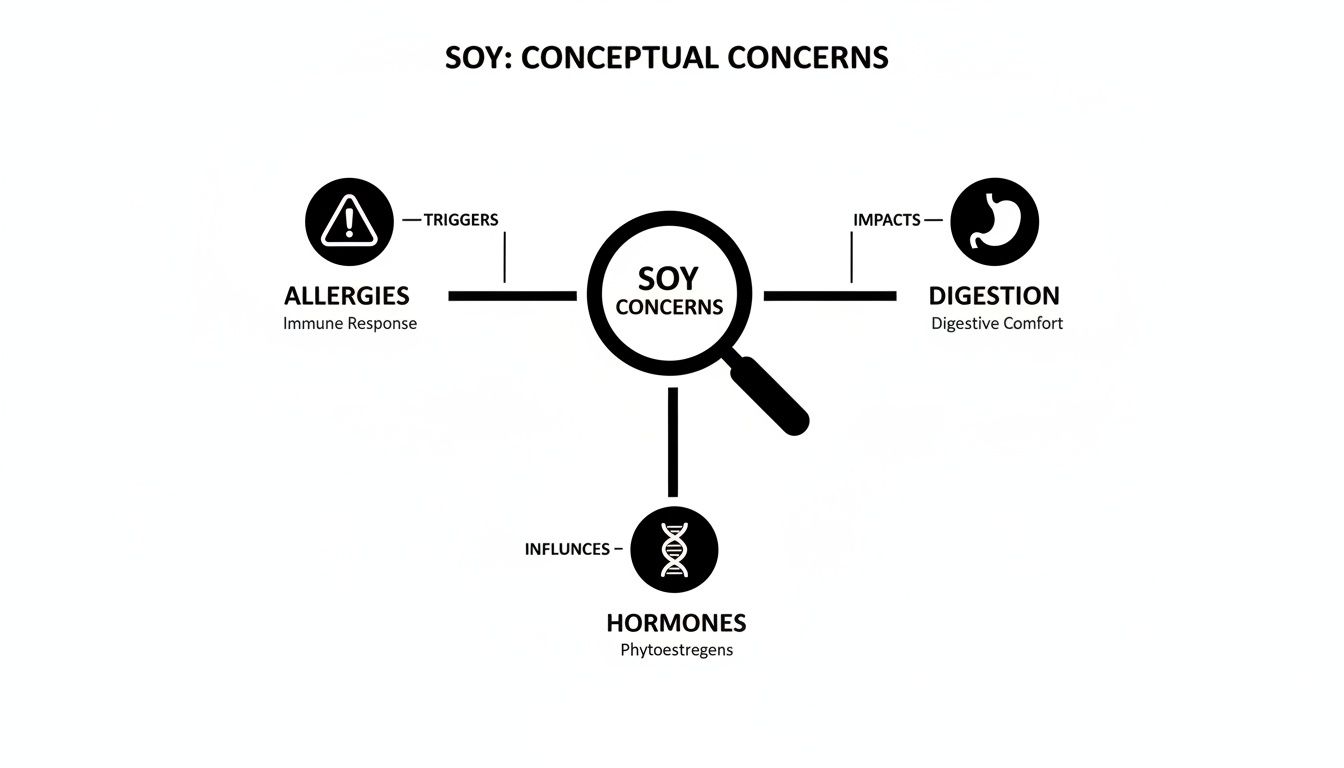
For many, choosing soy-free isn't about following a fad; it's about optimizing their health and feeling their best by avoiding ingredients that just don't work for their body.
Comparing Popular Soy-Free Protein Sources
To help you navigate the options, it's useful to see how the most popular soy alternatives stack up against each other. Each one brings something different to the table, from muscle-building amino acids to heart-healthy fats.
| Protein Source | Key Benefits | Best For |
|---|---|---|
| Pea Protein | Complete amino acid profile, high in iron, and easy to digest. | Muscle repair, post-workout recovery, and anyone needing a hypoallergenic, high-quality protein. |
| Rice Protein | Hypoallergenic and a good source of B vitamins and fiber. Often combined with pea protein for a complete amino acid profile. | Sensitive individuals, sustained energy, and as part of a protein blend. |
| Nut Proteins | Rich in healthy fats, fiber, and micronutrients like Vitamin E. Provides a creamy texture. | Satiety, sustained energy, and adding a boost of healthy fats and flavor. |
| Seed Proteins | Excellent source of omega fatty acids (hemp) and minerals like magnesium and zinc (pumpkin). | Overall wellness, hormonal balance, and adding a diverse range of micronutrients. |
As you can see, the "best" protein really depends on what you're trying to achieve. Whether it's building muscle or just getting more nutrients into your day, there's a soy-free option that fits the bill.
Pea Protein: The Plant-Based Powerhouse
Pea protein has rightfully earned its spot as the go-to choice in the soy-free world. Sourced from yellow split peas, it’s a true nutritional champion that’s also incredibly gentle on the digestive system.
One of its biggest selling points is that it’s a complete protein. This means it contains all nine essential amino acids your body can't make on its own, putting it on par with animal-based proteins for muscle growth and repair.
That's why it's a favorite among athletes and anyone serious about their fitness. It's also packed with iron and arginine, an amino acid that helps with blood flow. This potent combination is exactly why we made pea protein the star ingredient in Gym Snack—it delivers clean, effective fuel without compromise.
Nut and Seed Proteins: The Nutrient-Dense Contenders
But the world of soy-free protein doesn't end with peas. Nuts and seeds are fantastic contenders that do more than just add protein; they deliver a whole spectrum of other valuable nutrients.
-
Nut Proteins: Almond protein is a classic. It brings healthy monounsaturated fats, fiber, and vitamin E to the party. Those fats not only give bars a satisfying, creamy texture but also help you feel fuller for longer.
-
Seed Proteins: Hemp and pumpkin seeds are two other superstars. Hemp is another complete protein source loaded with omega-3 and omega-6 fatty acids, while pumpkin seed protein is a powerhouse of minerals like magnesium and zinc.
When you see these ingredients on a label, you know you're getting more than just a protein hit—you're getting a more well-rounded nutritional boost. If you're curious to learn more, you can check out our guide on other powerful soy-free vegan protein sources. Understanding the unique benefits of each helps you choose a bar that truly aligns with your goals, whether that's building muscle, finding sustained energy, or simply improving your overall wellness.
How to Read Labels and Avoid Hidden Soy
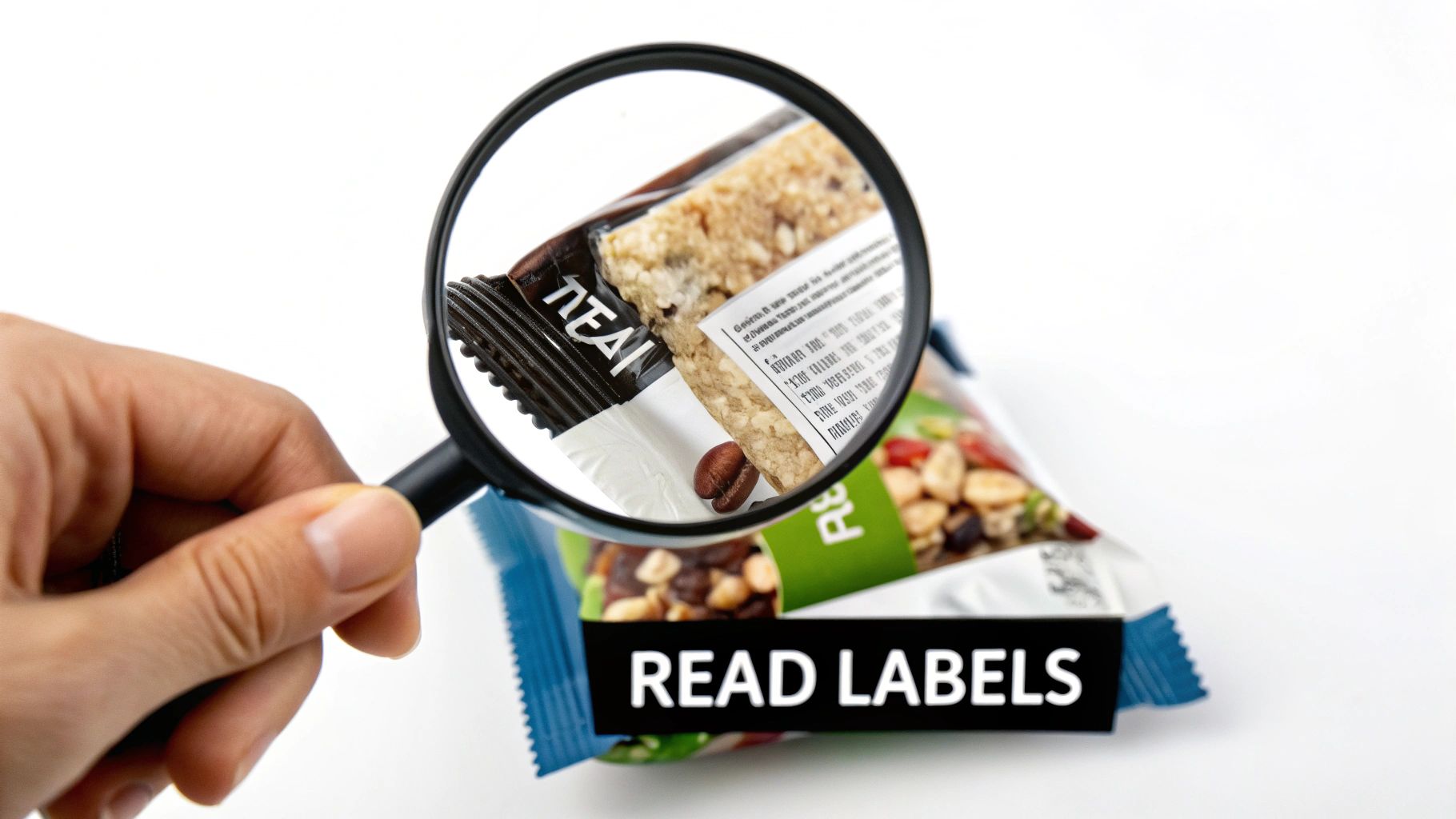
Trying to find a truly soy-free protein bar can sometimes feel like you need a special decoder ring just to read the ingredients list. Sure, a big "soy-free" sticker on the front of the package is a decent starting point, but the real confidence comes from knowing how to scan the label yourself.
Think of it as being a detective for your own health. You're not just looking for obvious culprits; you're on the hunt for clues to make sure what you’re eating is genuinely clean. This isn't just about dodging an allergen—it’s about taking full control of your nutrition. Many brands sneak soy into their products because it’s a cheap filler and texturizer, so learning to spot its many disguises is a powerful skill.
Uncovering Soy's Secret Identities
Soy rarely shows up on an ingredient list just as "soy." It's a master of disguise, appearing under all sorts of different names that are easy to miss if you don't know what you're looking for. Getting familiar with these aliases is your first big step toward becoming a label-reading pro.
Here are some of the most common hidden soy ingredients to keep an eye out for:
- Textured Vegetable Protein (TVP): A highly processed soy product often used to add a meaty texture or bulk up bars on the cheap.
- Soy Lecithin: This is an emulsifier that stops ingredients from separating. While it's a soy derivative, some people with very mild sensitivities can tolerate it.
- Edamame: It’s a fancier name, but these are just young soybeans.
- Miso: A fermented soybean paste that can add a savory, umami flavor.
- Hydrolyzed Soy Protein (HSP): You'll often see this in savory snacks as a flavor enhancer.
The real lesson here is to always look past the flashy marketing on the front of the box and get straight to the ingredient list. A truly transparent brand like Gym Snack keeps that list short and simple with recognizable ingredients like pea protein, so there’s no guesswork involved.
Beyond Soy: Other Red Flags on a Label
Once you've got a handle on spotting hidden soy, the next level is identifying other red flags that signal a lower-quality bar. A genuinely clean product is more than just soy-free; it should also be clear of junky fillers, artificial additives, and heaps of sugar that can sabotage your fitness goals.
If you want to get really good at this, our guide on how to read nutrition labels will turn you into an expert.
In the meantime, watch out for these common offenders:
- Sugar Alcohols: Things like erythritol, sorbitol, and xylitol are used to cut calories, but for many people, they come with a side of major bloating and digestive upset.
- Artificial Fillers: Ingredients like corn fiber or inulin are often thrown in to cheaply pump up the fiber content, but they can also lead to gas and discomfort.
- Artificial Sweeteners: If you see sucralose or aspartame, be prepared for that weird aftertaste. Plus, they might not align with your long-term health goals.
- Long, Unpronounceable Ingredients: Here’s a great rule of thumb: if you can’t pronounce it or wouldn't keep it in your kitchen pantry, you probably don't want to eat it.
By learning to spot both soy in disguise and these other additives, you can confidently pick a protein bar that actually fuels your body without any of the unwanted junk.
How the Right Bar Can Fuel Your Fitness and Weight Management Goals
Picking the right soy free protein bars is about more than just dodging an ingredient you don't want. It’s a smart, strategic move that can directly fuel your health and fitness journey. Whether you're trying to build lean muscle, last longer during your workouts, or manage your weight, the quality of your protein source is a massive piece of the puzzle.
If you’re a regular at the gym, you know that recovery is everything. Clean protein sources are vital for helping your muscles repair and grow stronger after a tough session. Think of your muscles post-workout like a construction site that’s a bit of a mess. High-quality protein delivers the amino acids—the essential building blocks—to get in there and rebuild everything stronger than before.
Plus, steering clear of soy can help you avoid the kind of digestive trouble, like bloating or discomfort, that can seriously derail your performance. When your fuel is easy on your stomach, your body can put its energy where you need it most: smashing your workout and recovering like a champ.
The Science of Feeling Full and Managing Weight
For anyone focused on weight management, protein is your best friend. The magic word here is satiety—that feeling of being full and satisfied after you eat. Hands down, protein is the most satiating of the three macronutrients. It keeps you feeling full for way longer than the same amount of carbs or fat.
This isn't a small thing; it's a huge advantage. When you feel satisfied, you’re far less likely to mindlessly grab unhealthy snacks or go overboard at your next meal. This simple effect makes it so much easier to stay in the calorie deficit needed for weight loss. Swapping in high-protein, soy-free options can be a total game-changer. You can find some great advice on choosing healthy snack bars for weight loss that work for you.
Here’s how it works: A high-protein snack triggers your body to release hormones that put the brakes on hunger. It also helps keep your blood sugar levels stable, preventing those awful energy crashes that send you hunting for sugary, high-carb junk food.
A Savory Solution to Help You Stay Consistent
We all know cravings can completely torpedo even the most dialed-in nutrition plan. And while sweet, dessert-like protein bars are great, they don't do much for you when what you really want is something salty, crunchy, and savory. This is where having a different kind of tool in your snack arsenal becomes so important.
A savory option like Gym Snack, with its cheesy flavors and seriously satisfying crunch, tackles a completely different kind of craving. Having that variety prevents "flavor fatigue," which is a real thing! It makes sticking to your plan not just easier, but actually enjoyable.
Allergen-conscious snacks are shaking up the market in a big way. In fact, the vegan protein bar market is projected to hit USD 3.913 billion by 2033, and a huge part of that growth is driven by alternatives like pea and nut proteins.
Ultimately, finding a snack that you genuinely look forward to eating and that lines up with your goals is the secret to long-term success. If you're not sure how much protein you should be aiming for, check out our guide on how to calculate daily protein needs and get your numbers dialed in.
The Savory Solution to Your Protein Needs
Let’s be honest. After all that work deciphering ingredient lists and dodging soy, the last thing you want is another chalky, overly sweet protein bar that tastes like a bland dessert. What if your perfect protein snack wasn't sweet at all? Imagine something savory, salty, and satisfyingly crunchy.
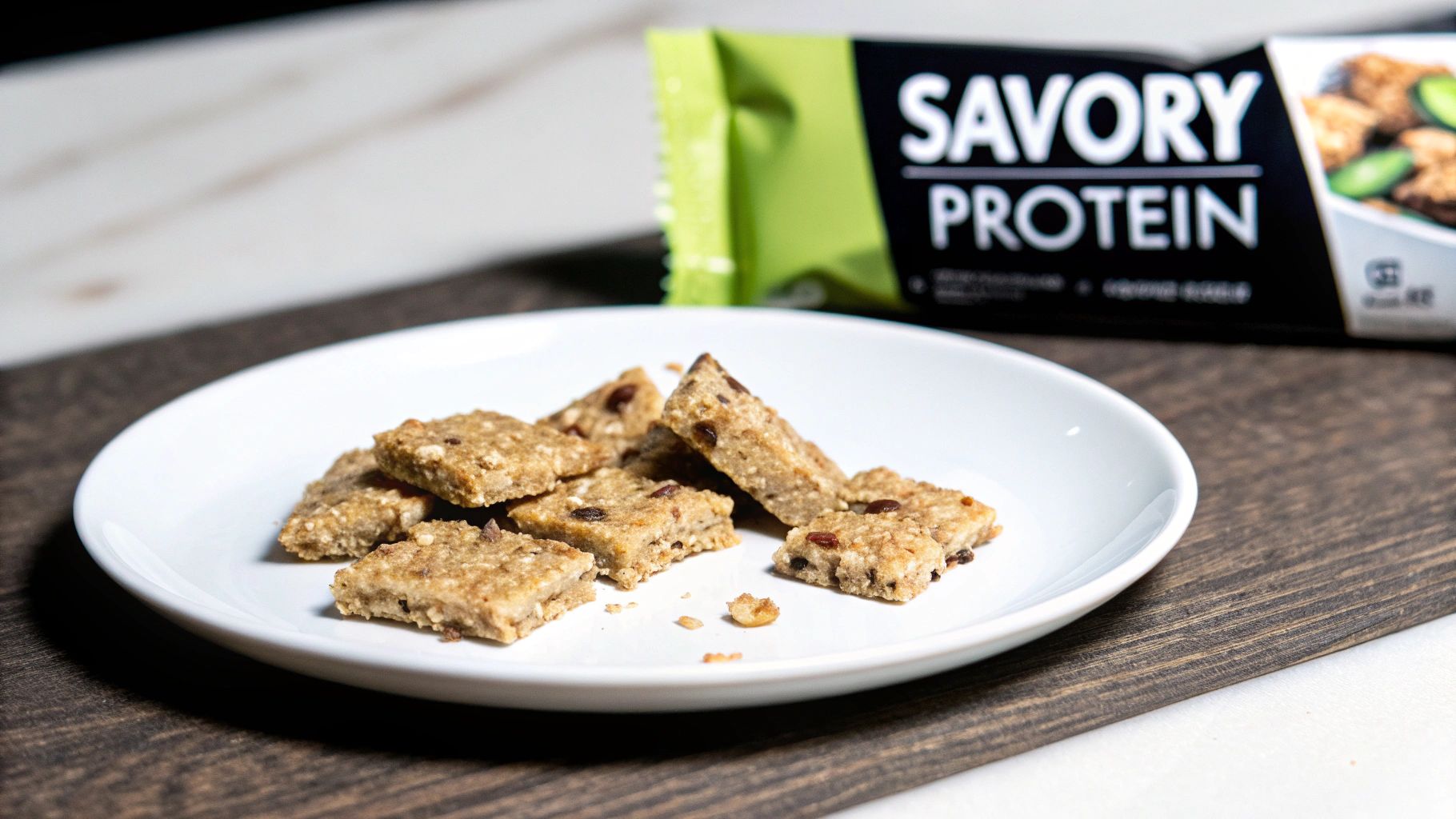
This is exactly where Gym Snack comes in. We’re not talking about another protein bar. This is a chef-crafted, savory protein snack for people who want real fuel that tastes genuinely good. With bold flavors like Cheddar Cheeze and Jalapeño Cheddar Cheeze, we're giving you a crave-worthy alternative to the endless parade of chocolate and peanut butter.
Fuel That’s Clean and Actually Works
At its core, Gym Snack is built on clean, powerful nutrition. Each serving delivers over 15g of high-quality pea protein, making it a perfect tool for muscle recovery and keeping hunger at bay.
We carefully designed the formula to support your health goals, not sabotage them. It's not just one of the best soy free protein bars out there; it's also completely free from gluten, dairy, and seed oils. This clean, macro-friendly profile makes it the ideal fuel for any moment.
- Pre-Workout Energy: Need a boost before you hit the gym? Grab a handful for sustained power that won’t weigh you down.
- Post-Workout Recovery: The complete amino acid profile in pea protein gets to work repairing and rebuilding muscle right away.
- Midday Boost: Finally, a way to crush afternoon hunger without the inevitable sugar crash that comes from sweet snacks.
“Finally, a protein snack that isn’t a chore to eat! The Jalapeño Cheddar flavor is addictive, and I love that I can get 30g of protein from one bag without any soy or junk ingredients. It’s my new go-to after every workout.” - Alex R., Verified Buyer
This is what happens when great taste meets clean ingredients. Gym Snack offers a smarter, more enjoyable way to hit your protein goals and stay locked in on your fitness journey.
Your Questions About Soy-Free Protein Bars, Answered
Making the switch to soy-free snacks can bring up a few questions. Let's clear the air so you can feel great about what you're eating.
Are Soy-Free Protein Bars Good for Building Muscle?
You bet. They’re just as effective as their soy-based counterparts, and for many people, they’re actually a smarter choice.
High-quality plant proteins like pea protein pack a complete amino acid profile, giving your muscles everything they need to repair and grow after a workout. Plus, by skipping the soy, you might also dodge digestive discomfort that can get in the way of nutrient absorption, letting your body put that protein to work more efficiently.
Can I Really Get Enough Protein from a Plant-Based Bar?
Absolutely. The plant-based protein bar game has changed. Today’s best soy-free options are engineered to be seriously protein-dense.
It's not uncommon to find a bar with over 15g of high-quality pea protein in a single serving, making it easy to hit your daily protein goals. Just give the label a quick scan for the protein content—you’ll be surprised how many soy-free bars match or even outdo the old-school options.
The real win with modern soy-free protein bars is their bioavailability. It’s not just about the amount of protein, but how easily your body can actually absorb and use it. This makes every gram count toward your fitness goals.
Why Go for a Savory Protein Snack Instead of a Sweet One?
Think of it as adding a new tool to your nutrition toolkit. While sweet bars have their place, they can sometimes just make you want more sugar. A savory snack hits a completely different spot—that craving for something salty, crunchy, and satisfying.
This variety is key to avoiding "flavor fatigue," which is that feeling of being bored with your food. Having a savory option makes sticking to a high-protein plan feel less like a chore and more like a choice, which is crucial for long-term success.
Ready to taste the savory, crunchy, and satisfying difference for yourself? Gym Snack delivers chef-inspired, cheesy protein snacks packed with over 15g of clean pea protein per serving. Discover your new favorite way to fuel up at GymSnack.com.