

You're two hours into a delayed flight, your stomach is growling, and the only available options are a sugary bar, a salty packet of crackers, or an expensive sandwich you don't really want. On a road trip, the same problem appears at the next gas station. You need food that fits in a small bag, survives the journey, and keeps hunger under control without leaving you sluggish or uncomfortable.
That's why travel protein snacks deserve more thought than grabbing any product labeled “high protein.” The protein amount matters, but so do the snack's texture, calories, added sugar, fat, shelf stability, packaging, and how easily you can eat it between airport announcements or meetings. The right choice works more like a compact meal component than a quick burst of sweetness.
Protein bars became a recognizable commercial category through products such as PowerBar, launched in 1986, and Clif Bar, which appeared in the early 1990s. The category has since moved from endurance sports into everyday convenience, with protein snacks estimated at about $0.4 billion in 2024 sales according to market history of energy bars and protein snacks.
This guide focuses on the part many travel articles miss: satiety and formulation. You'll learn how to choose, pack, time, and combine shelf-stable snacks for flights, workouts, road trips, and international travel. You'll also find savory plant-based ideas for travelers who want less sweetness, clearer ingredients, or an alternative to dairy-based shakes.
Introduction to Travel Protein Snacks That Work on the Go
A delayed flight quickly exposes weak snack planning. The bar that seemed convenient at the gate may melt in your bag, taste intensely sweet, or leave you hungry again before boarding. A shake can provide protein, yet it may be awkward through security, difficult to store, and unappealing after hours without refrigeration.
A useful travel snack works like a small piece of travel equipment. It should be protein-forward, shelf-stable, portioned, durable, and pleasant to eat. These qualities support training goals, appetite management, plant-based eating, and fewer impulse purchases at airport counters.
The underlying issue is satiety, not security screening. Protein supplies the meal's structural support, while the food matrix, texture, and portion help determine how satisfying the snack feels. A savory, crunchy format can work like a steady anchor between meals, especially during flights or long drives when sweet foods may become tiring.
Consumer behavior reflects this need for convenience. In a study of 102 snack-bar users, 78% cited convenience or on-the-go use, while 60% cited hunger management. Afternoon snacking was reported by 47%, with 33% using bars post-workout and 15% pre-workout, according to consumer behavior data on portable protein snacks.
The practical lesson is straightforward: people choose these foods because they are available when normal meals are not. A compact kit can combine a protein-centered item with a texture and flavor you will want to eat. This portable high-protein snacks guide offers more ideas for building one.
Throughout the article, savory options show how formulation changes the travel experience. Crunch can make eating feel more substantial, while less sweetness helps prevent every snack from resembling dessert. The aim is not a perfect travel day. It is predictable hunger management, so a delay, layover, or long highway stretch does not decide your meal for you.
What Makes a Protein Snack Truly Travel Ready
A travel-ready snack has to perform in conditions your kitchen never does. It may sit in a backpack, get squeezed under a seat, travel through a warm car, or wait in a hotel room overnight. A product can have an impressive label and still fail if it leaks, crumbles, melts, or needs refrigeration.
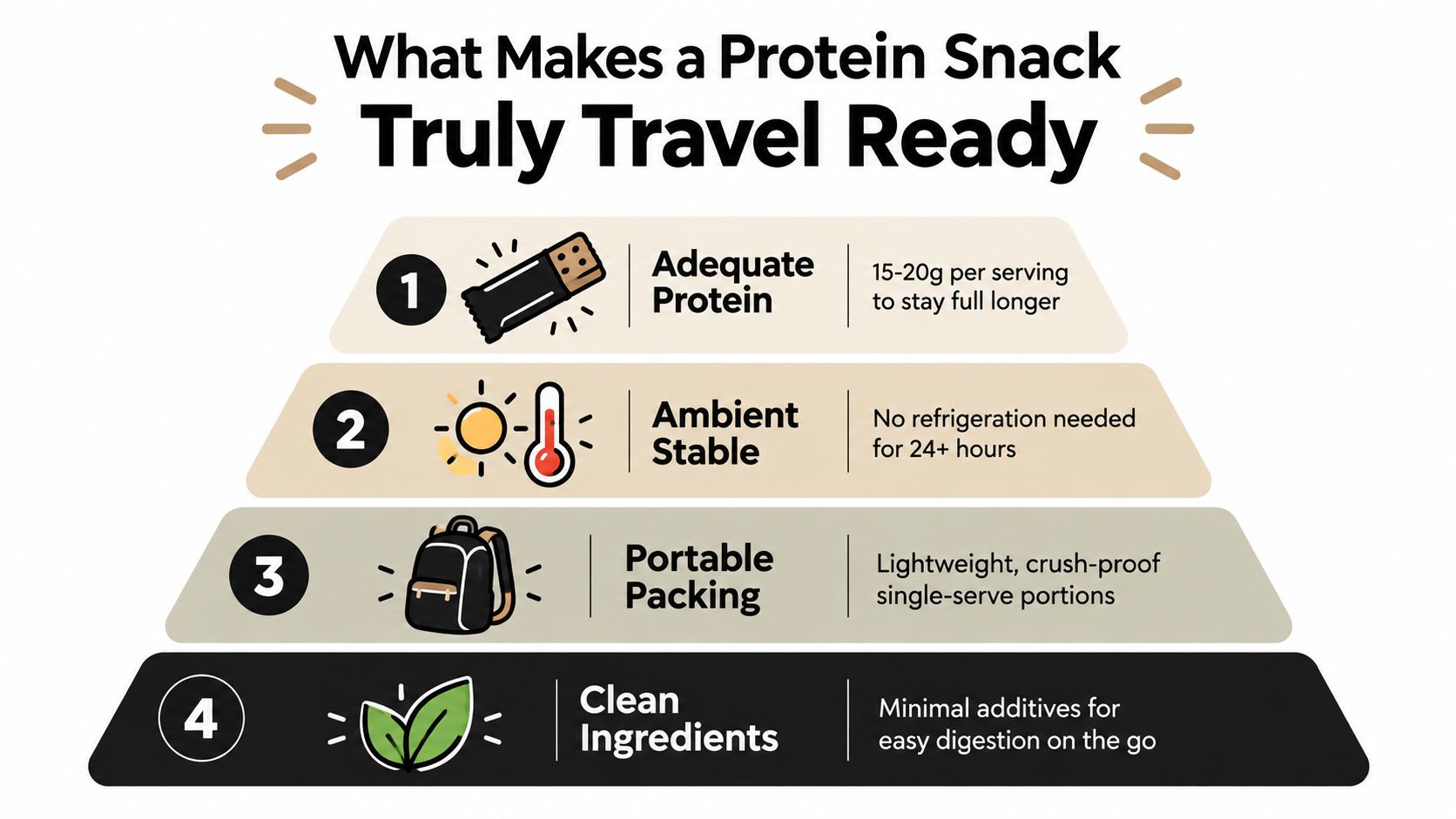
Start with protein density
Think of protein as the fuel tank, not the spark. A sweet snack can deliver quick energy, but a protein-forward option is more useful when you need food to carry you between meals. The relevant question isn't only whether the package says “high protein.” Check how much protein you receive in the portion you'll realistically eat.
A snack with moderate calories and meaningful protein can fit more easily into a travel day than a large meal replacement. The independent guidance gathered for this topic points toward roughly 10–15 grams of protein per serving, with calories kept under about 200 and added sugar below 5 grams as useful targets for portable snacks. These are practical benchmarks, not guarantees of fullness.
Confirm ambient stability
Shelf stability gives you freedom from ice packs and hotel refrigerators. Look for packaging that clearly states storage requirements, and don't assume a product is safe at room temperature because it's sold in a snack aisle.
Dry crisps, roasted legumes, sealed bars, and some plant-based jerky formats usually travel more easily than yogurt, fresh cheese, filled wraps, or open dips. A product that needs cold storage becomes a logistics problem during delays.
Protect the physical format
A snack should survive contact with your luggage. Crunchy foods need a rigid container or a protected compartment. Soft bars need separation from heat and pressure. Powdered products need leak-resistant packaging, especially if they're packed beside clothing or electronics.
Single-serve portions also reduce decision fatigue. You can take one packet from your bag without opening a large pouch, measuring food, or resealing it in a moving vehicle.
Keep the ingredient experience comfortable
Digestive comfort matters on a flight or long drive. A snack loaded with unfamiliar sweeteners, excessive richness, or ingredients you already know cause discomfort may be nutritionally suitable but practically useless.
For readers comparing plant and animal proteins, optimize protein absorption with science offers useful background on bioavailability. The bigger travel principle is to choose a protein source and texture your body handles well, then test it at home before relying on it during a major journey.
Packing rule: A protein snack isn't travel ready until it can survive the route, fit the rules, and feel comfortable in your stomach.
How to Choose the Right Travel Protein Snacks for Your Needs
A protein snack can fit neatly in your bag and still leave you hungry before the next meal. Choose it by looking at three connected factors: the protein dose, the food matrix, and the format. Protein supplies the building material, while fiber, fat, and a firm or crunchy texture can help the snack keep hunger quieter for longer.
Start with the serving size. Package fronts often advertise protein for a portion smaller than what you would eat, so compare the listed serving with your real travel portion.
Use this checklist while shopping:
- Protein: A serving of roughly 10–15 grams offers a useful starting point for a compact snack, though your target may differ. Travel snack formulation guidance supports this practical range.
- Calories: Keeping a snack under about 200 calories can help it work between meals instead of becoming a second meal. A hiking day or post-training stop may call for more.
- Added sugar: Savory formats can make it easier to stay below the suggested 5 grams of added sugar benchmark. Read the panel rather than trusting names such as chocolate, caramel, or cookie.
- Saturated fat and salt: A protein claim does not describe the whole food. Safefood's research found that 77% of surveyed high-protein bars were high in saturated fat and also a source of added salt and sugar, according to Safefood's high-protein snack foods research.
- Allergens: Check dairy, soy, gluten, nuts, and shared-facility statements when they affect you. “Plant-based” does not mean allergen-free.
- Ingredient clarity: A short list is not automatically better, but recognizable ingredients make sweeteners, oils, coatings, and seasonings easier to identify.
Match the format to the journey
| Snack Format | Protein per Serving | Added Sugar and Fat Watchouts | Travel Practicality |
|---|---|---|---|
| Sweet bar | Varies by product | Check coatings, syrups, sugar alcohols, and saturated fat | Compact, but can soften or crumble |
| Protein shake | Varies by product | Watch sweeteners and liquid calories | Convenient after security, less flexible before it |
| Jerky | Varies by product | Check sodium, sugar, and animal-product restrictions | Durable and savory, but customs rules vary |
| Crunchy pea-protein snack | Varies by product | Check seasoning, saturated fat, and added sugar | Dry, portionable, and useful as a stand-alone snack or topper |
The food matrix changes how the snack feels. A sweet bar may provide protein but crumble or soften. A shake can deliver protein quickly, yet liquid calories may not feel as satisfying between meals. Jerky offers a durable savory option, though destination rules can restrict animal products. A crunchy pea-protein snack combines a dry texture with portion control and can work alone or as a topper.
A useful choice balances hunger control with travel constraints. Select the protein amount first, then check whether the snack's fiber, fat, texture, and flavor suit the length of the journey. Test unfamiliar products at home, since a formula that looks efficient on paper may not feel comfortable during a flight or long drive.
Packing and Storage Tips That Keep Snacks Fresh and Safe
Your snack selection can be excellent and still arrive as crumbs. Pack food as if your bag will be turned upside down, squeezed beneath a seat, and exposed to changing temperatures.
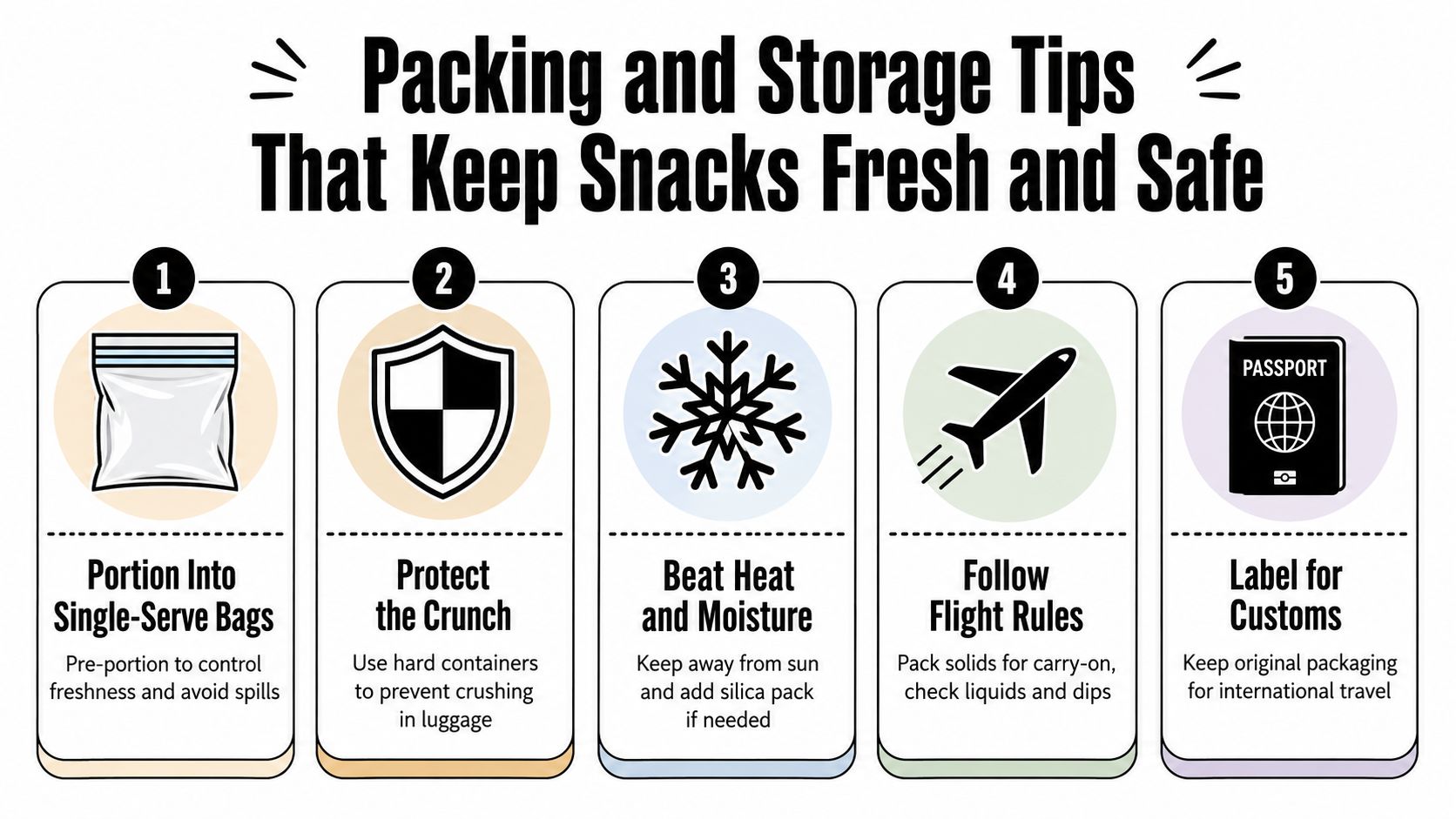
Build portions before leaving
Divide large pouches into single-serve bags before the trip. This keeps the main supply sealed, limits spills, and lets you make a quick choice without eating directly from a family-size package.
Place the portions in a clearly labeled pouch near the top of your carry-on. For road trips, keep one small snack container within reach of the passenger rather than scattering packets throughout luggage. Don't open food while driving if doing so distracts you from the road.
Use protection as part of the recipe
Crunch needs armor. Put fragile crisps, roasted legumes, or crackers inside a hard-sided container, then surround that container with soft clothing in your suitcase. Keep leak-prone items separate from electronics and passports.
Heat and moisture can change texture even when a snack remains shelf-stable. Cabin air is dry and pressurized, while a parked car can become hot. Keep food away from direct sun, avoid leaving it beside a heater, and reseal opened packets promptly.
Texture test: If the snack can't tolerate pressure, humidity, or heat in your expected route, it needs a container or a different format.
Treat international travel as a customs question
Security and customs are separate checks. Solid foods may be accepted through U.S. airport security, but a destination can impose its own biosecurity restrictions. Guidance for international airplane travel notes that Australia and New Zealand may prohibit meat, egg, or dairy products even when vacuum-sealed, so a snack that leaves one country legally may still be refused on arrival. Review the official rules for your destination before packing animal-based products, and keep original packaging available for inspection. The international flight delay insights from Passport Premiere can also help you plan for the possibility of a longer journey, when a compact backup snack becomes especially useful.
For cross-border trips, shelf-stable plant-based options can simplify the decision, but they still need ingredient and import checks. A practical collection of shelf-stable protein options can help you compare formats before you pack.
Use this simple system:
- Portion dry snacks.
- Protect fragile textures.
- Separate food from sensitive belongings.
- Keep liquids and dips subject to the applicable security rules.
- Check destination import restrictions, not only departure screening.
Here's a short visual guide for the journey:
When to Eat Protein Snacks for Flights Workouts and Road Trips
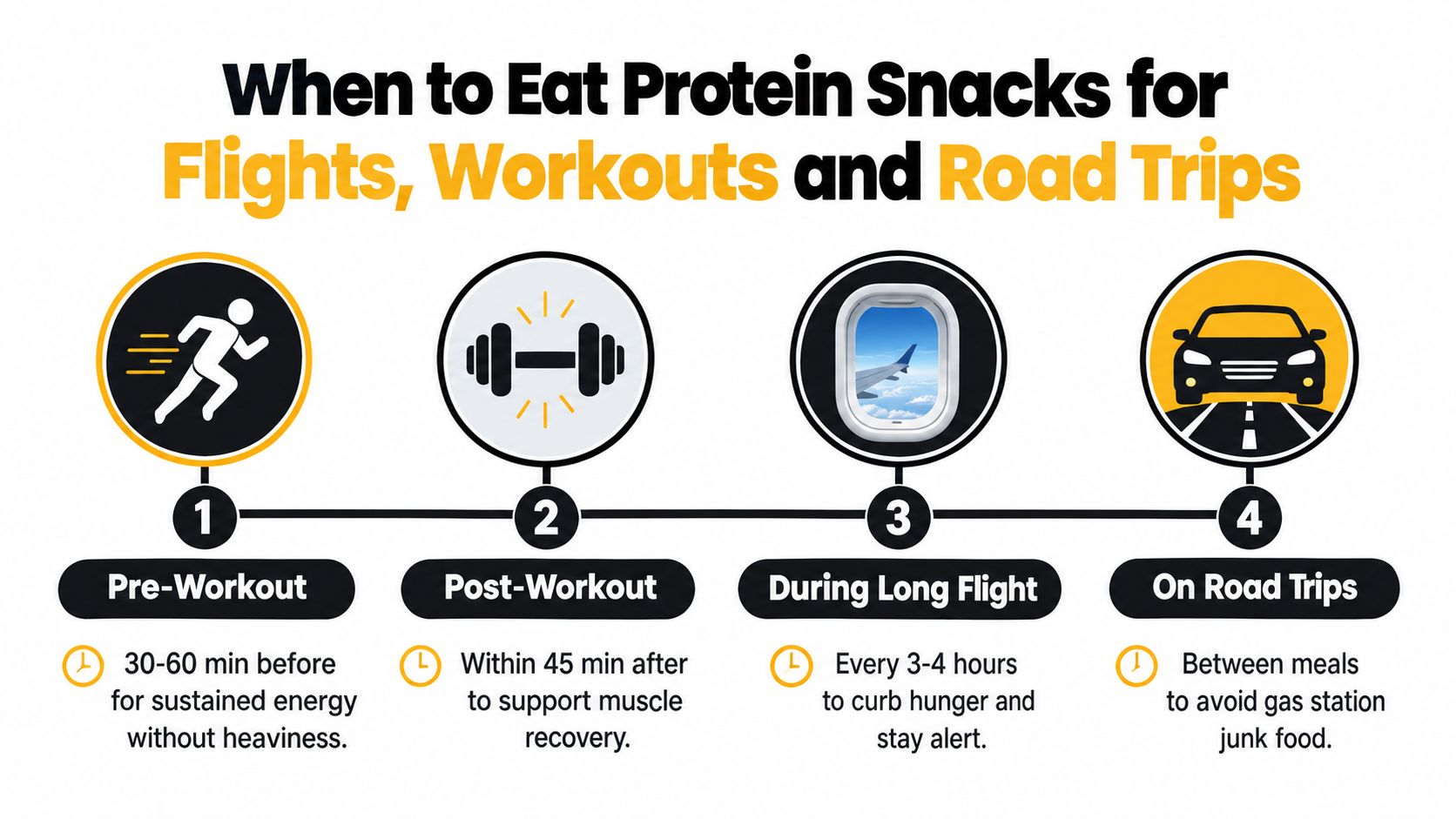
Timing changes the job your snack needs to do. Before training, you may want enough food to feel fueled without heaviness. During a long flight, the priority is controlled hunger and easy access. On a road trip, the snack should prevent an impulsive stop from becoming your entire meal plan.
A study summarized in the research on protein, GLP-1, PYY, and appetite found that a high-protein meal increased circulating GLP-1 and PYY. However, when meals were matched for volume, appearance, and calories, those hormone changes didn't reduce how much participants later ate. That distinction matters: protein can support satiety signaling, but protein by itself doesn't guarantee fullness.
The food matrix, portion size, palatability, and overall meal context still shape the experience. A dry, isolated protein product may feel less satisfying than a snack with useful volume and a texture that takes time to chew.
Use the snack as a bridge
- Before a workout: Choose a moderate portion that you've already tested for digestion. Keep the flavor familiar, and avoid a heavy coating or excessive sweetness if you'll be training soon.
- After training: Combine the snack with water and a normal meal when practical. A protein snack can fill the gap after a gym session, but it doesn't need to replace every part of recovery nutrition.
- During a long flight: Eat when genuine hunger appears rather than opening food only because the cabin crew passed by. A savory, crunchy portion can provide a stronger pause than grazing on sweet items.
- On a road trip: Pack one portion for the stretch between planned meals. This reduces the chance that hunger will make the nearest gas station display your menu.
The most reliable routine is flexible. Carry a protein-first option, eat it before hunger becomes urgent, and notice how your body responds. If a snack causes bloating, thirst, or a sharp desire for more sweetness, change the format before your next trip.
Savory Plant Based Snack Ideas and Mini Recipes for Travel
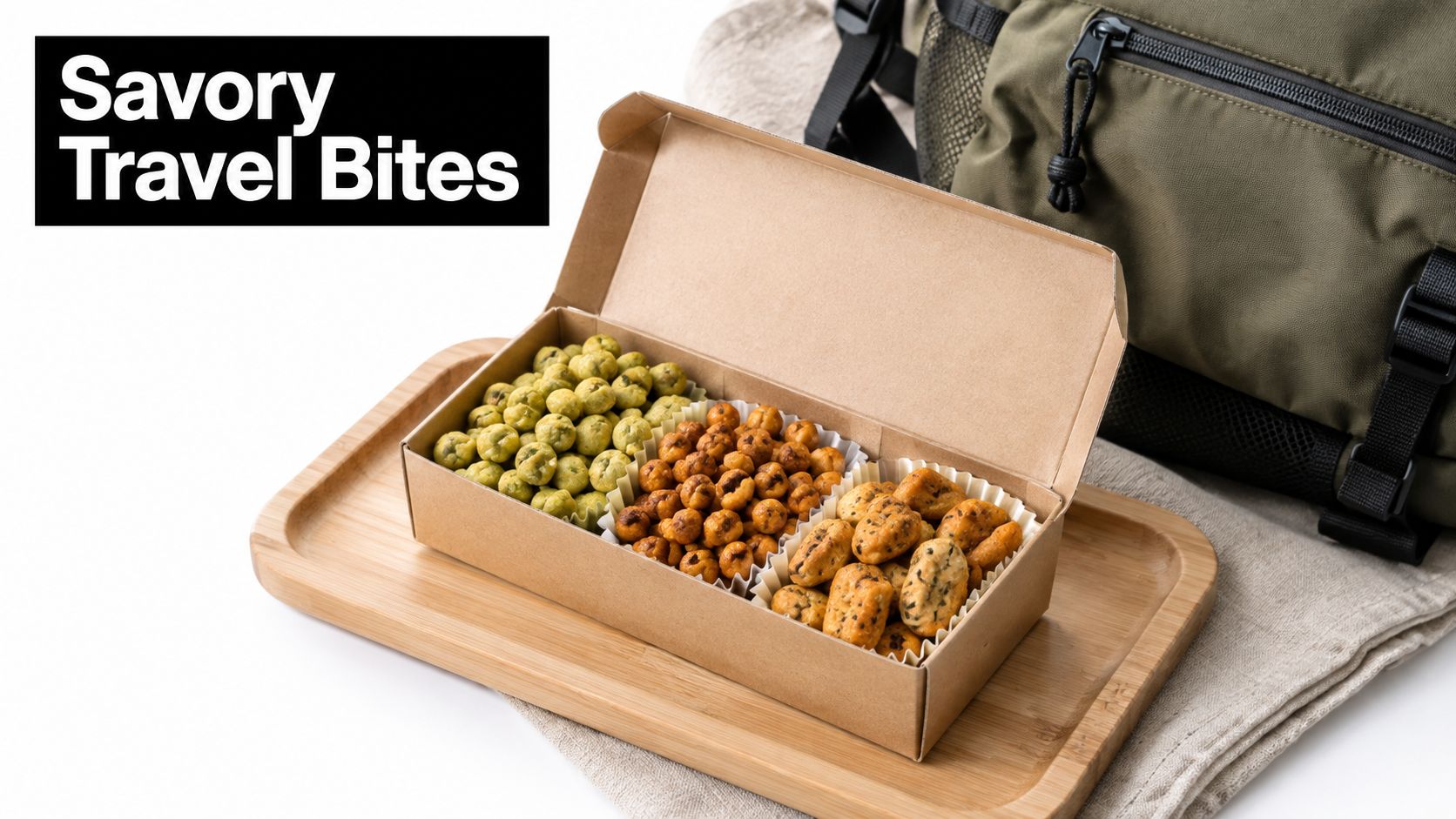
A long flight leaves you hungry, but another sweet bar may not sound appealing. Savory travel protein snacks solve a different problem: they need enough protein to anchor hunger, a texture that slows eating, and a dry format that survives a backpack. Pairing them with fruit, a salad, or coffee can make the snack feel closer to a small meal.
Crunchy pea-protein snacks offer a useful starting point. Pea protein can be highly digestible when properly processed. In a randomized trial, pea protein isolate showed 93.6% ± 2.9% real ileal amino acid digestibility, compared with 96.8% ± 1.0% for casein. The study found no significant difference in amino acid digestibility between the sources and reported a DIAAS of 1.00 for pea protein, as described in research on pea-protein digestibility and amino acid quality.
The ingredient list still matters. Processing, serving size, seasoning, and the rest of the formula affect how the finished snack fits your trip. A well-made pea-protein product can suit travelers avoiding dairy or soy, while its crisp texture gives the mouth more work than a soft, quickly eaten bite.
Three compact combinations
Savory crunch pouch: Mix pea-protein crisps with roasted chickpeas and pumpkin seeds. Keep the blend dry in a resealable bag, then add smoked paprika, black pepper, or nutritional yeast. Prepared components can vary widely, so check sodium and added sugar on the finished labels.
Cheeze-style snack pack: Pair plant-based cheddar-flavored crisps with a small portion of whole-grain crackers. The crisps provide the protein anchor, while the crackers add a contrasting texture. Store them separately until eating to prevent moisture from softening the crackers.
Crunch topper kit: Carry crisps in a rigid container and sprinkle them over a plain salad, grain bowl, or soup bought during a stop. The format adds protein and crunch without requiring a perishable entrée.
Use roughly 10–15 grams of protein per serving, under about 200 calories, and less than 5 grams of added sugar as a quick screening target. These numbers help compare packages, not predict identical fullness for every traveler. A snack's food matrix, portion, and texture still shape the experience.
Homemade combinations can add variety. This collection of homemade savory snacks offers ideas for building dry, packable mixes. For a ready-made option, Gym Snack lists crunchy pea-protein snacks in Cheddar Cheeze and Jalapeño Cheddar Cheeze flavors, with the publisher reporting 15 grams or more of protein per serving and 30 grams or more per bag.
Quick Decision Checklists for Every Type of Traveler
A good travel snack decision shouldn't require a spreadsheet at the airport. Use the person in front of you, the route ahead, and the label in your hand to narrow the choice quickly.
If you train regularly
Choose a shelf-stable snack with a protein amount that fits your normal post-workout or between-meal routine. Pack one savory option for convenience and a second food that adds carbohydrates or produce when your training day calls for more complete recovery nutrition.
Avoid testing a new formula for the first time during a flight. Familiar digestion is part of travel readiness.
If fullness is your priority
Look beyond the protein number. Choose a snack with a satisfying texture, reasonable volume, and a flavor you won't mind eating slowly. The research on GLP-1 and PYY shows why protein is relevant, but it also shows why a protein isolate alone may not control later intake in every meal context.
Pack water as well. A dry snack without adequate fluids may feel less comfortable, especially in a dry cabin.
If you eat plant-based
Check the protein source, allergen statement, and seasoning panel. Pea protein can offer strong amino acid digestibility, and a dry savory format may be easier to carry internationally than animal-based jerky, dairy, or egg products.
Don't equate “vegan” with automatically low sugar, low sodium, or easy digestion. Read the full label.
If you're packing for work travel
Choose single-serve portions that can sit in a desk drawer, briefcase, or carry-on without refrigeration. Favor quiet, low-mess foods that won't require utensils or create a strong aroma in a meeting room.
A simple final check helps: Will it survive the route, fit the destination rules, and keep you comfortable until your next real meal? If the answer is yes, you've found a practical travel protein snack.
Gym Snack offers crunchy, plant-based pea-protein snacks in savory Cheddar Cheeze and Jalapeño Cheddar Cheeze flavors for portable fueling between meals, before training, or after a long travel day. Build a bundle or explore the available flavors at Gym Snack, then pack a few portions before your next flight or road trip.